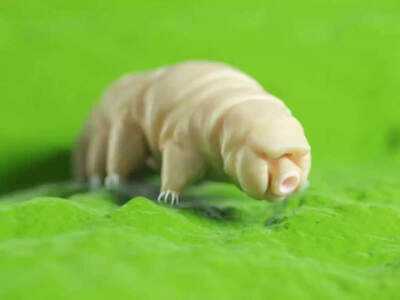
If you believe that humans are the most powerful beings on Earth, think again. There exists a microscopic creature that defies many scientific principles. Known as the tardigrade, or affectionately referred to as the 'water bear,' this tiny organism boasts astonishing capabilities that leave scientists in awe.
While humans struggle in temperatures of 40°C, tardigrades can endure extreme heat of up to 150°C (300°F). Whether submerged in boiling water, buried in volcanic ash, or exposed to the frigid vacuum of space, these creatures are remarkably resilient. In 2007, researchers sent thousands of tardigrades into space via a satellite, expecting them to perish. However, upon the satellite's return, not only were they alive, but some had even laid eggs.
Tardigrades typically inhabit moist soil or moss. When their environment dries up, they enter a dormant state known as cryptobiosis. In this state, they can survive for years without water, oxygen, or food. Once moisture returns, their cells reactivate, bringing them back to life.
Researchers have identified a unique gene in tardigrades called 'paramacrobiotus.' This gene protects them from harmful UV rays and radiation by converting damaging ultraviolet light into harmless blue light, neutralizing threats before they can cause harm. Scientists believe that if this gene could be transferred to other organisms, those species might also withstand extreme conditions.
Tardigrades are regarded as the most resilient and robust organisms known to science. They show no fear of radiation, fire, or ice, as if nature has equipped them with 'superpowers.' This remarkable creature can survive in nearly any situation.