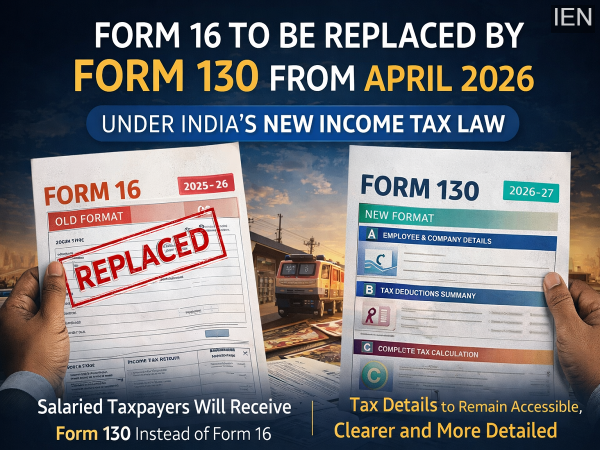
In a major shift under the upcoming tax reforms, the Government of India is set to replace the widely used Form 16 with a new document called Form 130. This change will come into effect from April 1, 2026, alongside the implementation of the new Income Tax framework.
While the name and structure may change, the core purpose of the form will remain largely the same—providing employees with a detailed summary of their salary, tax deductions, and tax deposited with the government. Here’s everything you need to know about this transition and how it will impact your tax filing process.
From the next financial year, Form 16 will gradually be phased out and replaced by Form 130 under the new income tax law. However, this change will not affect your immediate tax filings.
This means taxpayers will continue using Form 16 for one more cycle before transitioning fully to the new format.
Form 130 is essentially a redesigned version of Form 16 with a more structured and detailed format. It will still serve as proof of Tax Deducted at Source (TDS) for salaried individuals.
The form will include:
The biggest change lies in its improved format, which aims to make tax details clearer and more transparent for taxpayers.
The new Form 130 will be divided into three parts:
This structured format is expected to simplify tax understanding for individuals and reduce confusion during filing.
Form 130 will primarily be issued to salaried employees, just like Form 16. However, its scope may extend to certain senior citizens as well.
For eligible retirees, the form may also include details related to:
This makes it a more inclusive document covering different income sources.
Yes. If you switch jobs within a financial year, you will receive separate Form 130 documents from each employer—similar to the current system with Form 16.
Each employer will provide a separate statement for the duration of employment, and taxpayers will need to combine this information while filing their Income Tax Return (ITR).
Just like Form 16, Form 130 does not need to be submitted while filing your ITR. However, it is an important document and should be kept safely for:
If any mistake is found in Form 130, the employer will be responsible for correcting it. This will be done by filing a revised TDS return, after which a corrected form will be issued to the employee.
Employers will be required to issue Form 130 every year by June 15, ensuring timely availability for tax filing.
The introduction of Form 130 is part of a broader effort to modernize and streamline the tax system. With clearer segmentation and better presentation of data, the new form aims to:
The replacement of Form 16 with Form 130 marks an important update in India’s tax system, but it does not drastically change how taxes are calculated or filed. Instead, it enhances clarity and structure, making it easier for taxpayers to understand their financial details.
For now, salaried individuals can continue using Form 16 as usual. From 2027 onwards, Form 130 will take over, bringing a more streamlined and user-friendly approach to tax documentation.