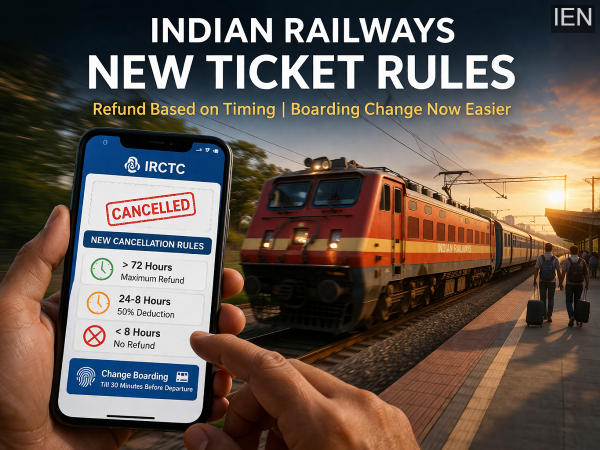
In a significant move aimed at improving passenger convenience and curbing misuse of tickets, Indian Railways has introduced new rules for ticket cancellation and boarding. These revised guidelines will come into effect between April 1 and April 15, 2026, and will directly impact how refunds are processed and how passengers manage their journey plans.
The updated policy focuses on stricter refund timelines and greater flexibility in boarding station selection, offering both convenience and discipline in the ticketing system.
Under the new system, the refund amount will depend entirely on how early a passenger cancels their ticket before the train’s departure. The earlier the cancellation, the higher the refund.
Here’s a clear breakdown of the revised refund structure:
These changes clearly encourage passengers to cancel tickets well in advance to avoid heavy financial loss.
One of the most important highlights of the new rule is the strict no-refund policy for last-minute cancellations. If a passenger fails to cancel their ticket at least 8 hours before departure, they risk losing the entire ticket amount.
This move is expected to reduce unnecessary blocking of seats and ensure better availability for genuine travelers.
In a major relief for passengers, the railway has also simplified the process of changing the boarding station.
Earlier, passengers could only modify their boarding point before the chart preparation. Now, under the revised rules, travelers can change their boarding station up to 30 minutes before the train departs.
This is especially beneficial for passengers traveling from cities with multiple railway stations, allowing them to choose a more convenient boarding point at the last moment.
According to Ashwini Vaishnaw, the updated rules are designed to prevent misuse of the reservation system.
In many cases, agents or middlemen used to book multiple tickets in advance and cancel them later, blocking availability for genuine passengers. By tightening refund timelines and increasing penalties for late cancellations, the railway aims to discourage such practices.
The revised policy brings several key changes compared to earlier rules:
These updates reflect a more structured and stricter approach to ticket management.
To avoid losing money, passengers should:
The new ticket cancellation and boarding rules introduced by Indian Railways mark a shift towards a more disciplined and passenger-friendly system. While stricter refund policies may seem tough, they are aimed at ensuring fair access to tickets and reducing misuse.
With added flexibility in boarding station changes and a clearer refund structure, passengers can now plan their journeys more efficiently—provided they stay mindful of the timelines.