
The phrase 'bodice and hem' is also no less interesting. We use it often. This idiom is also used a lot in the context of film songs and controversies. We can say that film songs and controversies have a close relationship. Coincidentally, whenever the word 'choli' or 'chunri' was written in film songs, a wave of controversy arose. Because 'choli and hem' is related to the controversy. well! This controversy has deepened again these days. Controversial songs filmed on Nora Fatehi-Sanjay Dutt Sarki Chunar… Such a tsunami arose regarding this issue that splashes of its waves were visible even in the Parliament. The walls of tradition thundered, the pillars of morality screamed. Intellectuals jumped into the quagmire of controversy and a fresh intellectual tussle started over cultural decline. This was also reasonable. At a time when we are trying to become civilized, developed and cultured, then who would like to remain silent on the spread of uncultured people?
However, given the atmosphere, flashbacks were abound. I reached the nineties, when Changing language of film songs It seemed as if he had created an uproar. The fearless use of words like choli, chunari, khatiya, cheese, upper-pigeon etc. in the songs of films like Khalnayak, Raja Babu and Mohra shocked the youth of that time. Like today, the elderly and intellectual generation of that time not only condemned it in strong words but also issued a request not to play these songs in public places. Pages and pages of newspapers and magazines of that time were filled with opposition to these songs. Even the songs which were released by the then Censor Board were banned from being broadcast on All India Radio. But the surprising thing is that it had no effect on the ground.
I remember a film was released in 1994 – Mohra. In this film, a song was filmed on Akshay Kumar and Raveena Tandon- You are a very desirable thing. The filming of that song, sung in the voices of Udit Narayan and Kavita Krishnamurthy, was very superficial and C-grade. In those days, Akshay Kumar was doing mostly films of the same grade. There was opposition to the song but still its popularity was not less. The surprise was expressed when this song was played in the annual function of a high profile school in Delhi and the boys and girls of class 10th-12th gave their alleged cultural offering in Akshay-Raveena style in front of the principal, teachers and parents. After the ceremony held late in the evening, there was a lot of news about that school yesterday.
This was the time when Khalnayak's most controversial songs - Choli Ke Peeche Kya Hai and Raja Babu's Sarkay Lyo Khatiya Jada Lage had created a stir. So the song was filmed on Karisma Kapoor- “Sexy sexy sexy, people told me…” It seemed as if he had demolished the high wall of the Kapoor family. The names of big and famous lyricists like Anand Bakshi, Indeevar or Sameer were associated with these controversial songs, who have given many memorable and evergreen songs to Hindi films. In view of the controversy, questions were raised at that time as to what compulsion the lyricists have to write such songs. Is there a demand from the producer and director, is there a competition to outdo each other, is there a demand from the public or is there one's own effort to write something new and shocking. What is the reason after all?
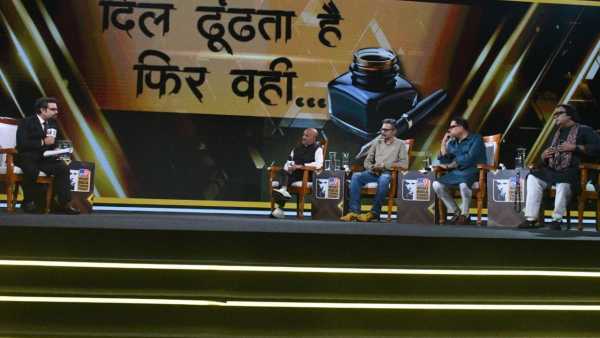
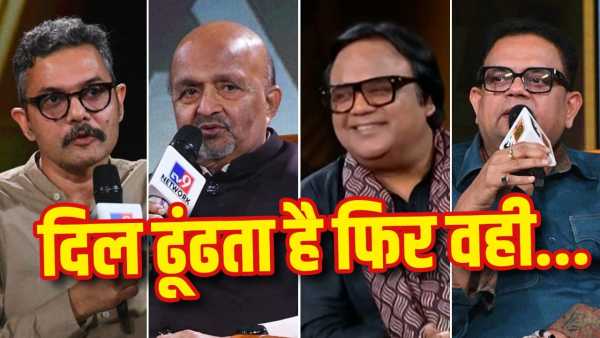
TV9 Bharatvarsh once again put forward an initiative regarding these questions. On March 24 (2026), stalwarts from the world of cinema and music gathered in the Satta Sammelan and expressed their views on this issue. Dil Dhundta Hai Phir Wahi… The segment featured renowned lyricist Sameer Anjan, lyricist and well-known storyteller Nilesh Mishra, ghazal writer Alok Srivastava and famous cine-song-music historian Yatindra Mishra. It is reasonable that the issue once again picturized on Nora Fatehi-Sanjay Dutt Sarke Chunar… and Haryanvi songs of Badshah Tatiri... There was controversy regarding. Why are lyricists forced to write songs with such obscene connotations? This is not just about the year 2026 or the 90s, such incidents have happened many times in history.
Lyricist Sameer believed that now not only songs, even dialogues in films are being written extremely obscene. Only what is being shown in films is being shown on OTT. Our hero is abusing in the dialogues. His reference was towards the blockbuster Dhurandhar. However, Sameer believed that in films, the lyricist writes only what the story or character demands. Lyricists do not have their own existence in film songs, as poets usually do in poems. The poet writes for himself and the lyricist writes for the character in the film. If the character is a truck driver then his language has to be understood. This is the process of writing songs.
But what should be the limits of language in songs? Who should be held responsible for obscene language? Sameer's blunt answer was - Why should only the lyricist be responsible for this, why should not the producer and director also be responsible for this? Nilesh Mishra took this issue forward in response to a question. Taking reference to the recent Nora Fatehi-Sanjay Dutt's Sarki Chunar..., he raised the question that how many processes would this song have gone through before hitting the market? First it was written, then sung, it was choreographed, picturized, it went to the editing table - but no one considered it obscene. Even before the CBFC scissor came into force, that song became a hit on YouTube. It is surprising that concern was raised in Parliament over a film song. After which action was taken. During this time, Nilesh Mishra drew his line - this is the reason why I left Mumbai.
Whereas poet and famous historian of cinema and music Yatindra Mishra put the responsibility entirely on the viewers and listeners. He said very frankly that why do we become so innocent? Who listens to these bad songs and makes them hits? There are people among us. There have been bad songs in every era, the audience and listeners have rejected them in every era, only good songs will survive. Why do we still remember the songs composed by Shailendra, Sahir or Majrooh, Neeraj – because there was pause in it. Those which were lighter, could not make a place in our memories. Today it is our responsibility to show courage to reject the bad. Even today good songs are written – that should also be discussed. Bad songs will never be able to make a place in the memories.
Well-known song-ghazal writer Alok Srivastava had different ideas regarding the language of film songs and its picturization. He also connected the songs and films of the earlier era with the society of that era. The mood of the viewers and listeners at that time was also different. The story of the films was such, its characters were such that emotional songs were written for them. Those songs were written according to the demand of the time. Today the way of writing songs has also changed. The metaphor of writing, composing and picturizing songs has changed. Now I have understood Mukhda and Antara in the songs, just a reel should be made for it. Songs are meant to unite, not to divide.
There is no doubt that bad film songs have been under question in the past, are there today and will be there tomorrow too. According to time and place, thinking changes, language changes, lifestyle changes, cinema changes, beliefs change, concerns change, acceptances and non-acceptances also change. But I would like to end this article with the statement of Nilesh Mishra in which he pointed towards the responsibility of a creator. He said that creator is a very big post. The responsibility of a creator is the greatest.
Many songs have been written in history using the words Choli and Chunari. I have been tainted… It was also written but here Chunari and Daag were also defined. In the song, the soul and God were talked about through symbols. But in the words of Yatindra Mishra, if today people do not have time to see the moon, then moon like lover…like for whom the songs should be written.