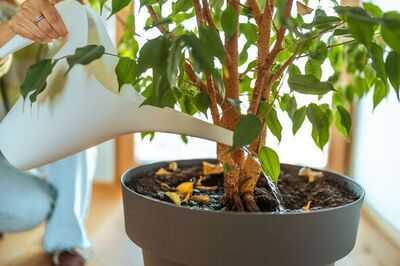
We've all made gardening blunders before. While the hobby is meant to be relaxing, it can be stressful when your plants don't grow the way you expect them to.
There's plenty of room for error - such as planting them in the wrong soil type or giving them a shady spot when they need full sun.
But one woman has taken the crown for the most embarrassing mistake made while gardening, after she spent three whole years watering a houseplant before discovering the blunder she was making.
Ms Liu, from China, said she devotedly watered a houseplant "every single day" for several years before she realised that the "plant" she was taking care of was actually a fake houseplant made entirely of plastic.
The woman posted pictures of the succulent on social media and confessed she felt rather foolish upon discovering her error, claiming that she had taken care of the plant "like a baby" prior to making her discovery.
However, when she uploaded images online, she said she realised she couldn't move the leaves with her hand, and it quickly became apparent that it was actually constructed from plastic.
The plant featured blue-coloured veins which altered in appearance over time, leading her to believe the succulent was thriving and maturing beautifully whenever she watered it.
She maintained her watering routine over the following years and was convinced it was flourishing and appeared healthy. She added that she "took care of the plant like a baby" and "watered it every single day".
Acknowledging the revelation made her feel rather daft, she said she could appreciate the humorous aspect.
Ways to keep your houseplant alivePlastic plants are obviously the easiest ones to maintain. However, if you do want to maintain a real houseplant, we have some handy tips for you:
1. Do your research: Look into your plant's specific needs (light, water, humidity, temperature, fertiliser). Different plants have different requirements.
2. Water correctly: Most houseplants prefer soil that's consistently moist but not soggy. Check the top inch of soil; water only when it feels dry to avoid drowning it.
3. Get the right light: Place your plant in the type of light it needs (direct, indirect, or low light). Rotate it occasionally for even growth.
4. Use a functional pot: Ensure the pot has drainage holes to prevent root rot. Repot when the plant outgrows its container.
5. Keep it clean: Wipe dust off leaves with a damp cloth to help them "breathe."
6. Watch out for pests: Check regularly for signs of pests (like sticky residue, holes, or webs). Treat promptly if you spot any.
7. Prune and deadhead: Remove dead or yellowing leaves to encourage new growth.