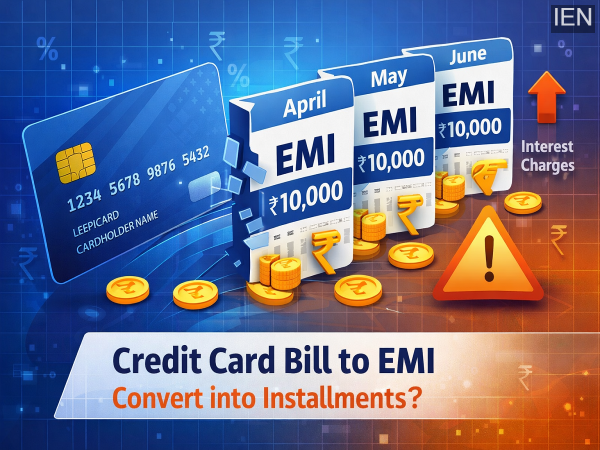
Converting a credit card bill into Equated Monthly Installments (EMIs) may seem like a convenient option, especially when dealing with large expenses. However, before opting for this feature, it is important to understand the hidden costs and long-term impact on your finances. While banks often promote EMI conversion as a flexible repayment option, financial experts advise caution.
If you’ve recently received an offer to convert your credit card bill into EMIs, here’s everything you need to know before making a decision.
When you convert your credit card bill into EMI, you are essentially splitting a large payment into smaller monthly installments over a fixed tenure—such as 3, 6, 12, or even 24 months. This reduces the immediate burden of paying a lump sum amount.
However, this convenience comes at a cost. Banks charge interest on the converted amount, along with a processing fee. In most cases, the interest rate is similar to or only slightly lower than the regular credit card interest rate, which is usually quite high.
At first glance, EMI conversion may appear helpful, but it can significantly increase your total repayment amount. The longer the repayment tenure, the more interest you end up paying.
For example, if you choose a longer EMI period to reduce your monthly burden, the cumulative interest cost rises sharply. As a result, you may end up paying much more than the original purchase amount.
Another important factor to consider is the processing fee charged by banks. This adds to the overall expense, making EMI conversion less economical than it seems.
Opting for EMI means committing to a fixed monthly payment. While this may appear manageable initially, it can affect your monthly cash flow over time.
Regular EMI payments reduce the amount of disposable income available for savings and essential expenses. If not planned properly, this can strain your budget and limit your financial flexibility.
Many credit card users overlook this aspect and later find it difficult to manage their finances due to ongoing EMI obligations.
The situation becomes more complicated when you convert multiple purchases into EMIs. At first, each EMI may seem affordable, but collectively they can create a heavy financial burden.
Over time, a significant portion of your income may go toward repaying these installments, leaving little room for savings or emergencies. This can lead to a cycle of debt, where managing monthly payments becomes increasingly difficult.
Experts warn that taking multiple EMIs simultaneously can disrupt your financial stability and should be avoided whenever possible.
Before choosing EMI conversion, it is advisable to explore other options:
You can pay a major portion of your bill immediately and carry forward the remaining balance. While interest will still apply, it may be limited to a shorter duration compared to long-term EMIs.
In some cases, a personal loan may offer a lower interest rate compared to credit card EMIs. This can help reduce your overall repayment cost.
If possible, adjusting your expenses and clearing the bill in full can save you from high interest charges altogether.
Despite its drawbacks, EMI conversion can be useful in certain situations—especially during financial emergencies or when dealing with unavoidable high-value purchases.
However, experts recommend a disciplined approach:
Converting your credit card bill into EMI is not always a bad option, but it should never be a default choice. While it offers short-term relief, it can increase your financial burden in the long run due to interest and additional charges.
The key is to use this facility wisely and only when absolutely necessary. Careful planning, awareness of costs, and disciplined spending can help you avoid falling into a debt trap while using your credit card effectively.