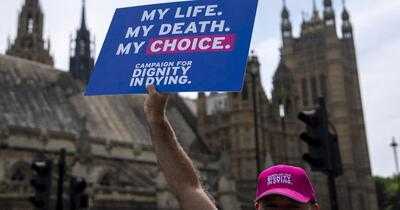
March 31, 2026, marks 50 years since a landmark decision that shapes American patients’ rights every day: the New Jersey Supreme Court ruling in the case of Karen Ann Quinlan, who had suffered an irreversible coma.
Quinlan’s case established for the first time that decisions near the end of life should be made by patients and families, not by doctors and hospitals alone. As a bioethicist, I have taught and written extensively about the profound impact the Quinlan case has had on law, bioethics and the pursuit of death with dignity.
Quinlan’s storyIn April 1975, at the age of 21, Karen Ann Quinlan suffered a cardiac arrest and loss of oxygen to the brain while at a friend’s party. After she had gone to bed, friends discovered that she had stopped breathing, and she was rushed to the hospital.
After a while, doctors determined that Quinlan was in a persistent vegetative state: a condition in which all cognitive functions of the brain have been lost and the patient has no awareness of themselves or their environment.
People in a persistent vegetative state retain some brain stem functions that regulate involuntary bodily activities, such as heart rate, blood pressure and digestion, but cannot live without continuous care and treatment. Some patients breathe independently with a...
Read more