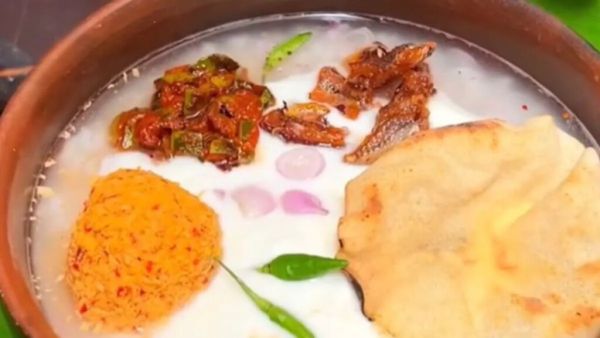
With hectic schedules, poor lifestyles and junk food at our disposal, many people in cities have deeply wrecked their diet, and in consequence, their gut health. Constant bloating and poor bowel movements have become a norm for many, who end up taking medicines to fix their digestion. Those who ignore it are putting a lot at stake, as poor gut health can ultimately affect your entire body. The traditional Indian diet is quite a logical and balanced one, and intentionally leaning towards it can help you move towards a healthier version of yourself.
One such traditional drink that deserves your attention is rice kanji. Recently, integrative and lifestyle medicine coach Luke Coutinho shared his rediscovery of rice kanji while traveling in South India.
Writing on
He reflects, “Today, we’re surrounded by probiotics, enzymes, and gut cleanses, all promising to fix digestion instantly. But in Indian wisdom, no one ever used the word probiotics, but our ancestors knew how to rebuild and support the gut naturally.”
His post resonated widely, prompting renewed curiosity about this ancient dish and its impressive gut-friendly reputation.
The preparation is quite simple. Leftover cooked rice is soaked overnight in water, traditionally in an earthen clay pot, which allows for gentle, natural fermentation. By morning, the liquid becomes tangy and probiotic-rich. Many households then add a splash of buttermilk or yogurt, and sometimes temper it with curry leaves and mustard seeds for flavour.
Pazhaya kanji is consumed early morning on an empty stomach to kickstart digestion or before meals to improve digestion.
Dietitian and Certified Diabetes Educator Dr Archana Batra explains why this process is so beneficial. “When cooked rice is soaked overnight, it undergoes natural fermentation. This encourages the growth of beneficial bacteria, particularly strains of lactic acid bacteria, which are essential for gut health. These microbes help balance the gut microbiome, improve nutrient absorption, and support smoother digestion,” she shared with NDTV Food.
Rice kanji is more than a probiotic drink. It also provides electrolytes, hydration, B vitamins and easily digestible energy, particularly useful during hot weather or lazy mornings.
According to Dr Batra, rice kanji “is incredibly affordable, sustainable, and reduces food waste by repurposing leftover rice,” making it both nutritionally and environmentally sensible. She notes that some naturally fermented batches may even contain small amounts of vitamin B12, a nutrient often missing in vegetarian diets.
Ayurvedic Nutritionist Shweta Shah further emphasizes its digestive strength. “Rice kanji is one of the simplest and most effective natural probiotics we have in our traditional diet. It supports smoother bowel movements, reduces bloating and acidity, and improves overall gut function. In Ayurveda, strong digestion is the foundation of good health, and foods like kanji work at a root level to strengthen that.”
Here’s where the experts agree: it’s less about superiority and more about purpose.
Dr Batra explains, “Packaged probiotics offer specific, targeted strains in controlled doses, often backed by clinical studies. Rice kanji provides a diverse range of naturally occurring microbes along with nutrients, fiber and hydration. It’s a whole-food approach rather than a supplement.”
Shweta Shah adds, “In many ways, yes, kanji can be better. It is free from preservatives and chemicals, and comes with enzymes and natural compounds formed during fermentation. But I don’t see it as a comparison, ideally, natural probiotics like kanji should form the foundation, while supplements can be used when clinically required.”
India’s culinary heritage is full of probiotic-rich dishes. Some expert-recommended options include:
Both nutritionists highlight that traditional Indian food habits were shaped by climate, locality and gut comfort. Fermentation, soaking, sprouting, and slow cooking weren’t trends; they were daily survival techniques that maximized nutrition.
Modern research on microbiome diversity, digestion and inflammation is now validating what generations intuitively practiced.
Shweta Shah says, “Our ancestors understood gut health and immunity long before science explained it. Traditional foods support long-term health by working with the body, not against it.”
In a world chasing quick fixes, the revival of rice kanji is a reminder that sometimes the most powerful health solutions are the simplest ones, sitting quietly in our kitchens for centuries.