In what military analysts are calling an unprecedented operational challenge for the Pentagon, thousands of American troops have been forced to abandon their bases across West Asia and relocate to hotels and office spaces, conducting an active war, in effect, from remote and improvised worksites.
The displacement is a direct consequence of sustained Iranian missile and drone strikes on US military installations throughout the region, according to military personnel and officials who told the New York Times (NYT).
The US had close to 40,000 troops stationed across the region when hostilities began. Central Command has since dispersed thousands of them, some as far as Europe, though a significant number remain in West Asia, operating from what one official described as “alternative” sites.

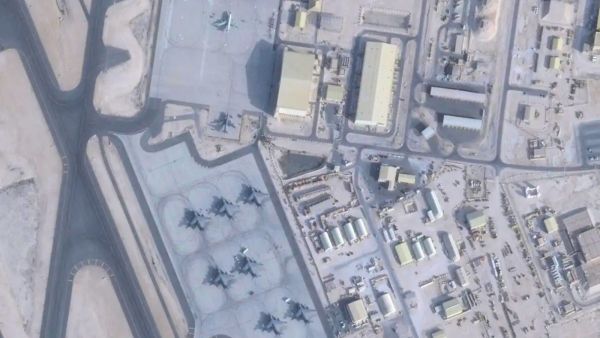
The scale of damage to US facilities has been significant. In Kuwait, which shares a border with Iran, six service members were killed in a strike on Port Shuaiba that destroyed an army tactical operations centre. Ali Al Salem Air Base and Camp Buehring both sustained damage to aircraft, maintenance facilities and fuel infrastructure.
In Qatar, Iran struck Al Udeid Air Base, the regional air headquarters of US Central Command, damaging an early-warning radar system. In Bahrain, a drone hit communications equipment at the headquarters of the US Fifth Fleet.
At Prince Sultan Air Base in Saudi Arabia, Iranian missiles and drones damaged communications equipment and several refuelling tankers. One service member was killed and several others were wounded. The NYT also reported that command centres at that base had no reinforced roofs.
Iran has also largely shut down the Strait of Hormuz, a vital shipping route, ensuring the war’s economic consequences extend well beyond the immediate theatre.
“We have the ability to set up expedient operation centres, but you’re absolutely going to lose capability,” Master Sergeant Wes J Bryant, a retired US Air Force Special Operations targeting specialist, told the NYT, elaborating on what the dispersal means for operations on the ground.
“You can’t just put all that equipment on the top of a hotel, for example. Some of it is unwieldy,” he added.
Iran’s Islamic Revolutionary Guards Corps (IRGC) has meanwhile urged civilians in the region to report the new locations of American troops via Telegram, calling it an “Islamic duty.” Iranian officials have accused Washington of using civilians as human shields by sheltering soldiers in hotels, which the US military denies.
The situation has renewed scrutiny of the Trump administration’s pre-war planning. The NYT reported that US embassies were not reduced in staffing before hostilities began, non-essential government employees were not evacuated and Americans in the region were not warned to leave until after the war started.
Two American KC-135 refuelling tankers also collided this month, killing six service members, an incident that is now under investigation. The tankers, officials said, were rushed to the war with little time to orient or practice in the region beforehand.
Two decades of operations in Iraq and Afghanistan, where US air superiority was established quickly, had led the military to build up large, fixed installations close to what are now active front lines. Those facilities were designed for a different threat environment than Iran’s ballistic missile capability represents.
General Dan Caine, Chairman of the Joint Chiefs of Staff, had previously acknowledged that Iran “still retains some capability” despite extensive US strikes. However, Defence Secretary Pete Hegseth claimed that the US has struck over 7,000 targets across Iran and its military infrastructure since the war began.