
Trump: Iran’s ‘Present’ Was Allowing 10 Oil Tankers Through Hormuz as Goodwill Gesture/ TezzBuzz/ WASHINGTON/ J. Mansour/ Morning Edition/ President Trump said Iran allowed 10 oil tankers through the Strait of Hormuz. The move was described as a goodwill gesture during negotiations. U.S. officials also confirmed a 15-point plan to end the conflict.
President Donald Trump said Thursday that Iran allowed 10 oil tankers to pass through the Strait of Hormuz, describing the move as a goodwill gesture during ongoing negotiations aimed at easing tensions and reopening the critical global shipping route.
Speaking during a Cabinet meeting at the White House, Trump elaborated on what he had earlier described as a “present” from Iran, revealing that the concession involved oil shipments being allowed to transit the vital maritime chokepoint.
The Strait of Hormuz is one of the world’s most strategically important shipping lanes, through which roughly one-fifth of global oil supply typically passes. Any disruption to traffic through the narrow waterway can significantly affect global energy markets and prices.
Trump’s comments came as the United States continues to push Iran toward a broader agreement that would reopen the strait and address Tehran’s nuclear program.
Earlier this week, Trump had hinted at a significant concession from Iran but declined to provide details, describing the move as a “very big present” worth “a tremendous amount of money.”
The revelation that Iran allowed tankers to pass suggests diplomatic channels remain active despite ongoing military tensions.
However, White House officials did not immediately provide additional details about the tankers, including ownership, cargo destinations, or the duration of the transit permission.
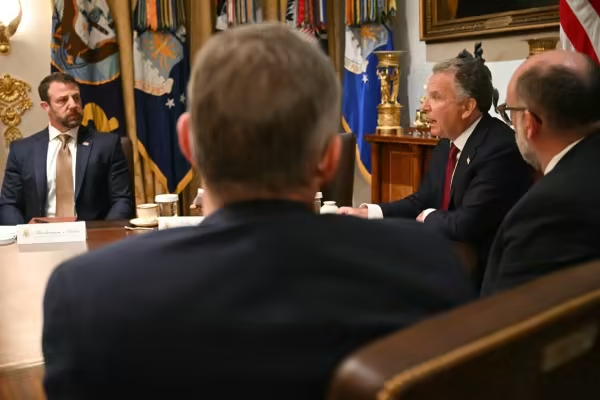
US special envoy Steve Witkoff, second right, speaks during a cabinet meeting at the White House on Thursday.
Witkoff said there are signs Iran may be interested in a deal if leaders conclude that continued conflict offers no viable alternative.
He added that Pakistan has been serving as a mediator between Washington and Tehran, confirming earlier reports from Pakistani officials.
The proposal is aimed at reducing tensions, restoring energy flows, and addressing broader security concerns, including Iran’s nuclear program.
Meanwhile, the Iran conflict is also generating political pressure within Congress. Republican Rep. Nancy Mace of South Carolina said she is likely to support a resolution aimed at limiting Trump’s authority to continue military operations against Iran.
Mace has emerged as one of the most vocal Republican critics of the conflict in recent days. She said the United States should end military operations after achieving its objectives.
She also expressed concern about sending American troops into further conflict, emphasizing that she would oppose funding additional military operations.
The potential shift in Republican support could influence future votes on a war powers resolution aimed at restricting military action.
Earlier this month, a similar measure narrowly failed in the House by a 212-219 vote. Several lawmakers who previously opposed the measure are now expected to reconsider their positions.
If additional Republicans join Democrats, Congress could move closer to issuing a formal rebuke of the administration’s military strategy.
The reopening of limited tanker traffic could help ease concerns about global oil supply disruptions, though broader uncertainty remains.
Energy markets have been volatile since tensions escalated, with traders closely watching developments in the Strait of Hormuz.
Allowing tankers to pass could signal progress toward restoring normal shipping flows, potentially stabilizing prices if negotiations continue.
While the tanker transit suggests a possible diplomatic opening, negotiations remain fragile, and military operations continue in the region.
The U.S. administration continues to push for a broader agreement, while lawmakers debate the long-term strategy and potential risks of prolonged conflict.
For now, the movement of 10 oil tankers through the Strait of Hormuz represents a small but potentially significant step toward de-escalation.
More on US News