
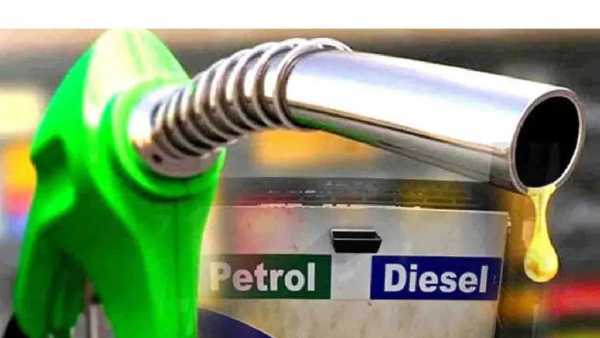
Amidst increasing tension in the Middle East and fears of supply stoppage from the Strait of Hormuz, the government has decided to reduce excise duty on petrol and diesel. This step is a sign of relief to the people and oil companies from the volatile prices of crude oil, but its full impact will depend on the way fuel prices are determined in India.
Taking a big decision, the government has reduced the tax on both petrol and diesel by Rs 10 per liter. Due to this, the tax on petrol has reduced to about Rs 3 per liter, while the tax on diesel has become almost zero. Its purpose is to reduce the pressure of rising costs on oil companies.
After the cut in excise duty, Union Petroleum Minister Hardeep Singh Puri said that the government had two options: either increase the prices too much for the citizens of India, as all other countries have done. Or the burden should be borne on one's financial position, so that Indian citizens can remain safe from the ups and downs of the international market. The government has taken a huge hit to its tax revenue to reduce the huge losses being incurred by oil companies at a time when international prices are skyrocketing by around Rs 24 per liter on petrol and Rs 30 per liter on diesel.
It is not necessary that there have been fluctuations in the prices of crude oil in recent months, but the prices of petrol and diesel in India have not changed much. This happens because oil companies themselves bear losses for some time to avoid frequent price changes. Therefore, the benefit of tax cut may accrue initially to the companies and not directly to the customers. Common people are likely to get relief gradually. When companies manage their losses, it is possible that they may reduce oil prices in the coming days.
According to the report of Business Standard, the price of petrol and diesel in India is decided in several stages, which starts from crude oil and reaches the petrol pump. India buys about 85% of its crude oil requirement from abroad and pays for it in dollars, hence the rupee-dollar price plays an important role in this. If the rupee weakens, oil becomes expensive, even if the price is stable in the international market. The price of one barrel i.e. 159 liters of crude oil is usually equal to Rs 35-45 per liter.
After this, the crude oil is cleaned in the refinery and converted into usable fuel, which after adding the cost of transportation and insurance, comes at an additional cost of about Rs 3-5 per litre. This forms the Refinery Transfer Price (RTP). After this, oil companies add a margin of about Rs 2-3 per liter for their expenses and profits. Then the central government imposes excise duty (tax). After this, a commission of about Rs 3-4 per liter is given to the petrol pump dealer. Finally, state governments impose VAT, which varies from state to state. After this entire process the final price of fuel is decided.
Tax plays a major role in the price of petrol and diesel. Before the recent cut, the central tax on petrol was around Rs 19-20 per liter and on diesel Rs 15-16 per liter, which is around 20-25% of the total price. Apart from this, state governments also levy VAT, which varies from state to state and contributes about 20-30% to the total price.
According to the BS report, if we understand the total structure, then the cost of crude oil, refining and transportation together constitutes about 35-45%. Central tax is around 20-25% and state VAT is around 20-30%. Whereas dealer commission and companies' margin together is around 5-8%. In this way, about 40-55% of the total price paid by the consumer is only tax.
Suppose the price of crude oil is Rs 40 per liter. To this, the cost of refining and transportation is added to Rs 5 and the oil companies add a margin of about Rs 3. After this, the central government imposes a tax of Rs 20 and the state government adds VAT of Rs 25. Also the dealer is given a commission of Rs 4 per litre. Putting all these together, the final price of petrol comes to around Rs 97 per litre. However, this data has been taken simply for understanding.
Tax cuts can help in reducing the pressure of rising inflation and will provide relief to oil companies. It also shows that the government is ready to take action in times of crisis. However, this will affect the government's earnings, because the government earns a lot from fuel tax. It is possible that the government's oil revenue may decrease in this financial year 2027.