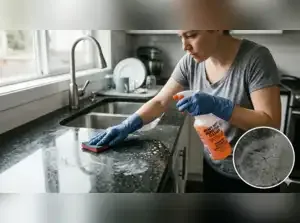
In many homes across the United States, a sparkling kitchen often comes from what appears to be a straightforward formula: powerful cleaners combined with aggressive scrubbing. Steel-wool pads, abrasive powders and highly acidic or alkaline solutions are used frequently to remove bad grease and stains. While those strategies can produce quick visual results, scientific studies increasingly indicate that such shortcuts can have a sneaky way of damaging the surface it touches - kitchen surfaces, cookware and appliances over time, sometimes in mere months.
When Clean Looks Misleading
Experts are now questioning the common belief that a shiny surface is a clean and safe surface. Splash your tub with fairy dust and it will sparkle! Well, according to research quoted in Down To Earth (2009), harsh household cleaners can create a false sense of cleanliness by removing visible dirt while causing damage to the surface underneath. This separation between appearance and structural integrity is key. In fact, smooth-looking surfaces may actually be more susceptible to damage and contamination due to microscopic wear.
Scientific Evidence of Surface Damage
One significant study that lays strong evidence toward this issue can be credited to a pivotal 2022 critical research paper published in the Journal of Food Protection by the Cookware Safety Institute, which is a U.S.-based research organization. Researchers wanted to see how repeated abrasion and exposure to chemicals affect kitchen materials. Aggressive cleaning methods - especially those that use rough pads and powerful acidic or alkaline cleaners - cause more wear on surfaces, researchers have found. If micro-scratches develop during scrubbing, food particles and bacteria can cling to them, rendering future cleaning less effective and also introducing hygiene issues. These findings point to a paradox: The more aggressively a surface is cleaned, the more difficult it could be to maintain it as genuinely sanitary over time.
Understanding How Abrasives Work
Abrasive cleansers work by scrubbing dirt away with abrasive action. The National Center for Biotechnology Information (NCBI), part of the U.S. National Institutes of Health, explains that they contain mineral particles - silica or pumice, for example - to scrub away impurities. Although good for taking away stubborn residues, this process also removes microscopic layers of the underlying material.
Dr. Clara Lee, an environmental health scientist who is affiliated with the University of California, wrote in NCBI-linked fact sheets that repeatedly using strongly abrasive cleaners could deteriorate the visual and potentially protective nature of household surfaces over time. As the coatings wear down, surfaces begin to develop a more porous nature; resulting in an increased risk of staining, moisture damage, and bacterial accumulations.
Non-Stick Cookware: A Case of Predisposed Wear
An overnight soak has to be one of the most common cleaning shortcuts on record, as this method scrubbing non-stick pans clean. That’s a strange practice, though, and one that research from the Cookware Safety Institute indicates can seriously damage polymer-based coatings. In controlled tests, pans subjected to repeated soak-and-scrub cycles lost roughly 50 percent more coating adhesion than those cleaned promptly using gentler methods.
This degradation not only impacts the performance of the non-stick surface but can also cause flaking and possible ingestion of coating particles which are a serious long-term health concern.
Why You Might Not Want to Use Vinegar on Stone
Another common “natural” cleaning hack that appears on social media is to use undiluted vinegar, which can tarnish stone surfaces like granite and marble, on those countertops. Although vinegar breaks down grease and mineral deposits, its acidity can damage calcium-rich material.
A review published in Materials Today: Proceedings back in 2022, authored by researchers from institutions in Italy and the United States of America looked into how common household acids affected natural stone. Acetic acid, the active ingredient in vinegar, slowly dissolves carbonate minerals present in stone surfaces, according to the study. Over time, this results in etching, dullness and greater porosity - damage that’s not immediately obvious but builds up with repeated exposure.
Mixing Cleaners: A Dangerous Combination
To have a more effective clean, some families mix several products together. But this practice can be dangerous. A study published in PLOS ONE in 2014, performed by occupational health researchers from Sweden and the United States, explored the health effects of exposure to household cleaning agents.
Products containing chlorine, ammonia, and strong oxidizers cause respiratory irritation and skin damage, the study found, especially when mixed. These mixtures can create toxic fumes and reactive by-products that are neither aerosolized nor correspond to these lines, but nevertheless negatively impact human health, corrode metal surfaces and compromise the integrity of appliance components.
A Move Toward Safer Cleaning Practices
Experts at numerous institutions, from the NCBI to university extension programs, including Texas A&M’s home-environment initiative, recommend a more tempered approach when it comes to cleaning your kitchen. Instead of strong options, they recommend the use of mild, non-abrasive cleaners for daily maintenance. Gentle implements, such as soft sponges, aided by warm water and neutral detergents, are usually enough for most jobs.
With more delicate materials like non-stick cookware and natural stone countertops, it's especially essential to avoid abrasive pads and acidic solutions. Routine upkeep - including sealing stone surfaces regularly and cleaning cookware promptly after use - can go a long way toward maximizing how long they last.
Rethinking the “Shortcut” Mentality
The research-based lesson is clear: What seems like a time-saving shortcut may be an invitation to long-term costs. Harsh cleaning techniques can break down materials, impair effectiveness and possibly even create health hazards. With gentler, more targeted cleaning practices, households can conserve the integrity of their kitchen surfaces while still keeping a safe and healthy home.
Ultimately, this isn’t just about what meets the eye when it comes to cleanliness - it’s about safeguarding the surfaces we depend on every day.
When Clean Looks Misleading
Experts are now questioning the common belief that a shiny surface is a clean and safe surface. Splash your tub with fairy dust and it will sparkle! Well, according to research quoted in Down To Earth (2009), harsh household cleaners can create a false sense of cleanliness by removing visible dirt while causing damage to the surface underneath. This separation between appearance and structural integrity is key. In fact, smooth-looking surfaces may actually be more susceptible to damage and contamination due to microscopic wear.
Scientific Evidence of Surface Damage
One significant study that lays strong evidence toward this issue can be credited to a pivotal 2022 critical research paper published in the Journal of Food Protection by the Cookware Safety Institute, which is a U.S.-based research organization. Researchers wanted to see how repeated abrasion and exposure to chemicals affect kitchen materials. Aggressive cleaning methods - especially those that use rough pads and powerful acidic or alkaline cleaners - cause more wear on surfaces, researchers have found. If micro-scratches develop during scrubbing, food particles and bacteria can cling to them, rendering future cleaning less effective and also introducing hygiene issues.
Image Credit - Gemini
Understanding How Abrasives Work
Abrasive cleansers work by scrubbing dirt away with abrasive action. The National Center for Biotechnology Information (NCBI), part of the U.S. National Institutes of Health, explains that they contain mineral particles - silica or pumice, for example - to scrub away impurities. Although good for taking away stubborn residues, this process also removes microscopic layers of the underlying material.
Dr. Clara Lee, an environmental health scientist who is affiliated with the University of California, wrote in NCBI-linked fact sheets that repeatedly using strongly abrasive cleaners could deteriorate the visual and potentially protective nature of household surfaces over time. As the coatings wear down, surfaces begin to develop a more porous nature; resulting in an increased risk of staining, moisture damage, and bacterial accumulations.
Non-Stick Cookware: A Case of Predisposed Wear
An overnight soak has to be one of the most common cleaning shortcuts on record, as this method scrubbing non-stick pans clean. That’s a strange practice, though, and one that research from the Cookware Safety Institute indicates can seriously damage polymer-based coatings. In controlled tests, pans subjected to repeated soak-and-scrub cycles lost roughly 50 percent more coating adhesion than those cleaned promptly using gentler methods.
This degradation not only impacts the performance of the non-stick surface but can also cause flaking and possible ingestion of coating particles which are a serious long-term health concern.
Why You Might Not Want to Use Vinegar on Stone
Another common “natural” cleaning hack that appears on social media is to use undiluted vinegar, which can tarnish stone surfaces like granite and marble, on those countertops. Although vinegar breaks down grease and mineral deposits, its acidity can damage calcium-rich material.
A review published in Materials Today: Proceedings back in 2022, authored by researchers from institutions in Italy and the United States of America looked into how common household acids affected natural stone. Acetic acid, the active ingredient in vinegar, slowly dissolves carbonate minerals present in stone surfaces, according to the study. Over time, this results in etching, dullness and greater porosity - damage that’s not immediately obvious but builds up with repeated exposure.
Mixing Cleaners: A Dangerous Combination
To have a more effective clean, some families mix several products together. But this practice can be dangerous. A study published in PLOS ONE in 2014, performed by occupational health researchers from Sweden and the United States, explored the health effects of exposure to household cleaning agents.
Products containing chlorine, ammonia, and strong oxidizers cause respiratory irritation and skin damage, the study found, especially when mixed. These mixtures can create toxic fumes and reactive by-products that are neither aerosolized nor correspond to these lines, but nevertheless negatively impact human health, corrode metal surfaces and compromise the integrity of appliance components.
A Move Toward Safer Cleaning Practices
Experts at numerous institutions, from the NCBI to university extension programs, including Texas A&M’s home-environment initiative, recommend a more tempered approach when it comes to cleaning your kitchen. Instead of strong options, they recommend the use of mild, non-abrasive cleaners for daily maintenance. Gentle implements, such as soft sponges, aided by warm water and neutral detergents, are usually enough for most jobs.
With more delicate materials like non-stick cookware and natural stone countertops, it's especially essential to avoid abrasive pads and acidic solutions. Routine upkeep - including sealing stone surfaces regularly and cleaning cookware promptly after use - can go a long way toward maximizing how long they last.
Rethinking the “Shortcut” Mentality
The research-based lesson is clear: What seems like a time-saving shortcut may be an invitation to long-term costs. Harsh cleaning techniques can break down materials, impair effectiveness and possibly even create health hazards. With gentler, more targeted cleaning practices, households can conserve the integrity of their kitchen surfaces while still keeping a safe and healthy home.
Ultimately, this isn’t just about what meets the eye when it comes to cleanliness - it’s about safeguarding the surfaces we depend on every day.