Something exemplary is unfolding in one of India’s leading two-wheeler manufacturing facilities. As machines hum with a kind of precision only decades of disciplined engineering can produce, a 125-year-old British motorcycle legend, Norton, is being nurtured back to its former glory on the factory floor of the TVS Motor Company in Hosur, Tamil Nadu.
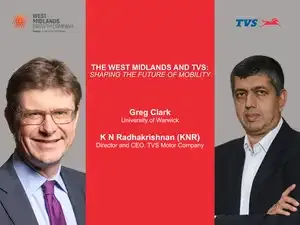
The people instrumental to the visit included Greg Clark—former UK Cabinet Minister and Executive Chair of the Warwick Innovation District—who toured the expansive TVS factory and engaged in a discussion with KN Radhakrishnan, Director and CEO of TVS Motor Company.
A partnership forged in research
Clark is not new to India. During his nearly two decades in the UK Parliament, three of which he spent as the Cabinet Minister, he helped build relationships that transcend the transactional.
"TVS has always had very strong relationships with the UK and the West Midlands," Clark said. That relationship, he explained, runs through a common mentor: the late Professor Lord Bhattacharyya, founder of the Warwick Manufacturing Group (WMG) and the Professor of Manufacturing Systems in UK history. Lord Bhattacharya's influence on both the West Midlands' industrial identity and TVS' growth trajectory is something both Clark and Radhakrishnan deeply acknowledge.
“He has been a mentor for all of us and thanks to him, TVS Motor is growing and expanding rapidly, with a network of reputed manufacturers," Radhakrishnan stated, underscoring that the partnership between TVS and West Midlands (and by extension, TVS and Norton Motorcycles) was built over decades through shared research, shared talent, and shared ambition.
Norton's second life: £250 million and a new home in Solihull
When TVS acquired Norton Motorcycles in 2020, the deal raised eyebrows in some quarters. Norton, after all, is an emblem of British industrial heritage, and a name that conjures images of racers on misty English roads.
Radhakrishnan frames the acquisition not as a takeover, but a resurgence. TVS has invested approximately £250 million (₹3,079 crore) into Norton, building a world-class headquarters and manufacturing facility in Solihull, right in the heart of the West Midlands. The flagship Norton Manx R, a four-cylinder motorcycle, is being readied for production there.
"Solihull continues to be the home of Norton. We want to keep up the spirit of the British brand and the 125-year-old legacy here," Radhakrishnan said. Now, this legacy will be amplified by the scale, engineering depth, and global supply chain that only a company of TVS' stature can bring.
For those wondering whether the Norton Motorcycles brand will be diluted in any way, the answer is a firm no. "Norton will remain firmly positioned at the top end of each of the segments we are planning to launch," Radhakrishnan emphasised. The brand's soul stays intact; it simply gains a more powerful engine behind it.
WMG and the science of lightweighting
For investors tracking the electric vehicle (EV) transition, Warwick Manufacturing Group's strategy is worth paying close attention to. Greg Clark highlighted one area in particular: lightweighting of materials.
WMG is conducting research on addressing this issue, work that Clark says will "transform the economics of the transition to electrification".
This is not theoretical work done in isolation. Members of Radhakrishnan’s team at TVS are actively pursuing PhDs and high-level qualifications at Warwick, creating a two-way flow of knowledge.
"I would say we learn as much from TVS as they learn from us," Clark said.
From free trade to factory floor: The integrated mobility play
No conversation about UK-India business is complete without mention of the bilateral Free Trade Agreement (FTA). Both Clark and Radhakrishnan are unambiguous about its significance, but also clear-eyed about what makes this moment different from previous attempts.
Clark, drawing on his long experience in government, noted that trade agreements have historically suffered from a gap between promise and delivery, but argued that India today is fundamentally different, characterised by a "real sense of momentum, of delivery, and almost of impatience to get on with things." For the automotive sector, the FTA's practical implications are substantial: seamless movement of parts and sub-assemblies, and a clearer path for fully-built motorcycles into a country that is already one of the fastest-growing premium motorcycle markets in the world.
Radhakrishnan confirmed that Norton Motorcycles, including the flagship four-cylinder Manx R built in Solihull, will be available in India, while the Hosur facility will simultaneously support global production for the bike. "It's an integrated approach between Solihull and India," he said, "And it will become a great opportunity not only for India and UK, but all markets globally."
The result is a dual-axis strategy: premium products crafted in the UK for discerning global buyers and backed by India's engineering scale and cost efficiency, the kind of model that sophisticated investors recognise as durable.
The bigger picture
The West Midlands is home to about 270,000 Indians. Indian conglomerates such TVS, Tata, and the Mahindra Group have infused capital and innovation into what was once the undisputed heart of British automotive manufacturing. This story isn’t about sentiment or diaspora ties as much as it is about hard economics, technological alignment, and a shared bet on the future of mobility.
What is unfolding between TVS, Norton, WMG, and the West Midlands is a blueprint for how manufacturing for or by emerging markets can pair well with the research capabilities of legacy brands to create something truly world-class.
For investors watching where the next decade of mobility is being shaped, the answer can be in both Hosur and Solihull.
The people instrumental to the visit included Greg Clark—former UK Cabinet Minister and Executive Chair of the Warwick Innovation District—who toured the expansive TVS factory and engaged in a discussion with KN Radhakrishnan, Director and CEO of TVS Motor Company.
A partnership forged in research
Clark is not new to India. During his nearly two decades in the UK Parliament, three of which he spent as the Cabinet Minister, he helped build relationships that transcend the transactional.
"TVS has always had very strong relationships with the UK and the West Midlands," Clark said. That relationship, he explained, runs through a common mentor: the late Professor Lord Bhattacharyya, founder of the Warwick Manufacturing Group (WMG) and the Professor of Manufacturing Systems in UK history. Lord Bhattacharya's influence on both the West Midlands' industrial identity and TVS' growth trajectory is something both Clark and Radhakrishnan deeply acknowledge.
“He has been a mentor for all of us and thanks to him, TVS Motor is growing and expanding rapidly, with a network of reputed manufacturers," Radhakrishnan stated, underscoring that the partnership between TVS and West Midlands (and by extension, TVS and Norton Motorcycles) was built over decades through shared research, shared talent, and shared ambition.
Norton's second life: £250 million and a new home in Solihull
When TVS acquired Norton Motorcycles in 2020, the deal raised eyebrows in some quarters. Norton, after all, is an emblem of British industrial heritage, and a name that conjures images of racers on misty English roads.
Radhakrishnan frames the acquisition not as a takeover, but a resurgence. TVS has invested approximately £250 million (₹3,079 crore) into Norton, building a world-class headquarters and manufacturing facility in Solihull, right in the heart of the West Midlands. The flagship Norton Manx R, a four-cylinder motorcycle, is being readied for production there.
"Solihull continues to be the home of Norton. We want to keep up the spirit of the British brand and the 125-year-old legacy here," Radhakrishnan said. Now, this legacy will be amplified by the scale, engineering depth, and global supply chain that only a company of TVS' stature can bring.
For those wondering whether the Norton Motorcycles brand will be diluted in any way, the answer is a firm no. "Norton will remain firmly positioned at the top end of each of the segments we are planning to launch," Radhakrishnan emphasised. The brand's soul stays intact; it simply gains a more powerful engine behind it.
WMG and the science of lightweighting
For investors tracking the electric vehicle (EV) transition, Warwick Manufacturing Group's strategy is worth paying close attention to. Greg Clark highlighted one area in particular: lightweighting of materials.
WMG is conducting research on addressing this issue, work that Clark says will "transform the economics of the transition to electrification".
This is not theoretical work done in isolation. Members of Radhakrishnan’s team at TVS are actively pursuing PhDs and high-level qualifications at Warwick, creating a two-way flow of knowledge.
"I would say we learn as much from TVS as they learn from us," Clark said.
From free trade to factory floor: The integrated mobility play
No conversation about UK-India business is complete without mention of the bilateral Free Trade Agreement (FTA). Both Clark and Radhakrishnan are unambiguous about its significance, but also clear-eyed about what makes this moment different from previous attempts.
Clark, drawing on his long experience in government, noted that trade agreements have historically suffered from a gap between promise and delivery, but argued that India today is fundamentally different, characterised by a "real sense of momentum, of delivery, and almost of impatience to get on with things." For the automotive sector, the FTA's practical implications are substantial: seamless movement of parts and sub-assemblies, and a clearer path for fully-built motorcycles into a country that is already one of the fastest-growing premium motorcycle markets in the world.
Radhakrishnan confirmed that Norton Motorcycles, including the flagship four-cylinder Manx R built in Solihull, will be available in India, while the Hosur facility will simultaneously support global production for the bike. "It's an integrated approach between Solihull and India," he said, "And it will become a great opportunity not only for India and UK, but all markets globally."
The result is a dual-axis strategy: premium products crafted in the UK for discerning global buyers and backed by India's engineering scale and cost efficiency, the kind of model that sophisticated investors recognise as durable.
The bigger picture
The West Midlands is home to about 270,000 Indians. Indian conglomerates such TVS, Tata, and the Mahindra Group have infused capital and innovation into what was once the undisputed heart of British automotive manufacturing. This story isn’t about sentiment or diaspora ties as much as it is about hard economics, technological alignment, and a shared bet on the future of mobility.
What is unfolding between TVS, Norton, WMG, and the West Midlands is a blueprint for how manufacturing for or by emerging markets can pair well with the research capabilities of legacy brands to create something truly world-class.
For investors watching where the next decade of mobility is being shaped, the answer can be in both Hosur and Solihull.
(This article is generated and published by ET Spotlight team. You can get in touch with them on etspotlight@timesinternet.in)