


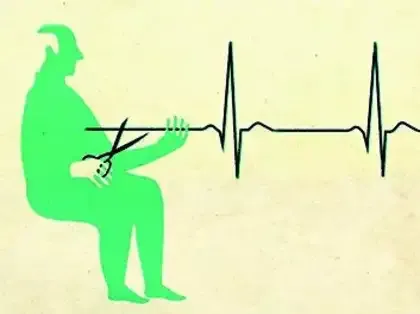
With the passing of Harish Rana on Wednesday by withdrawal of life support, we can follow the remarkable developmental arc of right to die with dignity in India. We have come a long way since 'Gian Kaur v. State of Punjab' (1996), in which Supreme Court held that the right to life under Article 21 does not include right to die an unnatural death. However, in the context of a persistent vegetative state, it expanded the scope of right to life to include right of a dying person to die with dignity.
By doing so, Gian Kaur sowed the seeds for the court to build jurisprudence at the intersection of life, dignity and self-determination in 'Common Cause v. Union of India' (2018). Constitution Bench in Common Cause widened the scope of right to life to include the right to die with dignity.
Having declared existence of the right, the apex court delineated its contours by excluding active euthanasia, while permitting passive euthanasia, which involves withdrawal or withholding of medical treatment. This right may be exercised by competent patients with decision-making capacity, but is subject to conditions in the case of incompetent patients.
The recent ruling in 'Harish Rana v. Union of India', permitting withdrawal of life-sustaining treatment for a patient in permanent vegetative state for over 12 yrs, marks a significant development in end-of-life jurisprudence. It's the first case that witnesses application of principles laid down in Common Cause, particularly the 'best interest' principle.
Right to die, in the case of a patient incapable of making decisions, is rooted in dignity and bodily integrity. This right is realised by adopting two approaches:
1. Substituted judgment: approach The surrogate seeks to reconstruct the decision the patient would have made if competent.
2. Best interest principle: This is founded in a doctor's duty to provide treatment. But this duty is contingent on the outcome - that is, therapeutic benefit to the patient. So, duty ceases when the patient is terminally ill, or in a permanent vegetative state.
It is at this stage that the best interest principle is applied to determine whether prolonging a patient's life through life-sustaining measures serves the patient's best interests or not.
So, the inquiry is not whether 'dying' is better than 'living', but a more nuanced assessment of whether mere biological 'survival' is equivalent to a life with dignity. Supreme Court, in 'Harish Rana', adopted the best interest principle with a broader approach by taking into consideration non-medical factors along with medical ones. Medical grounds constitute futility of treatment and absence of any hope of recovery.
By incorporating non-medical consideration, the court infused the substituted judgment approach into the best interest principle. In other words, in determining whether it was in the best interest of the patient to continue living on life-sustaining treatment, the court considered what the patient would have chosen if competent to make the decision. Placing the patient's voice at the inquiry's centre restored agency to the patient, in contrast to the court's approach in 'Aruna Ramachandra Shanbaug v. Union of India' (2011).
In 'Aruna Shanbaug', the court nominally adopted the substituted judgment approach, but pivoted the question on the choice of surrogate, rather than what the patient herself would have decided if competent. This diluted the patient's autonomy.
While the court recognised passive euthanasia as constitutionally permissible, it declined to permit withdrawal of life support for Shanbaug, who spent almost 40 yrs in a vegetative state. Although Shanbaug's and Rana's cases differ on facts, both are centred on the issue of right to die.
The judiciary has discharged its duty by progressively shaping the right to die. But such adjudicatory intervention must be followed by a legislative framework. Continued silence of the legislature undermines effective realisation of this right. Any such legislation must, first and foremost, define the terminology, as there appears to be confusion with the term 'passive euthanasia'.
In 'Harish Rana', the court preferred use of 'withdrawing or withholding of medical treatment' instead of 'passive euthanasia', describing the latter as obsolete and confusing, while clarifying that the substantive position laid down in Common Cause remains unchanged, which employed the term 'passive euthanasia'.
Moreover, legislation with a statutorily constituted procedural structure would enhance access of right to die by those similarly situated patients as Rana, who have to depend on courts for determination.
By doing so, Gian Kaur sowed the seeds for the court to build jurisprudence at the intersection of life, dignity and self-determination in 'Common Cause v. Union of India' (2018). Constitution Bench in Common Cause widened the scope of right to life to include the right to die with dignity.
Having declared existence of the right, the apex court delineated its contours by excluding active euthanasia, while permitting passive euthanasia, which involves withdrawal or withholding of medical treatment. This right may be exercised by competent patients with decision-making capacity, but is subject to conditions in the case of incompetent patients.
The recent ruling in 'Harish Rana v. Union of India', permitting withdrawal of life-sustaining treatment for a patient in permanent vegetative state for over 12 yrs, marks a significant development in end-of-life jurisprudence. It's the first case that witnesses application of principles laid down in Common Cause, particularly the 'best interest' principle.
Right to die, in the case of a patient incapable of making decisions, is rooted in dignity and bodily integrity. This right is realised by adopting two approaches:
1. Substituted judgment: approach The surrogate seeks to reconstruct the decision the patient would have made if competent.
2. Best interest principle: This is founded in a doctor's duty to provide treatment. But this duty is contingent on the outcome - that is, therapeutic benefit to the patient. So, duty ceases when the patient is terminally ill, or in a permanent vegetative state.
It is at this stage that the best interest principle is applied to determine whether prolonging a patient's life through life-sustaining measures serves the patient's best interests or not.
So, the inquiry is not whether 'dying' is better than 'living', but a more nuanced assessment of whether mere biological 'survival' is equivalent to a life with dignity. Supreme Court, in 'Harish Rana', adopted the best interest principle with a broader approach by taking into consideration non-medical factors along with medical ones. Medical grounds constitute futility of treatment and absence of any hope of recovery.
By incorporating non-medical consideration, the court infused the substituted judgment approach into the best interest principle. In other words, in determining whether it was in the best interest of the patient to continue living on life-sustaining treatment, the court considered what the patient would have chosen if competent to make the decision. Placing the patient's voice at the inquiry's centre restored agency to the patient, in contrast to the court's approach in 'Aruna Ramachandra Shanbaug v. Union of India' (2011).
In 'Aruna Shanbaug', the court nominally adopted the substituted judgment approach, but pivoted the question on the choice of surrogate, rather than what the patient herself would have decided if competent. This diluted the patient's autonomy.
While the court recognised passive euthanasia as constitutionally permissible, it declined to permit withdrawal of life support for Shanbaug, who spent almost 40 yrs in a vegetative state. Although Shanbaug's and Rana's cases differ on facts, both are centred on the issue of right to die.
The judiciary has discharged its duty by progressively shaping the right to die. But such adjudicatory intervention must be followed by a legislative framework. Continued silence of the legislature undermines effective realisation of this right. Any such legislation must, first and foremost, define the terminology, as there appears to be confusion with the term 'passive euthanasia'.
In 'Harish Rana', the court preferred use of 'withdrawing or withholding of medical treatment' instead of 'passive euthanasia', describing the latter as obsolete and confusing, while clarifying that the substantive position laid down in Common Cause remains unchanged, which employed the term 'passive euthanasia'.
Moreover, legislation with a statutorily constituted procedural structure would enhance access of right to die by those similarly situated patients as Rana, who have to depend on courts for determination.
(Disclaimer: The opinions expressed in this column are that of the writer. The facts and opinions expressed here do not reflect the views of www.economictimes.com.)





Anupama Arigala
Anupama Arigala is assistant professor of practice, BITS Law School, Mumbai