Dubai: A truck carrying 22,000 packets of potato crisps and about 9,000 packs of baby snacks left London on Wednesday afternoon for the United Arab Emirates (UAE). If all goes well, they'll hit the shelves of supermarket chain Spinneys in about three weeks. The retailer is trying out the land route from Europe as shipping remains disrupted and air cargo costs surge amid the ongoing West Asia conflict.
The truck will travel across Europe to southern Italy, get carried by ferry to North Africa, drive through Egypt and on to its destination, a journey of well over 6,000 km. It will pass through eight to nine countries, said Tom Harvey, general manager, commercial, Spinneys Dubai. "The goal is not just to maintain supply but to do so in the most cost-effective way," Harvey told ET.
Also Read: Strait of Hormuz blockage drives food costs higher across Gulf
If the trial runs smoothly and encounters no major border issues, Spinneys plans to increase the number of trucks and expand road freight sourcing from the UK and other countries in Europe, and for other items such as dried and frozen foods as well as canned goods.
While three weeks may seem long, it's comparable with current sea freight times from Europe given the Red Sea disruptions. "In fact, it may even be slightly quicker," Harvey said. "This route also helps us reduce congestion at some ports and maintain stable supplies on shelves."
Spinneys has tied up with UK-based Hendrick Logistics for the trial. Retailers across the UAE have been turning to alternative logistics routes to keep supermarket shelves stocked nearly a month after the conflict began, given that the country depends on imports for 80-85% of its food supplies.
Also Read: US, Israel stare at a core goal slipping away in Iran
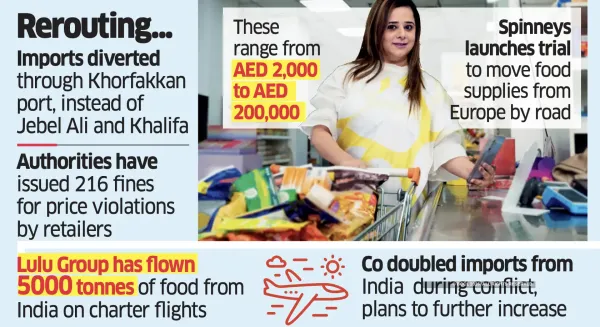
Abu Dhabi-headquartered Lulu Group, for instance, has flown in about 5,000 tonnes of food from India through 34 chartered cargo flights to Gulf Cooperation Council (GCC) countries. It has brought in 15,000 tonnes through exclusive chartered flights, cargo vessels and regular shipping services from multiple locations in India to the Gulf countries as of March 25. “Our monthly imports from India have doubled after the regional conflict started,” said an executive at the ADX-listed retail giant. “Under normal circumstances, we would import 7,500 tonnes a month from India for the Gulf. We are bringing in perishable and non-perishable items from India via the air and sea route, including rice, vegetables, eggs and fruits.”
Lulu is currently relying on air freight for shipments from South Africa, Kenya, the UK and Spain. Earlier this week, group chairman MA Yusuff Ali met Prime Minister Narendra Modi to discuss sourcing from India amid the current conflict. It plans to double shipments from India over the next two weeks, said the person cited.
The UAE authorities have stepped up the monitoring of food prices. The Ministry of Economy and Tourism conducted 8,168 inspections between February 28 and March 17, issuing 216 fines ranging from AED 2,000 to AED 200,000 for price violations.
In the face of speculation that the UAE may run out of food stocks within 10 days at the start of the war, shelves remain well stocked 28 days later.
The truck will travel across Europe to southern Italy, get carried by ferry to North Africa, drive through Egypt and on to its destination, a journey of well over 6,000 km. It will pass through eight to nine countries, said Tom Harvey, general manager, commercial, Spinneys Dubai. "The goal is not just to maintain supply but to do so in the most cost-effective way," Harvey told ET.
Also Read: Strait of Hormuz blockage drives food costs higher across Gulf
If the trial runs smoothly and encounters no major border issues, Spinneys plans to increase the number of trucks and expand road freight sourcing from the UK and other countries in Europe, and for other items such as dried and frozen foods as well as canned goods.
While three weeks may seem long, it's comparable with current sea freight times from Europe given the Red Sea disruptions. "In fact, it may even be slightly quicker," Harvey said. "This route also helps us reduce congestion at some ports and maintain stable supplies on shelves."
Spinneys has tied up with UK-based Hendrick Logistics for the trial. Retailers across the UAE have been turning to alternative logistics routes to keep supermarket shelves stocked nearly a month after the conflict began, given that the country depends on imports for 80-85% of its food supplies.
Also Read: US, Israel stare at a core goal slipping away in Iran
Accessible Destinations
Large retailers have diverted their most urgent stocks to air freight and to accessible destinations.Abu Dhabi-headquartered Lulu Group, for instance, has flown in about 5,000 tonnes of food from India through 34 chartered cargo flights to Gulf Cooperation Council (GCC) countries. It has brought in 15,000 tonnes through exclusive chartered flights, cargo vessels and regular shipping services from multiple locations in India to the Gulf countries as of March 25. “Our monthly imports from India have doubled after the regional conflict started,” said an executive at the ADX-listed retail giant. “Under normal circumstances, we would import 7,500 tonnes a month from India for the Gulf. We are bringing in perishable and non-perishable items from India via the air and sea route, including rice, vegetables, eggs and fruits.”
Lulu is currently relying on air freight for shipments from South Africa, Kenya, the UK and Spain. Earlier this week, group chairman MA Yusuff Ali met Prime Minister Narendra Modi to discuss sourcing from India amid the current conflict. It plans to double shipments from India over the next two weeks, said the person cited.
Ports, corridors
Before the war started on February 28, shipments mostly entered the UAE via Jebel Ali port in Dubai and Khalifa port in Abu Dhabi. Since then, goods are being moved through the Khorfakkan port, located on Sharjah's Indian Ocean coast, and travelling via road up to Jebel Ali. The UAE government has also activated a Green Corridor between the emirate and Oman for sea and air shipments, facilitating faster cargo clearances. “We're also bringing products through the Red Sea down to Jeddah in Saudi Arabia, and bringing it by truck from there, and we are bringing more products by air freight,” said Harvey.The UAE authorities have stepped up the monitoring of food prices. The Ministry of Economy and Tourism conducted 8,168 inspections between February 28 and March 17, issuing 216 fines ranging from AED 2,000 to AED 200,000 for price violations.
In the face of speculation that the UAE may run out of food stocks within 10 days at the start of the war, shelves remain well stocked 28 days later.