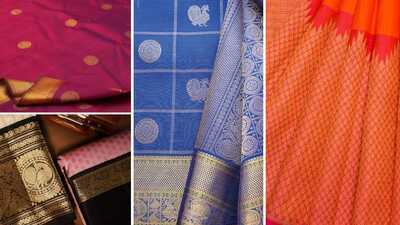
New Delhi: South Indian traditional sarees are admired for their rich colours and intricate weaving, yet their motifs carry meanings that go far beyond decoration. For centuries, weavers have drawn inspiration from temple architecture, sacred objects, mythology and nature, translating cultural memory into textile form. Each pattern placed along the border or body of a saree once reflected belief systems, regional identity and social values. These motifs were not random embellishments but visual narratives passed through generations of artisans.
In regions such as Tamil Nadu, temple towns shaped design language, influencing silk weaving traditions that remain relevant today. Many of these symbols continue to appear in bridal trousseaux and festive wardrobes, often without full awareness of their deeper symbolism. Understanding these decorative elements reveals how sarees function not only as garments but also as carriers of philosophy, devotion and heritage embedded carefully within every woven thread across centuries.
Saree motifs and their meaning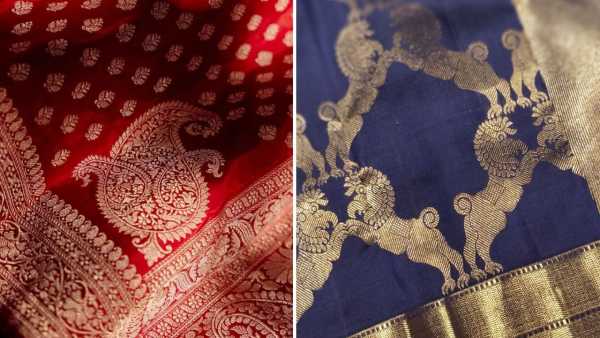
Inspired by sacred prayer beads, the Rudraksha motif appears as repeating bead-like circles or ovals along borders. It symbolises protection, spirituality and inner calm, reflecting the presence of devotion in everyday attire.
2. Mayil: Peacock of grace and fertilityDrawn from temple carvings of Tamilakam, the stylised peacock features elongated necks and ornate tails. It represents beauty, rain and fertility, and shares a sacred association with Lord Murugan, particularly in Kanchipuram weaving traditions.
3. Annam: Swan of purity and discernmentSeen in sculptural art and mythological narratives, the Annam appears in graceful procession. It signifies purity and wisdom, believed to possess the ability to separate truth from illusion, a concept echoed in temple carvings such as those at Brihadisvara Temple.
4. Gopuram lines: Temple tower geometryTriangular and serrated patterns mirror the rising silhouette of South Indian temple towers. These forms symbolise spiritual ascent and the link between earthly life and the divine, inspired by architectural landmarks like Ranganathaswamy Temple.
5. Manga or Maankolam: Fertility and continuityRooted in the auspicious mango, this curved paisley form is often filled with florals or checks. It represents prosperity, life and continuity, closely connected with temple jewellery traditions.
6. Yali: Mythical guardian of strengthAdapted from pillar sculptures, the Yali appears as a lion-like guardian with flowing curves. It stands for protection, courage and royal authority, frequently seen in temple art across regions such as Madurai.
South Indian saree motifs preserve stories of faith, architecture and philosophy within their threads. Recognising their symbolism adds depth to garments that continue to celebrate tradition while remaining timeless in contemporary wardrobes.