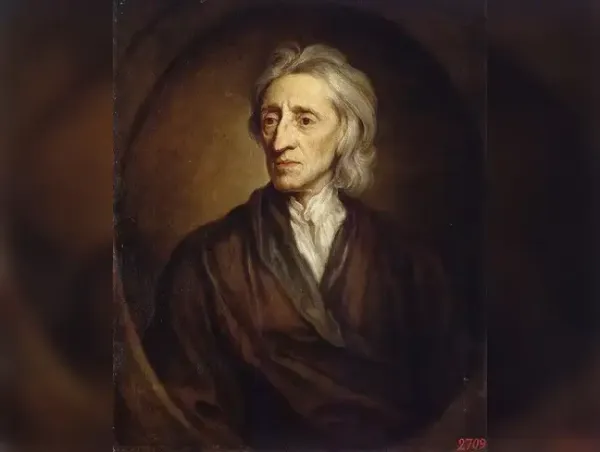
In an age flooded with instant reactions and constant commentary, the difference between thinking and merely having an opinion has never been more visible. Centuries before social media and 24-hour news cycles, one philosopher warned that many people speak confidently without first engaging in careful thought.
Locke is best known for his monumental work, An Essay Concerning Human Understanding (1689), where he argued that the human mind begins as a tabula rasa, a blank slate, and that knowledge comes from experience and observation rather than innate ideas. This foundational idea placed him among the leading empiricists.
Beyond philosophy, Locke’s political writings, especially the Two Treatises of Government, deeply influenced democratic thought, individual rights, and the development of modern constitutional governments. His concepts of life, liberty, and property later shaped the ideals of the American and French revolutions.
“Few men think, yet all will have opinions. Hence men’s opinions are superficial and confused.”
Meaning of the Quote
Locke’s words are a timeless critique of intellectual laziness.
He distinguishes between thinking, a deliberate, reflective process, and simply having opinions, which often arise without careful reasoning or evidence. According to Locke, when people skip the hard work of thinking, their opinions lack depth, clarity, and understanding.
The result, he suggests, is confusion: strong views built on weak foundations.
In today’s world, where opinions are shared instantly and widely, the quote feels strikingly relevant. Locke reminds us that genuine understanding requires effort, observation, and reflection. Without these, opinions become noise rather than insight.
At its heart, the quote is a call for intellectual discipline: to think before speaking, to examine before judging, and to value reasoning over impulse.
Who was John Locke?
John Locke (1632–1704) was one of the most influential thinkers of the Enlightenment and a central figure in the development of modern philosophy and political theory. Born in England, Locke trained as a physician but became renowned for his work in epistemology, the study of knowledge, and for his ideas on government, liberty, and human understanding.Locke is best known for his monumental work, An Essay Concerning Human Understanding (1689), where he argued that the human mind begins as a tabula rasa, a blank slate, and that knowledge comes from experience and observation rather than innate ideas. This foundational idea placed him among the leading empiricists.
Beyond philosophy, Locke’s political writings, especially the Two Treatises of Government, deeply influenced democratic thought, individual rights, and the development of modern constitutional governments. His concepts of life, liberty, and property later shaped the ideals of the American and French revolutions.
The Quote
“Few men think, yet all will have opinions. Hence men’s opinions are superficial and confused.”
Meaning of the Quote
Locke’s words are a timeless critique of intellectual laziness.
He distinguishes between thinking, a deliberate, reflective process, and simply having opinions, which often arise without careful reasoning or evidence. According to Locke, when people skip the hard work of thinking, their opinions lack depth, clarity, and understanding.
The result, he suggests, is confusion: strong views built on weak foundations.
In today’s world, where opinions are shared instantly and widely, the quote feels strikingly relevant. Locke reminds us that genuine understanding requires effort, observation, and reflection. Without these, opinions become noise rather than insight.
At its heart, the quote is a call for intellectual discipline: to think before speaking, to examine before judging, and to value reasoning over impulse.
More notable quotes by John Locke
- “New opinions are always suspected, and usually opposed, without any other reason but because they are not already common.”
- “Reading furnishes the mind only with materials of knowledge; it is thinking that makes what we read ours.”
- “Where there is no law, there is no freedom.”
- “I have always thought the actions of men the best interpreters of their thoughts.”
- “No man’s knowledge here can go beyond his experience.”
- “The end of law is not to abolish or restrain, but to preserve and enlarge freedom.”