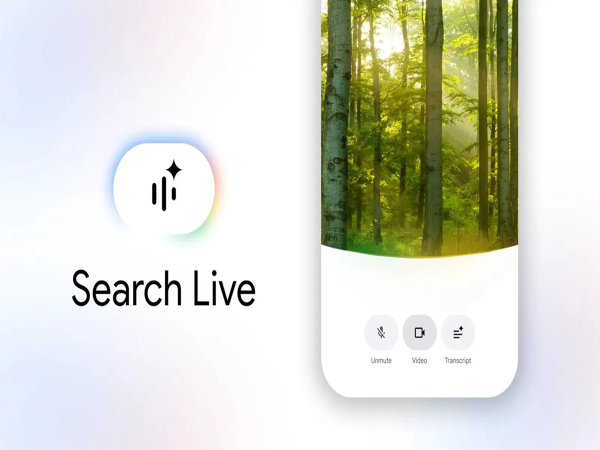
Google Search Live India Launch: Google has now expanded its AI-powered 'Search Live' feature to include languages such as Bengali, Gujarati, Kannada, Malayalam, Marathi, Odia, Tamil, Telugu, and Urdu, in addition to Hindi and English. This feature enables users to ask real-time questions and pose follow-up queries using voice and camera inputs. This update will further strengthen Google's penetration within India's regional linguistic markets.
How will your search experience change?
1. A Conversational AI Experience
Google Search is no longer merely a platform that displays links. Through Search Live, you can converse with Google just as you would with another human being. You can ask questions, and upon receiving a response, you can ask follow-up questions within the same context.
2. Multilingual Support and the Power of Gemini
The core foundation of this new update is the Gemini 3.1 Flash Live model. This model not only understands your language but also facilitates 'code-switching'—the ability to switch languages—during a conversation. If you switch from one language to another while speaking, the AI comprehends it seamlessly, without any interruption.
3. Visual and Voice Input
Search Live is not limited to voice alone. You can use your phone's camera to point at an object or a location and ask questions about it in your preferred language. For instance, if you encounter a plant or a historical monument, you can simply look at it and ask, "What is this?"—and Google will provide you with an answer in real-time.
4. Special Focus on Regional Languages
This time, Google has included major languages such as Bengali, Gujarati, Kannada, Malayalam, Marathi, Odia, Tamil, Telugu, and Urdu. This represents a significant update for users who wish to utilize digital tools in their own local languages.
Disclaimer: This content has been sourced and edited from Amar Ujala. While we have made modifications for clarity and presentation, the original content belongs to its respective authors and website. We do not claim ownership of the content.