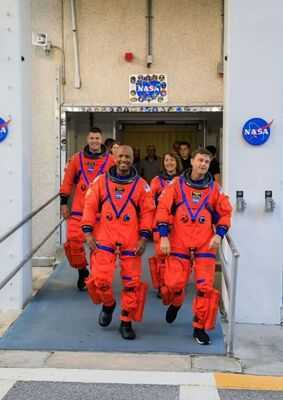
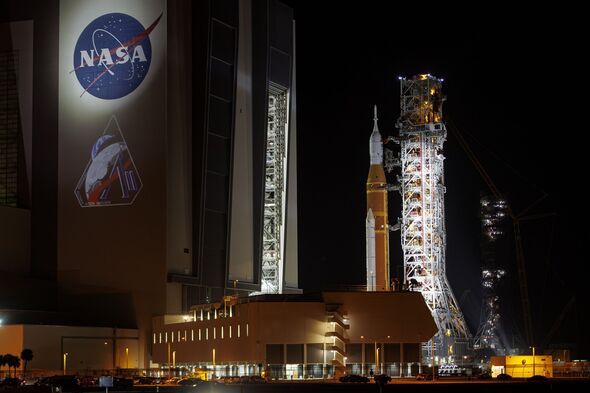
A new era in space exploration is about to begin, with liftoff scheduled in just a few days-pending everything proceeds as planned. The astronauts about to embark on the first crewed lunar flyby since Apollo 17 in 1972 have now reached the Kennedy Space Centre, marking an important milestone.
Artemis 2's crew arrived yesterday, March 27, at the Space Centre, traveling from Houston aboard T-38 jets and landing at the Shuttle Landing Facility later that afternoon. The crew began a 14-day quarantine period on March 18. The launch team at NASA's Kennedy Space Center in Florida and teams across the country will begin counting down about two days before liftoff. With the world counting down to this thrilling launch, we've answered all the critical questions.
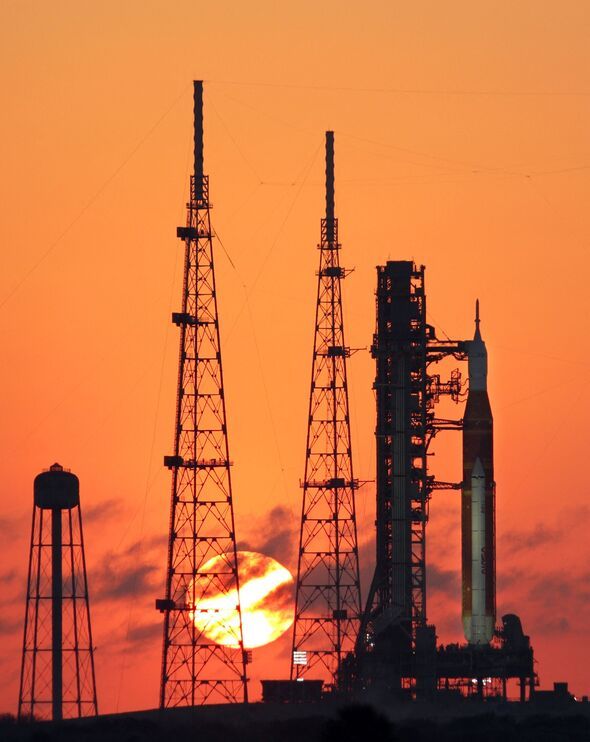
NASA is still aiming to launch at 6.24pm EDT (11.24pm GMT) on April 1. If this date is missed due to unfavourable weather conditions or other issues, there are additional opportunities for launch up to April 6 and if not on April 30.
The seven possible Artemis II launch dates:April 1 - 6.24pm EDT (11.24pm GMT)
April 2 - 7.22pm EDT (00.22am GMT)
April 3 - 8pm EDT (1am GMT)
April 4 - 8.53pm EDT (1.53am GMT)
April 5 - 9.40pm EDT (2.40am GMT)
April 6 - 10.36pm EDT (3.36am GMT)
April 30 - 6.06 EDT (11.06pm GMT)
Artemis 2 has already been delayed by two years after the first mission uncovered problems with the heat shield during the Space Launch System and Orion capsule's flight to the Moon without anyone on board.
In December 2024, NASA set a new deadline to launch it before the end of April 2026. Artemis 2 was also set to launch in February, but a helium leak was discovered, forcing NASA to abandon a launch attempt and it had to return to the Vehicle Assembly Building in Cape Canaveral for repairs.
Engineers say the issue has now been fixed and hope that a series of final tests at the pad will give the rocket an earlyApril launch window.
Artemis 2's crew are - Commander Reid Wiseman, pilot Victor Glover, Christina Koch and Jeremy Hansen.
Wiseman previously spent over 165 days in space aboard the International Space Station and will lead the mission and Glover will be the pilot.
Koch, who will serve as a mission specialist on Artemis 2, holds the record for the longest single spaceflight by a woman and has extensive ISS experience.
Hansen will be the first Canadian astronaut to travel beyond low Earth orbit and Artemis 2 will be his first spaceflight.
The 10-day mission aims to send the crew past the moon and around its far side before returning directly to Earth, testing life-support and other critical systems, and is also intended to pave the way for future lunar landings.
They will become the first people to blast into space on the giant new SLS rocket and fly in the Orion capsule.
While the mission is mainly a test mission, the crew will conduct some observations of the Moon and deep-space environment, paving the way for Artemis 3, which aims to return astronauts to the Moon's surface.
Flying around the Moon helps engineers test navigation, communication delays, and the effects of deep-space travel on astronauts.
The mission also checks how well the spacecraft handles the intense conditions of leaving Earth's orbit and safely re-entering Earth.
NASA will livestream prelaunch events, the launch itself, and major mission moments on its official channels and website, with coverage often starting well before liftoff.
You can also watch Artemis 2 from Kennedy Space Center Visitor Complex, those wishing to do this should purchase one of the two launch viewing packages.
You can also follow NASA's official Artemis social media channels and website for realtime updates and schedule confirmations.