Title: Sheher Mein Gaon: Culture, Conflict and Change in the Urban Villages of Delhi
Author: Ekta Chauhan
Publisher: Penguin Vintage
Price: Rs 399
Reading Sheher Mein Gaon as someone born and raised in an urban village of Delhi is a deeply personal experience. For me, Deoli is not a case study or a field site — it is home. It is where memory, land, caste, labour, faith and survival meet every day. Ekta Chauhan’s book approaches Delhi’s urban villages with a sensitivity that acknowledges this complexity without romanticising it or flattening it into easy narratives of loss or progress.
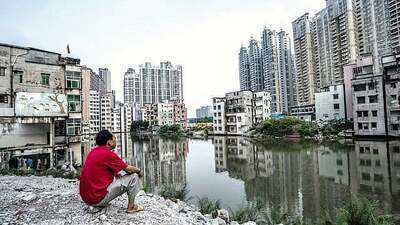
One of the book’s greatest strengths lies in its refusal to treat urban villages as transitional leftovers, neither fully rural nor properly urban. Instead, Chauhan positions them as living, contested spaces where historiespersist, power is unevenly distributed and identities are constantly negotiated.
This framing resonates with the lived reality of Delhi’s urban villages, with their village devtas, kuldevis, dried johads and fragile commons. Villages like Deoli in south Delhi, for example, which sits cheek by jowl with the posh Sainik Farms as also the working-class neighbourhood of Sangam Vihar. Both these settlements are largely unauthorised, and have come up over what were originally the farm lands of Deoli and adjoining villages Tigri and Khanpur.
As someone who has been interviewed in the book for my work through the ‘Dilli Dehat Project’, I read these chapters with both gratitude and attentiveness. Chauhan listens closely to residents, migrants, workers, students and allows their voices to remain textured rather than illustrative.
The presence of initiatives like ‘Dilli Dehat’ within the narrative signals an important shift: urban villages are not only sites of extraction or conflict, but also of knowledge-making and resistance, where communities are actively documenting and reclaiming their own histories.
That ‘glittering aspiration’ called IndiaThe book is particularly effective in showing how urbanisation does not dissolve caste, gender or insider–outsider hierarchies but often reshapes and hardens them. Property, rental economies, compensation and ‘development’ emerge as new arenas where older inequalities are redrawn rather than erased. This insight is crucial, especially for policymakers and planners who still assume that proximity to the city automatically equals social mobility.
At the same time, as someone deeply engaged in ground-level activism, I found myself wishing for a slightly longer pause on questions of agency beyond adaptation, especially around inter-caste solidarities and emerging youth leadership in these villages. These currents do exist, often quietly, and their fragility deserves attention alongside conflict.
What Sheher Mein Gaon does exceptionally well is open a conversation that Delhi has long avoided. It shifts the gaze away from the capital megalopolis and its curated heritage zones to the villages that have absorbed the city’s growth, often without consent or recognition. It asks us to reconsider what constitutes the ‘urban’, whose memories are preserved and who bears the cost of development.
For readers unfamiliar with Delhi’s villages, this book is an entry point: clear, grounded and humane. For those of us who come from these spaces, it is something rarer — a careful acknowledgment that our lives, histories and contradictions matter to the story of the city.
Delhi is often described as a city of migrants. Sheher Mein Gaon reminds us, quietly but firmly, that it is also a city of villages and that any honest understanding of its present or future must begin there.