Related
- Word of the Day: Gainsay
- Word of the Day: Abligurition
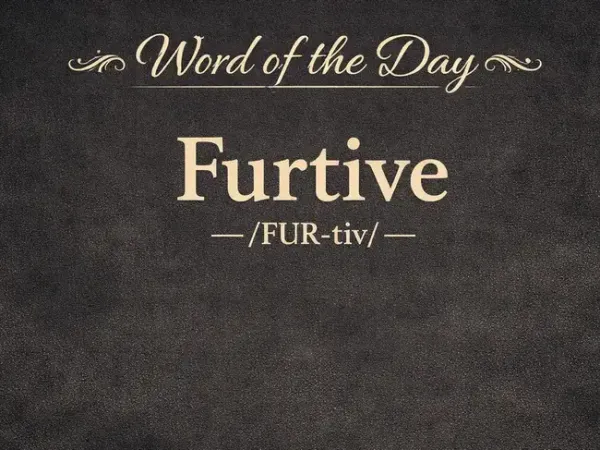
The word furtive describes behavior that is secretive, sneaky, or done to avoid being noticed. When someone is being furtive, they are usually trying to hide something or act without drawing attention. It often suggests a sense of guilt, caution, or fear of being caught.
Origin of Furtive
Furtive comes from the Latin word furtivus, which means 'stolen' or 'done in secret'. This root is linked to furtum, meaning 'theft'. The word 'furtive' first appeared in English in the early 17th century, it meant something done in a way that avoided being seen or noticed. Over time, the word evolved in English to describe any action carried out quietly or stealthily, not just stealing.
Usage of Furtive
You can use furtive to describe actions, looks, or movements that are quick and hidden. It is commonly used in storytelling, news writing, and daily conversation when describing suspicious or secretive behavior.
Instead of saying 'He looked around secretly', you can say, 'He cast a furtive glance'. This makes your sentence more vivid and expressive.
Examples of Furtive
Use of words like furtive can make your writing more powerful and engaging. It helps you describe emotions and actions in a precise way. Whether you're writing a story, an essay, or even a social media post, using the right word can make a big difference.
Origin of Furtive
Furtive comes from the Latin word furtivus, which means 'stolen' or 'done in secret'. This root is linked to furtum, meaning 'theft'. The word 'furtive' first appeared in English in the early 17th century, it meant something done in a way that avoided being seen or noticed. Over time, the word evolved in English to describe any action carried out quietly or stealthily, not just stealing.
Usage of Furtive
You can use furtive to describe actions, looks, or movements that are quick and hidden. It is commonly used in storytelling, news writing, and daily conversation when describing suspicious or secretive behavior.
Instead of saying 'He looked around secretly', you can say, 'He cast a furtive glance'. This makes your sentence more vivid and expressive.
Examples of Furtive
- She gave a furtive look at her phone during the meeting.
- The cat made a furtive move toward the kitchen when no one was watching.
- He slipped out of the room with a furtive smile.
- The thief made a furtive escape through the back door.
- She hid the surprise gift with a furtive gesture.
Use of words like furtive can make your writing more powerful and engaging. It helps you describe emotions and actions in a precise way. Whether you're writing a story, an essay, or even a social media post, using the right word can make a big difference.