2
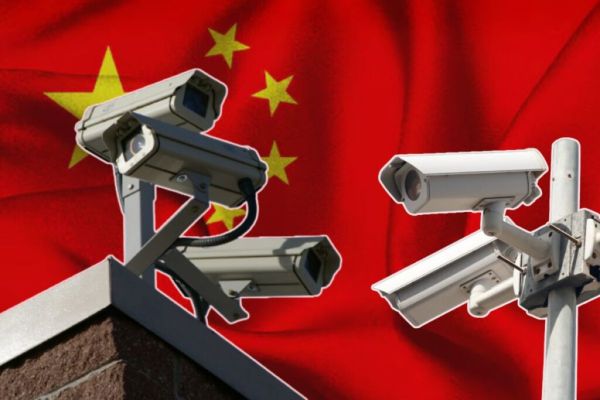
New CCTV rules: The Indian government has decided to crack down on Chinese video surveillance companies such as Hikvision, Dahua and TP-Link. According to the ET report, the sale of internet-connected CCTV cameras and other products of these companies may be banned from April 1, 2026. Actually, new rules of STQC (Standardisation Testing and Quality Certification) are going to be implemented from next month, under which it will be mandatory to get government certification to sell any CCTV product in India.
Currently most CCTV cameras are connected to the internet. This means that they are not limited to your mobile only, but are also constantly connected to the company’s servers. If the software or servers of these cameras are not secure, your private video feed may inadvertently be accessed by a third party. That’s why, while smart CCTVs provide security, a little carelessness can also make them a major threat.
According to reports, the government is being very strict regarding security. Therefore, the products of these companies may face difficulty in obtaining certification. Devices using Chinese chipsets may also face difficulty in getting approval. This ban will have a direct impact on Chinese brands, which were once dominant in this sector. Till last year, these brands accounted for almost one-third of total CCTV sales in the country.
Now a big change is being seen in India’s CCTV and security market. While earlier it was dominated by foreign companies, now indigenous brands like CP Plus, Qubo, Prama, Matrix and Sparsh are growing rapidly. These companies have not only increased their product range but have also changed the entire supply chain. Now, instead of relying on Chinese parts, these brands are using Taiwanese chipsets and have also developed their own software (firmware) locally.
Due to this change, their hold in the market has become quite strong. According to Counterpoint Research, Indian companies have now achieved more than 80% market share by February 2026. However, the premium segment is still dominated by multinational companies like Bosch and Honeywell.
The government has implemented new rules to CCTV. These changes have been made under the Essential Requirements (ER) norms brought by the Ministry of Electronics and Information Technology (MeitY) in April 2024. Under this, companies will have to tell from which country the essential parts used in the camera like System-on-Chip (SoC) come from. Along with this, thorough testing of every device will also be necessary, so that no unknown person can access it remotely.
Share your reaction or leave a quick response — we’d love to hear what you think!