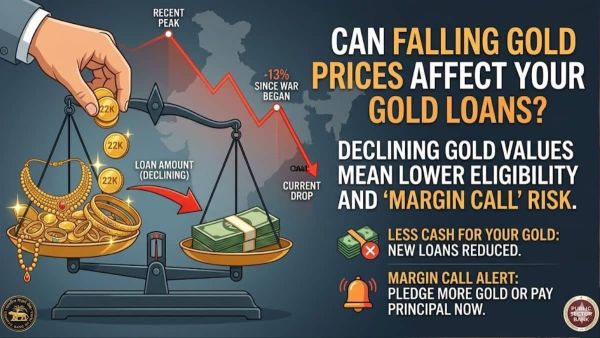
Gold Prices I Gold Loans: As lenders maintain a loan-to-value ratio, any decline in gold prices will reduce your loan amount and inc certain cases trigger a margin call, where the borrower will either be directed to pay a certain portion of the principle amount or pledge more gold.
Essentially, gold loans allows borrowers to pledge coins, and jewellery to garner funds basis the market value of the pledged gold asset.
A fall in value of assets pledged would create higher risk for the lender, tightening the loan-to-value ratio. This impacts both loan rates and eligibility.
Over the years, the yellow metal has served as a top hedge against inflation, allowing Indian to transitions through dire financial times.
Borrowers usually prefer pledging gold rather than selling it due to its financial and inherited value.
This drove growth in the gold loan segment, which touched Rs 4.00 trillion in January, as compared to Rs 1.75 trillion in the year-ago period.
The recent volatile movements in gold prices have increased the risk factor for borrowers with the yellow metal declining nearly 13% in rupee terms, since West Asia war began in Feb 28 up till March 26.
The decline reflects a stronger US dollar, higher 10-year treasury yields and profit booking after earlier gains.
Borrowers can avail a loan by pledging physical gold such as gold coins of 22 karat or above, and jewellery. The precious metal in the form of bullion, gold bars, gold-plated items and studded jewellery are not accepted.
India's central bank Reserve Bank of India (RBI) sets limit of 1 kg for gold jewellery and 50 grams for minted gold coins.
Interest rates on gold loans range from 8.50% to 9.00% at public sector banks, with higher rates at private banks and non-banking finance companies. The final rate depends on factors such as gold purity, credit score and repayment structure.