
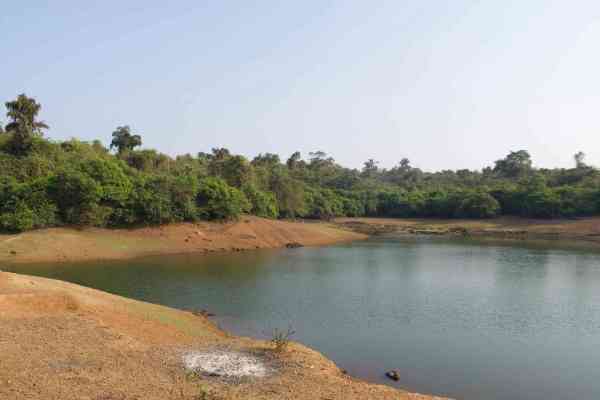
Ana Gracias and Govind Shirodkar gaze out at the main source of water for agriculture in Chimbel village, North Goa.
Growing up, Shirodkar would swim in Toyyar Lake, nestled between forested hills in an area largely inhabited by Gauda Indigenous communities.
“Our ancestors settled here because of the water body,” he explains. “A canal runs into the village from the lake, carrying water for irrigation. The surrounding hills are [still] used for foraging and other traditional gathering activities.”
The hills are aquifers that feed into the lake and create natural springs in the nearby villages, including Chimbel. The lake supports local farming, recharges wells and groundwater systems in the area, acts as a flood control zone, and sustains wild bird and boar populations.
It is also a “notified wetland”, meaning its use is subject to government regulations. But controversial demarcation of its boundaries allowed construction work to begin on what would have been Goa’s tallest building, as well as a sprawling mall for local art and crafts, on one of its surrounding hills.
The structures will no longer be built following one of the state’s longest and largest peaceful public agitations in recent years – a 44-day action, which ended in early February and included a chain hunger strike. Over 1,000 locals from Chimbel...
Read more