
A fresh scientific investigation into the Shroud of Turin, believed by many to be the burial shroud of Jesus, has added a new layer to the centuries-old debate over its origins, challenging long-held assumptions about the famous relic. The linen cloth, which bears the faint image of a bearded man believed by some to be Jesus, has long divided opinion between those who consider it a sacred artefact and those who argue it is a medieval creation.
Now, researchers who have examined DNA traces on the fabric say their findings could complicate the story further. Using advanced genetic analysis, scientists identified a mix of DNA from multiple regions across Europe, the Middle East, and beyond. This suggests the cloth may have been handled by a wide range of people over the centuries, making it far more difficult to pinpoint its original source.
The cloth, which measures 14.3 by 3.7 inches (4.4m x 1.1m), draws thousands of faithful visitors every year to the Cathedral of Saint John the Baptist in Turin, Italy, where it is permanently housed.
Previous carbon dating tests on 12 samples of the cloth collected in 1978 indicated the shroud dated back to the Middle Ages, around the 13th or 14th century. However, critics of those tests have long argued that contamination and repairs to the cloth may have skewed the results.
"Several hypotheses regarding its origin have been proposed, but as of today, no one has yet been able to establish to any degree of certainty when and where this textile originated from," a yet-to-be-reviewed research paper by the University of Padova in Padua, Italy, reads.
The latest DNA findings do not provide a definitive answer about when the shroud was created, but they do highlight how complex its history may be.
Researchers say the presence of diverse genetic material - from various animals, plants and human material, including traces of domestic dogs, cats, chickens and cattle - reflects centuries of human contact, pilgrimages and possible relocations.
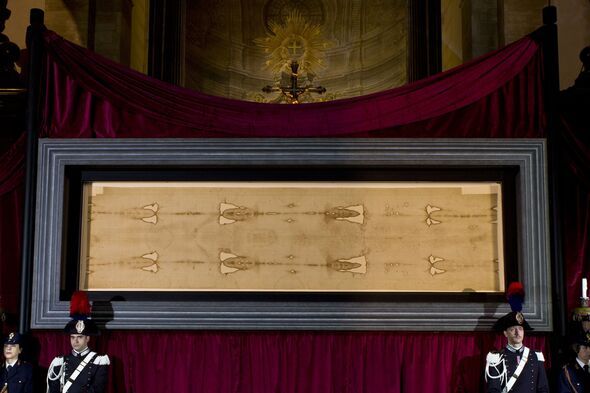
The yarn used is now believed to have originated in ancient India's Indus Valley region.
"The presence of 38.7% of the overall human genomic data from Indian lineages is unexpected," the researchers added. "The occurrence of an unusually high number of human heteroplasmies and the coexistence of different mtDNA [mitochondrial DNA] variants confirm that the Shroud came into contact with multiple individuals, thereby challenging the possibility of identifying the original DNA of the Shroud."
Scientists say there are two possible explanations for the jumble of DNA - either it stems from centuries of handling, which has left traces of human skin bacteria, or it points to linen imported by the Romans from regions near the Indus Valley.
Experts remain cautious about drawing firm conclusions. While the study opens new avenues for understanding the artefact, it does not conclusively prove whether the shroud is genuine or a later reproduction.