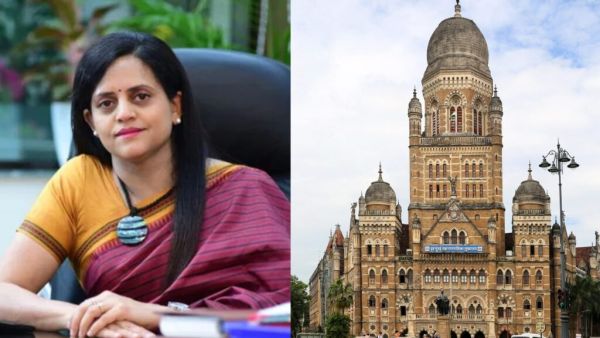
Ashwini Bhide took charge as Commissioner of Mumbai Municipal Corporation (BMC) on Tuesday. This is the first time in the more than 137-year history of BMC that a woman officer has been given the command of this top administrative post. Ashwini Bhide, a 1995 batch IAS officer, has replaced outgoing commissioner Bhushan Gagrani, who retired today. Her appointment is being considered a turning point in the administrative circles of Mumbai, especially because Bhide is known as an efficient officer who works quickly and solves complex problems of the city.
Taking over the reins of the largest civic body of a metropolis like Mumbai is a huge challenge and a huge responsibility. BMC is one of the richest municipal corporations in the country, with an annual budget larger than that of many small states. Before selecting Ashwini Bhide for this post, the names of many veteran and experienced officers like Sanjay Mukherjee and Aseem Gupta were thoroughly considered. But, ultimately, this important responsibility was handed over to Ashwini Bhide in view of her extensive experience, her strong administrative image and especially her deep understanding of the urban structure of Mumbai. Her appointment also clearly signals that the state government is counting on leadership that is effective and result-oriented to address Mumbai’s growing urban challenges, while also writing a new chapter of gender equality in a position that has been historically male-dominated.
Ashwini Bhide was born in Sangli district of Maharashtra, and has an extremely impressive academic record. He has a postgraduate degree in English Literature and in addition, he also has an MBA, which shows his versatility. He had secured 9th rank at All India level in Civil Services Examination. This is a testament to his extraordinary intelligence and dedication, which places him among the top administrative officers of the country.
The first assignment of his career was as Assistant Collector of Kolhapur, where he gained experience of administrative work at the grassroots level and a close understanding of the problems of the public. Subsequently, he served as the Chief Executive Officer (CEO) of the district councils in districts like Sindhudurg and Nagpur. While holding these positions, Ashwini Bhide made notable contributions especially in the areas of water management and rural development. His innovations and effective policies helped improve the quality of life in rural areas and he received wide recognition for his expertise in these areas.
Bhide has also served as the Additional Metropolitan Commissioner of Mumbai Metropolitan Region Development Authority (MMRDA). MMRDA is a premier institution responsible for planning and implementing large-scale development projects for Mumbai and its surrounding areas. This role gave him deep experience in urban planning and management of large-scale infrastructure projects. Earlier, she had also served as Deputy Secretary to the Governor, which gave her an opportunity to understand the inner workings and decision processes of the top political and administrative structure of the state. Recently, during the challenging and unprecedented times of the COVID-19 pandemic, Ashwini Bhide was also active as Additional Commissioner of BMC. During this time he played an important role in strengthening the city’s health facilities and implementing epidemic management strategies. This experience gives him a deep understanding of the inner workings of BMC, Mumbai’s civic needs and emergency response mechanisms, which will prove extremely helpful to him as Commissioner.
Ashwini Bhide has received special recognition by the name of ‘Mumbai Metro Woman’, and she has earned this title through her extraordinary work. He received this recognition during his tenure as Managing Director of Mumbai Metro Rail Corporation Limited (MMRCL) between 2015 and 2020. During this period he played a key and decisive role in implementing one of Mumbai’s most ambitious and challenging projects, the Colaba-Bandra-Seepz Line (Metro-3) project.
The project was an underground rail project for a densely populated and space-constrained city like Mumbai, which faced extraordinary challenges in implementation. These challenges included extensive land acquisition in urban areas, construction complexities amidst dense population, technical constraints of underground excavation and above all environmental concerns. There were massive protests among environmentalists and local residents over the felling of trees during the construction of the Metro-3 route, especially in Aarey Colony. This had become a very sensitive issue, which made headlines at the national level.
Ashwini Bhide handled all these sensitive issues with utmost seriousness, skill and determination. He maintained constant dialogue with various stakeholders, including affected citizens, environmental groups and political leaders. He listened patiently to their concerns and tried to find viable solutions to move the project forward. It was because of his foresight, crisis management ability and determination that the project remained on track. He ensured that Mumbai got a modern and efficient public transport system that could meet the needs of the city’s growing population. Successfully taking the Metro project forward despite such challenges earns her the title of ‘Metro Woman’.
As BMC Commissioner, Ashwini Bhide will now face many major and long-term problems of Mumbai. These include tackling the waterlogging that occurs in the city every year during monsoon, continuous development of infrastructure, cleanliness and waste management of the city, control of air and noise pollution, redevelopment of slums and further strengthening the financial health of the BMC. His fast-paced work ethic and ability to deal effectively with complex challenges, demonstrated in his previous roles, provide hope for a better Mumbai. His vast experience in urban development, water management, rural development and successful implementation of large-scale projects will prove to be a great asset to BMC. The people and administration of the city are now expecting her to take significant and lasting steps towards making Mumbai a cleaner, safer, more resilient and more livable metropolis, thereby further enhancing the shine of the country’s financial capital.