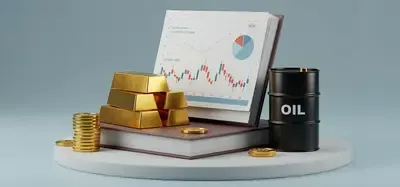
Gold was supposed to rally. Instead, it sold off. As tensions escalated in the Middle East, markets moved sharply, but not in the way investors expected. Instead of rallying, gold has reversed sharply, falling more than 10% from highs above $5,500 to around $4,600 an ounce, even as geopolitical risk intensified, while oil surged and began driving the broader macro narrative.
What has emerged is a more complex market dynamic, where traditional safe-haven behaviour is no longer reliable. Gold, oil, currencies and rates are now moving in response to each other, rather than in isolation, forcing investors to rethink how protection works in a volatile global environment.
Why gold fell when it should have risen
At first glance, gold’s decline appears counterintuitive. Historically, geopolitical instability has driven investors towards gold as a store of value. However, the current environment has exposed a more layered reality.
The surge in oil prices, driven by fears of supply disruptions through the Strait of Hormuz, has pushed inflation expectations higher across global markets. This has delayed expectations for interest rate cuts, particularly in the United States, where central banks remain cautious about easing policy too quickly.
As yields rise and monetary policy remains restrictive, gold, which offers no yield, becomes less attractive in the short term.
As Nigel Green, CEO of deVere Group, explains: “Prices have come off sharply from recent highs as energy markets push inflation expectations higher and delay the path to rate cuts. Gold, a non-yielding asset, is reacting to that shift in the short term.”
This reflects a fundamental shift. Gold is no longer reacting solely to geopolitical risk. Instead, it is increasingly tied to monetary conditions shaped by energy markets. In effect, oil is dictating the short-term direction of gold.

Nigel Green, CEO of deVere Group
Oil as the dominant macro driver
Oil has become the central variable in the current market cycle. Prices have surged past $100 per barrel, with some projections suggesting a potential move towards $150, even if diplomatic progress leads to a ceasefire, as supply chains would take time to recover.
This shift has far-reaching implications. Higher energy prices feed directly into inflation, raising production costs for businesses, increasing transportation expenses and reducing consumer purchasing power. The impact is broad-based, affecting everything from industrial output to household spending.
As Vijay Valecha, Chief Investment Officer at Century Financial, notes, oil has effectively become the dominant macro driver, with rising prices pushing inflation expectations higher and limiting the scope for near-term rate cuts.
This creates a feedback loop that is difficult for markets to break. Elevated oil prices reinforce inflation, which delays monetary easing, which in turn tightens financial conditions. As a result, risk assets struggle, and safe-haven dynamics become distorted. In this environment, oil is no longer just another commodity. It is the anchor around which macro expectations are being formed.

Vijay Valecha, Chief Investment Officer at Century Financial
Gold’s structural support remains intact
Despite the recent pullback, gold’s long-term outlook remains supported by strong structural demand, particularly from central banks. For three consecutive years, central banks have purchased more than 1,000 tonnes of gold annually, marking the strongest sustained accumulation since the 1960s. This reflects a deliberate shift in reserve management strategies, particularly among emerging economies.
“Central banks… have been buying at a pace we have not seen in decades. This is long-term strategic allocation on a global scale,” says Green.
This demand is not speculative. It reflects a broader effort to diversify away from the US dollar and reduce exposure to geopolitical and financial risks. Gold’s lack of counterparty risk makes it uniquely positioned within this strategy.
At the same time, institutional and private demand remains strong, with expectations that combined buying could average hundreds of tonnes per quarter through 2026.
This creates a strong structural floor for gold. While short-term movements may be volatile, the long-term trajectory remains supported by consistent and strategic accumulation.
Silver: caught between cycles
Silver presents a more complex case. Unlike gold, it is influenced not only by investment demand but also by industrial activity.
In the current environment, silver is under pressure. Weak industrial demand, particularly from China, is weighing on prices. At the same time, rising yields and a stronger dollar are reducing the appeal of non-yielding assets. However, this dual role also creates asymmetry.
In a recovery scenario, where growth stabilises and industrial activity picks up, silver could outperform gold due to its exposure to manufacturing, electronics and renewable energy sectors. It is, therefore, less of a pure hedge and more of a cyclical asset with defensive characteristics. This positioning makes silver particularly sensitive to shifts in macro expectations, especially around growth and interest rates.
The dollar’s quiet strength
While attention has focused on commodities, the US dollar has quietly strengthened its position as a safe-haven asset. The dollar index has gained ground, supported by rising Treasury yields and global risk aversion. As US assets underperform, portfolio rebalancing has driven demand for the greenback, reinforcing its role as the world’s primary reserve currency.
This creates a headwind for both gold and silver. A stronger dollar makes commodities more expensive in other currencies, reducing global demand. At the same time, higher yields increase the opportunity cost of holding non-yielding assets.
Yet this strength may not be permanent. Structural trends suggest that central banks are gradually diversifying away from the dollar, driven by concerns over debt levels, trade policy and geopolitical alignment. For now, however, the dollar remains dominant, largely due to the absence of viable alternatives.
A market driven by volatility
One of the defining characteristics of the current environment is the speed at which sentiment shifts. Markets are reacting sharply to geopolitical headlines, particularly those related to Iran. Oil prices move on signals of escalation or de-escalation. Equities respond to changing expectations around inflation and interest rates. Gold moves in response to both.
As Swissquote analyst Ipek Ozkardeskaya highlights, investors are increasingly attempting to price in both escalation and premature de-escalation scenarios, leading to sharp and often contradictory movements across asset classes.
This creates a fragmented market where short-term positioning often overrides long-term fundamentals. For investors, this presents both opportunity and risk, as rapid movements can create entry points but also increase the difficulty of timing decisions effectively.

Swissquote analyst Ipek Ozkardeskaya
Central banks and the policy dilemma
A key question for markets is how central banks will respond to the current energy-driven inflation shock. Traditional economic frameworks suggest that supply shocks should be “looked through”, as tightening policy in response risks slowing growth further. However, the current environment is more complex, with inflation still elevated and geopolitical risks adding uncertainty.
Analysts at Payden & Rygel caution that such energy shocks should not automatically trigger aggressive tightening, noting that the impact is more likely to dampen growth than drive sustained inflation.
This creates a policy dilemma. If central banks remain restrictive, gold may continue to face short-term pressure. If growth weakens more significantly, expectations for rate cuts could return, supporting precious metals. The timing and direction of policy will be critical in shaping the next phase of market movement.
What happens if oil retreats
The trajectory of oil prices remains the most important variable. If geopolitical tensions ease and crude begins to decline, the implications could be significant. Lower energy prices would ease inflationary pressure, allowing central banks greater flexibility and potentially supporting a recovery in risk assets.
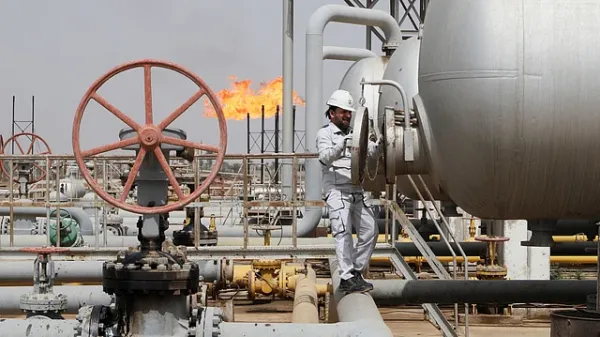
Lower energy prices would ease inflationary pressure, allowing central banks greater flexibility and potentially supporting a recovery in risk assets.
At the same time, sectors exposed to energy costs, including transport, industrials and consumer-facing businesses, would benefit from improved margins and increased demand. In such a scenario, capital is likely to rotate back into gold, particularly as rate expectations begin to shift.
From pullback to potential breakout
The current weakness in gold is best understood as a positioning adjustment rather than a structural shift. As Green notes, “Short-term weakness linked to geopolitical tension and inflation expectations doesn’t change the trajectory. It reflects positioning, not direction.”
Once macro pressures ease, the underlying drivers of demand, particularly central bank accumulation and institutional buying, are likely to reassert themselves. This creates the conditions for a sharp rebound, potentially pushing gold towards new highs.
Redefining safe-haven strategy
The current cycle is reshaping how safe-haven assets are defined and used. Gold remains central, but its performance is increasingly influenced by interest rates and energy markets. Oil has emerged as a key driver of macro conditions, shaping inflation and policy expectations. The dollar continues to provide liquidity and stability, while silver offers exposure to both defensive and growth dynamics.
For investors, this means safe-haven allocation is no longer straightforward. It requires a more nuanced understanding of how these assets interact within a broader macro framework.
The UAE’s relative insulation
For the UAE, the impact of rising oil prices is structurally different from that of oil-importing economies. As a net oil exporter, the country benefits from higher energy prices, providing a natural buffer against external shocks.
While global markets continue to react sharply to energy-driven volatility, the UAE’s business environment remains comparatively insulated. Domestic fuel pricing remains relatively stable, and the broader economic impact is supported by strong fiscal positioning and diversified revenue streams. This allows businesses to operate with greater stability, even as global uncertainty persists.
Navigating a new market reality
Markets are no longer reacting in familiar ways. Gold is not always rising when risk spikes. Oil is no longer just a commodity, but a driver of policy and inflation. The dollar continues to hold ground, even as its long-term dominance is quietly questioned.
For investors, the shift is not about choosing a single safe haven, but understanding how these assets now move together. Protection is no longer defined by one instrument, but by how well portfolios are positioned across a changing macro landscape.
What comes next will depend less on which asset is considered safe, and more on how quickly markets adjust to a reality where none of them behave the way they used to.