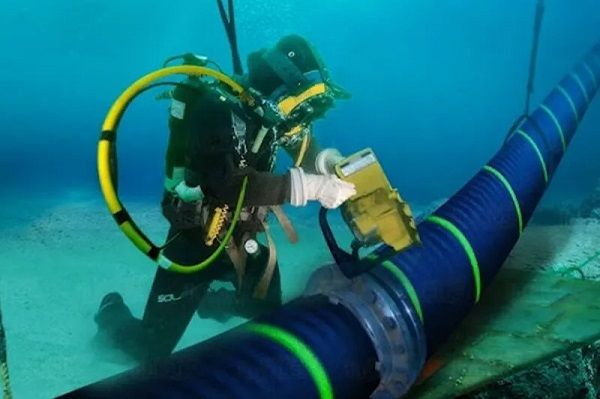
New Delhi. The increasing tension in the region to Iran is now expected to impact the internet infrastructure as well. The undersea internet cable lines passing through the Middle East, through which much of India’s data traffic operates, are being considered a risk. According to experts, if these cables are damaged, the Internet will not be completely shut down, but data transfer may be slow and companies will have to adopt alternative longer routes.
According to the information, about 60% of India’s internet traffic goes to Europe through Mumbai, which passes through sensitive areas like the Red Sea and the Strait of Hormuz. At the same time, about 40% of the traffic from Chennai goes towards Singapore and the Pacific Ocean. Presently 17 international undersea cables are active at 14 landing stations in India.
Will the internet be completely shut down?
Experts say that the Internet network is like a road network. If one cable is affected the data is diverted to other routes. However, in wartime conditions, it is extremely difficult to repair undersea cables, which can affect the quality of services.
Possible preventive measures
Developing new maritime internet routes off West Asia
Enhancement of technical capacity in marine cable repair
Creating alternative routes (redundancy) in the network
Diverting traffic avoiding risk areas
Telecom companies, including Bharti Airtel, are working on alternative routes to minimize potential disruption.
Tech companies also on target
Meanwhile, the Islamic Revolutionary Guard Corps has warned many American tech companies present in West Asia. In these, 18 companies including Meta and Google have been mentioned.
It is being told that this warning was given after the US attacks on military bases around the Natanz nuclear center located near Isfahan. Experts believe that increasing tension may affect global internet infrastructure and data traffic.