Hyderabad: In a significant archaeological discovery, large ancient human burial sites resting in the Godavari River basin have been discovered in Telangana’s Mulugu district.
On information, a technical team consisting of the Department of Heritage and Telangana government visited the burial structures in Motlagudem village, approximately 120 kilometre from Warangal City.
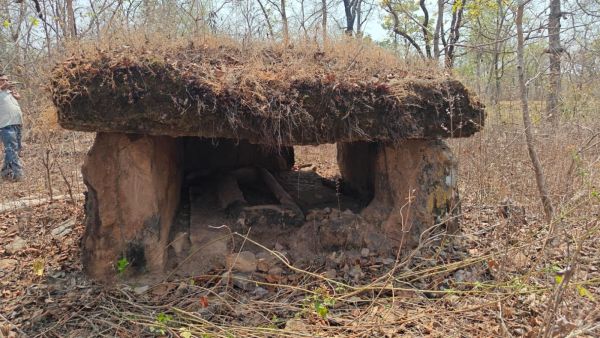
Locally, they are referred “rakasi bandalu” (giant stones) and “rakasi guhalu” (giant caves).

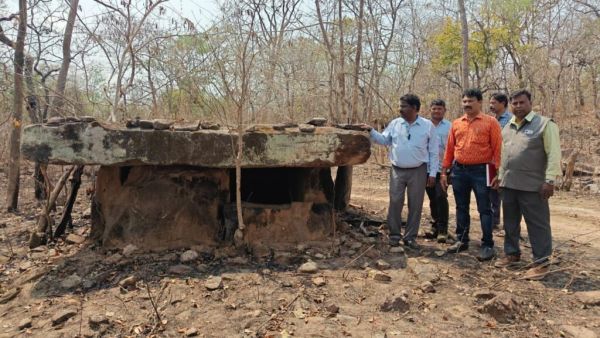
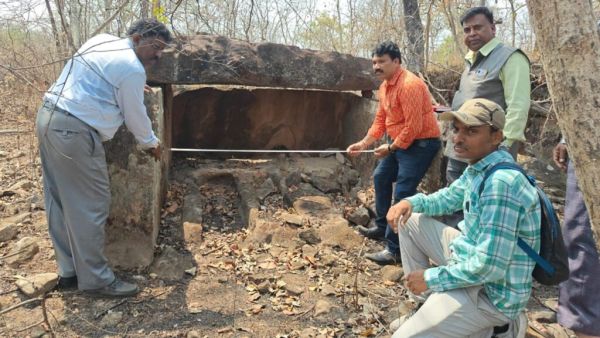
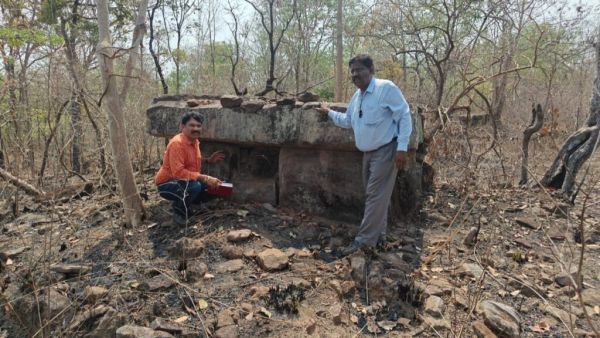
Officials said the findings confirm the presence of early human settlements and offer valuable insights into their lifestyle, customs, and social organisation.
The site features dolmen burial structures made from sandstone slabs, each consisting of four vertical stones topped with massive capstones weighing between 10 and 20 tonnes. Inside, stone troughs resembling a sarcophaus has been discovered, enclosed within a circular stone boundary wall of approximately 10 feet in radius, suggesting a well-planned settlement.
However, many structures have been reportedly damaged over the years due to natural deterioration and human activity. Some stone slabs are used for water storage and livestock purposes.
Hundreds of burial sites have been identified in Damaravai, Jaggaram, Gangaram, Rangapuram, Kamaram, Mallur Gutta, Motlagudem, Komuraram, Chettupalli, Kanchanpalli, Galaba, Dongathogu, and Gundala villages. According to the team, the Kappalayi Gutta region might have been one of the largest clusters of dolmen burials in India.