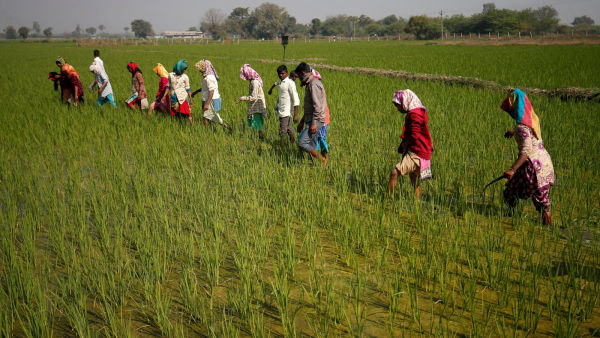
Hyderabad: The Department of Anthropology at the University of Hyderabad (UoH) has joined a global collaborative project to address mental health issues among farmers and farm workers in India caused by climate change and heat exposure.
Titled “TOLAKARI” – transformation of lived experience and knowledge of heat, agriculture, and depression in India – the global project aims to understand the reasons behind heat-related mental health issues among Indian farmers, the university said in a release on Thursday, April 2.
Through its research findings, TOLAKARI also aims to co-design a community-owned intervention to address the mental health issues and provide support.

Farmers are one of the most vulnerable communities to heat exposure and depression, since extreme heat can reduce overall yield, lower income and potentially increase the risk of depression as a result.
With studies to date mainly focused on the yield-income pathway, the TOLAKARI team will explore other causal pathways.
Causal pathways are a logical sequence of events or factors linking a cause to an outcome.
The primary goal of the project is to understand the importance of different pathways between heat and depression among farmers in India based on farmers’ perceptions and data.
The group of researchers will use various methodologies to determine how Indian farmers think of the impact of heat on depression. The research will find out if there is any relationship between heat and depression among farmers. An intervention will also be formulated to solve the identified mental health issues.
The project will be based in Telangana, Andhra Pradesh and Karnataka.
Funded by the Wellcome Trust with EUR 3 million, the project has a global team of researchers from the United Kingdom (UK) as well. The collaborators include the University of Edinburgh, Ashoka University, the Centre for Sustainable Agriculture, Hyderabad, the National Institute of Mental Health and Neurosciences (NIMHANS) and the Mariwala Health Initiative in Mumbai.
Dr Nanda Kishore Kannuri, Associate Professor in Anthropology Department, UoH, will receive a grant of EUR 175,971 over a period of five years to support the initiative.
“For the University of Hyderabad, this collaboration agreement marks a milestone in enriching international academic partnerships that tackle the immediate impact of climate change on vulnerable communities in India,” said Dr Kannuri. ” It will also attempt to propose a scalable policy suggestion that advances the university’s mission of research excellence and social impact,” he said.