


All on board
India is among the hardest-hit nations in the current war in West Asia. It imports $400-450 mn worth of oil every day. With tankers stalled in the Strait of Hormuz and insurance costs surging, availability itself has become an issue, never mind price.
Rupee's hit an all-time low of 94.07 against dollar, reflecting a depreciation of more than 9%. FPIs, sensing structural shift, withdrew nearly ₹1.18 lakh cr from Indian equities in March alone. Despite RBI's efforts, pressure on the balance of payments remains acute. India's current account deficit has also widened over the last year, and every 10% rise in oil prices adds roughly 35 bps to that deficit.
Catch all war-related developments here
In such an environment, the traditional corporate rulebook is obsolete. Budgets prepared for FY27 are no longer valid as they were built on the ghosts of stability: stable energy, hedgeable currency and predictable capital. All three have broken simultaneously. KPIs tied to these budgets are of no use. CFO must step out of the back office and become a 'bridge officer', who actively pivots the business model for continuity.
This requires transition from soft 'VUCA' thinking - volatility, uncertainty, complexity, ambiguity - to a hard disruption mindset. This means moving beyond chasing lowest cost and starting to build massive cushions into key business drivers. Because supply chains will snap, markets will freeze, and customers will likely default. Every node - whether Taiwan Strait, Red Sea, undersea cables, rare earths or magnets - is now a pressure point.
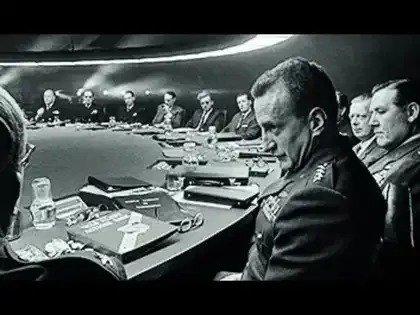
Establishment of an immediate 'war room' is critical. CFO must own this space, creating a dependency map of every single input that could be cut overnight. Toyota's response to the 2011 Fukushima disaster is a benchmark. By mapping its entire supply chain, Toyota reduced its response time- to-supplier disruptions from 2 weeks to half a day.
Also Read: India attends UK-led talks as 37 countries sign pledge to secure Strait of Hormuz
The war room must produce pre-made decisions for various scenarios - baseline, constrained and severe - so that when a crisis hits, execution begins in hours, instead of weeks. CFO leadership must extend to front lines as well. Pricing discipline and working capital decisions are made by sales teams and procurement officers. CFO must reach them directly, ensuring they internalise the shift from growth-at-all-costs to ambition-with-resilience.
That means building geopolitical cost buffers into customer contracts in advance, where prices adjust automatically based on pre-agreed formulas. In times of war, ability to guarantee delivery is premium value proposition, and sales teams should be trained to lead with supply certainty besides price.
Tactically, short-term focus must be a ruthless conservation of cash. All avoidable cash flows, especially capex commitments, and 'good-to-have' costs like travel and conferences, must be postponed. Companies should even consider deferring decisions that increase fixed costs, like annual wage hikes, to preserve liquidity.
Simultaneously, CFO must secure additional funding lines and ensure there are no open forex exposures. Risk profiling becomes a daily exercise of assessing one's own vulnerability to operational interruptions, creditworthiness of customers, and reliability of suppliers to sustain operations under duress. Cybersecurity, too, becomes a financial priority.
Beyond these tactical measures, CFO and CEO must also be prepared for radical, non-incremental decisions. Speed is the ultimate separator of survivors. Those executing war-room decisions cannot be penalised by standard metrics or KPIs that don't account for cost of resilience. CFO must have CEO's mandate to take decisions fast, bypassing standard approval cycles designed for a slower, more predictable world.
Even in this gloom, a clear-eyed CFO will spot opportunities at the granular level of corporate strategy. For instance, the scramble for supply chain resilience opens the door to renegotiate supplier terms. Higher defence spending could offer opportunities. CFOs who pre-emptively allocate capital to captive renewable assets, or long-term power purchase agreements, will insulate their P&Ls from the next oil shock.
Even within working capital, disorder creates arbitrage. Distressed suppliers may accept faster payments in exchange for steep discounts, while creditworthy customers can be persuaded to prepay for guaranteed delivery. CFO who treats this moment as a portfolio of asymmetric opportunities - not just a list of risks - will exit this crisis stronger, leaner and ahead of every competitor.
Charan is a corporate adviser, andGoenka is chairman, RPG Enterprises.
Rupee's hit an all-time low of 94.07 against dollar, reflecting a depreciation of more than 9%. FPIs, sensing structural shift, withdrew nearly ₹1.18 lakh cr from Indian equities in March alone. Despite RBI's efforts, pressure on the balance of payments remains acute. India's current account deficit has also widened over the last year, and every 10% rise in oil prices adds roughly 35 bps to that deficit.
Catch all war-related developments here
In such an environment, the traditional corporate rulebook is obsolete. Budgets prepared for FY27 are no longer valid as they were built on the ghosts of stability: stable energy, hedgeable currency and predictable capital. All three have broken simultaneously. KPIs tied to these budgets are of no use. CFO must step out of the back office and become a 'bridge officer', who actively pivots the business model for continuity.
This requires transition from soft 'VUCA' thinking - volatility, uncertainty, complexity, ambiguity - to a hard disruption mindset. This means moving beyond chasing lowest cost and starting to build massive cushions into key business drivers. Because supply chains will snap, markets will freeze, and customers will likely default. Every node - whether Taiwan Strait, Red Sea, undersea cables, rare earths or magnets - is now a pressure point.
Establishment of an immediate 'war room' is critical. CFO must own this space, creating a dependency map of every single input that could be cut overnight. Toyota's response to the 2011 Fukushima disaster is a benchmark. By mapping its entire supply chain, Toyota reduced its response time- to-supplier disruptions from 2 weeks to half a day.
Also Read: India attends UK-led talks as 37 countries sign pledge to secure Strait of Hormuz
The war room must produce pre-made decisions for various scenarios - baseline, constrained and severe - so that when a crisis hits, execution begins in hours, instead of weeks. CFO leadership must extend to front lines as well. Pricing discipline and working capital decisions are made by sales teams and procurement officers. CFO must reach them directly, ensuring they internalise the shift from growth-at-all-costs to ambition-with-resilience.
That means building geopolitical cost buffers into customer contracts in advance, where prices adjust automatically based on pre-agreed formulas. In times of war, ability to guarantee delivery is premium value proposition, and sales teams should be trained to lead with supply certainty besides price.
Tactically, short-term focus must be a ruthless conservation of cash. All avoidable cash flows, especially capex commitments, and 'good-to-have' costs like travel and conferences, must be postponed. Companies should even consider deferring decisions that increase fixed costs, like annual wage hikes, to preserve liquidity.
Simultaneously, CFO must secure additional funding lines and ensure there are no open forex exposures. Risk profiling becomes a daily exercise of assessing one's own vulnerability to operational interruptions, creditworthiness of customers, and reliability of suppliers to sustain operations under duress. Cybersecurity, too, becomes a financial priority.
Beyond these tactical measures, CFO and CEO must also be prepared for radical, non-incremental decisions. Speed is the ultimate separator of survivors. Those executing war-room decisions cannot be penalised by standard metrics or KPIs that don't account for cost of resilience. CFO must have CEO's mandate to take decisions fast, bypassing standard approval cycles designed for a slower, more predictable world.
Even in this gloom, a clear-eyed CFO will spot opportunities at the granular level of corporate strategy. For instance, the scramble for supply chain resilience opens the door to renegotiate supplier terms. Higher defence spending could offer opportunities. CFOs who pre-emptively allocate capital to captive renewable assets, or long-term power purchase agreements, will insulate their P&Ls from the next oil shock.
Even within working capital, disorder creates arbitrage. Distressed suppliers may accept faster payments in exchange for steep discounts, while creditworthy customers can be persuaded to prepay for guaranteed delivery. CFO who treats this moment as a portfolio of asymmetric opportunities - not just a list of risks - will exit this crisis stronger, leaner and ahead of every competitor.
Charan is a corporate adviser, andGoenka is chairman, RPG Enterprises.
(Disclaimer: The opinions expressed in this column are that of the writer. The facts and opinions expressed here do not reflect the views of www.economictimes.com.)




Ram Charan
Harsh Goenka
Chairman, RPG Enterprises