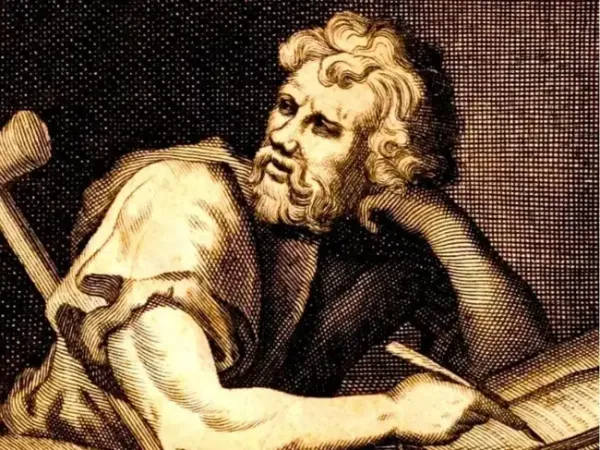
Born into enslavement, Epictetus rose to become one of the most influential Stoic thinkers in ancient Greece. His life itself stood as a testament to the ideas he later taught—ideas rooted in resilience, inner freedom, and moral clarity. Despite beginning his existence without social power or autonomy, he developed a philosophy that would shape ethical thinking for centuries. Among his most remembered reflections is the line: “There is only one way to happiness and that is to stop worrying about things which are beyond the power or our will…” This statement captures the heart of his worldview and continues to resonate across generations.
Epictetus received his training in Stoic thought under the guidance of Musonius Rufus. After gaining his freedom from slavery, he devoted himself fully to teaching philosophy. Near the close of the first century, Emperor Domitian ordered philosophers to leave Rome, prompting Epictetus to relocate and establish his own philosophical school in Nicopolis. There, he shaped a distinctive approach that emphasized philosophy as a practical guide for daily living rather than an abstract intellectual pursuit. According to Epictetus, the events and circumstances of the external world lie outside human command. Because they cannot be controlled, he maintained that people should meet whatever life presents with composure, acceptance, and emotional restraint, focusing their energy instead on mastering their own judgments and responses.
His ideas were preserved and later made public by his student Arrian, who compiled them into the works known as the Discourses and the Enchiridion. These writings went on to leave a lasting impact on generations of intellectuals and writers, shaping the thought of figures such as Marcus Aurelius, Blaise Pascal, Denis Diderot, Montesquieu, François Rabelais, and Samuel Johnson.
The Stoic View of Human Nature
At the center of Epictetus’s philosophy lies a distinct understanding of what it means to be human. Like other Stoics, he viewed human beings as mortal yet rational creatures. Rationality, in his framework, is not merely intelligence but the ability to consciously evaluate perceptions. Humans do not simply react to the world; they possess the power to pause, reflect, and judge whether what they perceive is accurate or misleading. This reflective engagement with experience sets humanity apart from animals, who respond instinctively to appearances without examining their truth.Epictetus received his training in Stoic thought under the guidance of Musonius Rufus. After gaining his freedom from slavery, he devoted himself fully to teaching philosophy. Near the close of the first century, Emperor Domitian ordered philosophers to leave Rome, prompting Epictetus to relocate and establish his own philosophical school in Nicopolis. There, he shaped a distinctive approach that emphasized philosophy as a practical guide for daily living rather than an abstract intellectual pursuit. According to Epictetus, the events and circumstances of the external world lie outside human command. Because they cannot be controlled, he maintained that people should meet whatever life presents with composure, acceptance, and emotional restraint, focusing their energy instead on mastering their own judgments and responses.
His ideas were preserved and later made public by his student Arrian, who compiled them into the works known as the Discourses and the Enchiridion. These writings went on to leave a lasting impact on generations of intellectuals and writers, shaping the thought of figures such as Marcus Aurelius, Blaise Pascal, Denis Diderot, Montesquieu, François Rabelais, and Samuel Johnson.
Impressions, Assent, and Moral Responsibility
While animals and humans alike receive impressions from the external world, Epictetus emphasized that humans uniquely possess the ability to grant or deny assent to those impressions. This faculty allows individuals to decide how they interpret events and how they respond emotionally and ethically. Because of this capacity, people are responsible for their actions and mental states. Accountability, in Epictetus’s view, is inseparable from the power of choice, making ethical self-governance both possible and necessary.Volition as the Core of Freedom
Epictetus frequently explored the concept of prohairesis, a term he used to describe the inherent capacity for choice rather than individual decisions themselves. Often translated as volition, this inner faculty is, according to him, naturally unhindered. Because no external force can truly dominate one’s will, freedom becomes an essential and inborn human quality. The very act of choosing implies independence from coercion; otherwise, it would not qualify as a choice at all. This understanding sharply distinguishes humans from even the most advanced animals, who lack reflective self-direction.Inner Peace Through Revaluing the External World
By reassessing the importance of external objects and circumstances, Epictetus believed individuals could achieve deep emotional stability. Feelings such as sorrow, fear, jealousy, craving, and persistent worry arise from the mistaken belief that fulfillment depends on factors outside oneself. He rejected the notion that emotions are imposed by fate or inner compulsions beyond control. Instead, he argued that emotional turmoil stems from faulty judgments, which can be corrected through disciplined reasoning.Education, Hardship, and Liberation
Epictetus developed an early devotion to philosophy and, with his master’s consent, studied under the Stoic teacher Musonius Rufus. This education elevated his standing despite his enslaved status. At some point in his life, he became physically disabled; some accounts attribute this to deliberate cruelty, while others suggest a lifelong condition. After the death of Emperor Nero in AD 68, Epictetus gained his freedom and began teaching in Rome. When philosophers were later expelled by Emperor Domitian, he relocated to Nicopolis in Greece, where he established a school that attracted devoted students.A Life of Simplicity and Compassion
True to his teachings, Epictetus lived modestly, owning very little and embracing simplicity. For much of his life, he lived alone, but in old age, he took in the child of a deceased friend who would otherwise have been abandoned. His life reflected his philosophy: freedom rooted not in possessions or status, but in mastery over one’s own mind and choices.What Is Stoicism?
Stoicism is an ancient Greek philosophy focused on building inner strength, self-control, and clarity of mind. Founded by Zeno of Citium around the 3rd century BCE, it teaches that peace comes from accepting what we cannot control and focusing on what we can—our thoughts, actions, and choices. Stoicism emphasizes living in harmony with reason and nature, practicing virtues like wisdom, courage, justice, and temperance. By managing emotions and responding calmly to challenges, Stoicism helps individuals develop resilience, reduce stress, and live a meaningful, disciplined life.( Originally published on Dec 26, 2025 )