


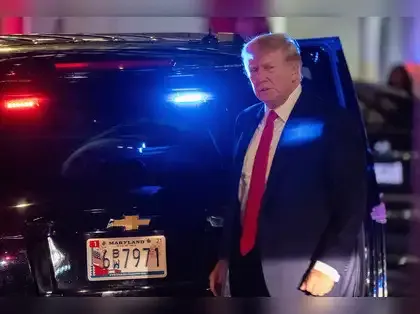
Many insist that the main threat to world peace is Trump and his promulgation of reactionary campaign promises that have alienated friends and foes alike. Now that he has initiated a deeply unpopular and unlawful war at the behest of Israel, the thinking goes, unseating or incapacitating him – through an act of Congress—will restore order to the world.
This is a facile argument because it apportions blame to the symptom while overlooking the cause.
In his valedictory speech on January 17, 1961, Dwight D Eisenhower warned against the growing power of a lobby which, by combining a large defence establishment with a formidable arms industry, could pose a significant threat to democratic freedoms and civil liberties. ‘The total influence – economic, political, even spiritual – is felt in every statehouse … in the councils of government, we must guard against the acquisition of unwarranted influence, whether sought or unsought, by the military-industrial complex.’
In this, he was right.
It is a lesser-known fact that he had discerned something more pernicious. In the original draft of his speech, he coined a tripartite name for the cabal: Military-Industrial-Congress complex. He believed that without the active involvement of this third constituency, nothing could really be promised, budgeted or achieved. Not even a sitting president, he felt, had the power to enforce a domestic or foreign policy intervention without its active cooperation or collusion. Such power, if used unwisely, unscrupulously, or unlawfully, could have severe implications for the ambit of US influence, and the balance of power necessary to maintain a peaceful global order. In the end, he was advised that it was not fitting for a US president to so opine of Congress. Its name was reluctantly redacted.
Despite the omission, his view was prescient.
This is why the US Congress – and not just the sycophantic Republican fringe – will favour any move by a sitting president which furthers its own aims. Today, it operates in conjunction with three seemingly separate (but intertwined though mutual gain) consortiums: the Military-Industrial, the Big Technology-Big Finance, and the Israel-AIPAC complexes. In each of these, Congress has a major stake, enabling liberal procurement and overseas funding deals, blocking digital antitrust legislation and condoning, or promoting, Israel’s grisly goals, in exchange for campaign contributions. The graft is such that only an inebriated satirist could do it justice.
And so, while it is easy for large swathes of Congress to deplore a mercurial president – for posing ruinous tariffs, for the ill-treatment and killing of immigrants and citizens in his quest to make America great again, for suggesting that Canada be made the 51st state, and for threatening to annex Greenland – many of these same politicians are willing to turn a blind eye to, or clandestinely support, the defunding and hobbling of the UN and ICC, weaponisation of the dollar to sanction recidivist and recalcitrant states, illegal kidnapping of a sitting president to commandeer, as with Iraq, the country’s oil, and starting a war that the US is unlikely to win.
For decades, the rest of the world has had to participate in this circus or watch its deleterious effects from the sidelines. Many nations chose not to interfere from a sense of fear. Others because it was not their concern. But this war, if anything, should make it apparent to all but the most obstinate that collective and concerted action is necessary now more than ever.
After all, there are two prerequisites for any international order: a group of nations representing a large proportion of global peoples, trade, and interests that abide by a set of rules for the sake of mutual peace; and a set of hegemons with clearly defined spheres of interest that display, by maintaining conformity and driving enforcement, the value of such a system.
By embroiling the world in a regional conflict with global consequences for energy, food and technology security, the current hegemon is not only presiding over the implosion of its own unipolar order but also over the demise of multilateral bodies. like the UN and other trade organisations.
To believe that the removal of one president will solve this issue is to be short-sighted. The real problem will remain until Congress is almost fully reconstituted with younger members whose interests and values steer America in a different direction. This will take time, a delay that neither the rest of the world nor the average American can afford, especially when the outcome is uncertain.
Instead, it is imperative that willing BRICS+ powers, like China, Russia, India, Brazil, South Africa or even the newly resurgent Iran, attempt a parallel world order that caters to 80% of the world, elevating the importance of Asia, Africa, Latin America, Canada and Oceania, centred in a neutral venues like Singapore and Sydney, rivalling and replacing the nearly defunct institutions created at the end of WW 2 to ensure the supremacy of the old colonial powers.
Ultimately, peace and development should not be left to chance or the indifferent passage of time. It may be in the best interest of developing nations to coalesce under new, and sometimes countervailing, hegemons for future growth, prosperity and harmony.
This is a facile argument because it apportions blame to the symptom while overlooking the cause.
In his valedictory speech on January 17, 1961, Dwight D Eisenhower warned against the growing power of a lobby which, by combining a large defence establishment with a formidable arms industry, could pose a significant threat to democratic freedoms and civil liberties. ‘The total influence – economic, political, even spiritual – is felt in every statehouse … in the councils of government, we must guard against the acquisition of unwarranted influence, whether sought or unsought, by the military-industrial complex.’
In this, he was right.
It is a lesser-known fact that he had discerned something more pernicious. In the original draft of his speech, he coined a tripartite name for the cabal: Military-Industrial-Congress complex. He believed that without the active involvement of this third constituency, nothing could really be promised, budgeted or achieved. Not even a sitting president, he felt, had the power to enforce a domestic or foreign policy intervention without its active cooperation or collusion. Such power, if used unwisely, unscrupulously, or unlawfully, could have severe implications for the ambit of US influence, and the balance of power necessary to maintain a peaceful global order. In the end, he was advised that it was not fitting for a US president to so opine of Congress. Its name was reluctantly redacted.
Despite the omission, his view was prescient.
This is why the US Congress – and not just the sycophantic Republican fringe – will favour any move by a sitting president which furthers its own aims. Today, it operates in conjunction with three seemingly separate (but intertwined though mutual gain) consortiums: the Military-Industrial, the Big Technology-Big Finance, and the Israel-AIPAC complexes. In each of these, Congress has a major stake, enabling liberal procurement and overseas funding deals, blocking digital antitrust legislation and condoning, or promoting, Israel’s grisly goals, in exchange for campaign contributions. The graft is such that only an inebriated satirist could do it justice.
And so, while it is easy for large swathes of Congress to deplore a mercurial president – for posing ruinous tariffs, for the ill-treatment and killing of immigrants and citizens in his quest to make America great again, for suggesting that Canada be made the 51st state, and for threatening to annex Greenland – many of these same politicians are willing to turn a blind eye to, or clandestinely support, the defunding and hobbling of the UN and ICC, weaponisation of the dollar to sanction recidivist and recalcitrant states, illegal kidnapping of a sitting president to commandeer, as with Iraq, the country’s oil, and starting a war that the US is unlikely to win.
For decades, the rest of the world has had to participate in this circus or watch its deleterious effects from the sidelines. Many nations chose not to interfere from a sense of fear. Others because it was not their concern. But this war, if anything, should make it apparent to all but the most obstinate that collective and concerted action is necessary now more than ever.
After all, there are two prerequisites for any international order: a group of nations representing a large proportion of global peoples, trade, and interests that abide by a set of rules for the sake of mutual peace; and a set of hegemons with clearly defined spheres of interest that display, by maintaining conformity and driving enforcement, the value of such a system.
By embroiling the world in a regional conflict with global consequences for energy, food and technology security, the current hegemon is not only presiding over the implosion of its own unipolar order but also over the demise of multilateral bodies. like the UN and other trade organisations.
To believe that the removal of one president will solve this issue is to be short-sighted. The real problem will remain until Congress is almost fully reconstituted with younger members whose interests and values steer America in a different direction. This will take time, a delay that neither the rest of the world nor the average American can afford, especially when the outcome is uncertain.
Instead, it is imperative that willing BRICS+ powers, like China, Russia, India, Brazil, South Africa or even the newly resurgent Iran, attempt a parallel world order that caters to 80% of the world, elevating the importance of Asia, Africa, Latin America, Canada and Oceania, centred in a neutral venues like Singapore and Sydney, rivalling and replacing the nearly defunct institutions created at the end of WW 2 to ensure the supremacy of the old colonial powers.
Ultimately, peace and development should not be left to chance or the indifferent passage of time. It may be in the best interest of developing nations to coalesce under new, and sometimes countervailing, hegemons for future growth, prosperity and harmony.
(Disclaimer: The opinions expressed in this column are that of the writer. The facts and opinions expressed here do not reflect the views of www.economictimes.com.)


Ateesh Tankha
The writer is founder-CEO, ALSOWISE Content Solutions