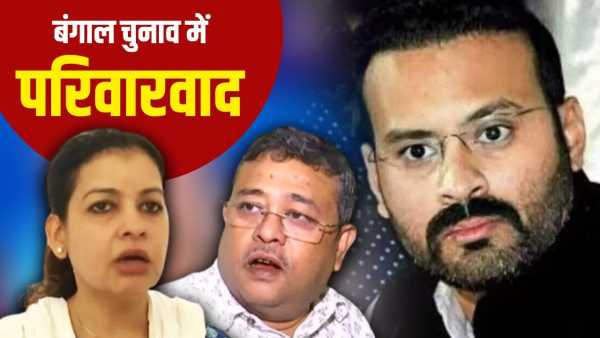
West Bengal has been a state that has long rejected legacy politics, but the 2026 assembly elections are telling a very different story. For decades, West Bengal has scoffed at the dynastic culture seen in states like Uttar Pradesh and Bihar, preferring instead a political tradition built on college campuses, union rooms and street protests, but that tradition appears to be changing this election.
Mamata Banerjee Leaders like Buddhadev Bhattacharya and Adhir Choudhary to Dilip Ghosh have emerged from the movement and organisation, but this time across party lines, from the Trinamool Congress and the Bharatiya Janata Party to the Congress and the Communist Party of India (Marxist), many of the candidates are now from well-known political families. The new generation of political leaders has stepped forward in the new era of politics.
Trinamool Congress has fielded maximum candidates who have connections with political families, but this trend is spread across different ideologies. Even parties that once criticized dynastic politics are now trusting the new generation of well-known leaders. And this change is visible at the ground level.
In West Burdwan, Trinamool Congress has fielded former minister Malay Ghatak from Asansol North, while his brother Abhijeet Ghatak is contesting from nearby Kulti. Similarly, in South 24 Parganas district, Ratna Chattopadhyay, the sitting MLA of Behala East, has been sent to Behala West, while her brother Subhashish Das has been made the candidate from Maheshtala. This seat was once held by his father Dulal Das.
Trinamool Congress has also retained minister Becharam Manna from Singur and his wife Karabi from Haripal. At the same time, Sirsanya Bandopadhyay, son of four-time MP Kalyan Banerjee, is contesting from Uttarpara. In Entali, TMC MLA Swarn Kamal Saha's own son Sandipan Saha has been made the candidate, while from Panihati, his son Tirthankar Ghosh will contest in place of sitting MLA Nirmal Ghosh.
In Maniktala, TMC has fielded Shreya Pandey, daughter of late minister Sadhan Pandey, and sitting MLA Supti Pandey. Similarly, Madhuparna Thakur from Bagda, Vasundhara Goswami from Purbasthali North and Rituparna Adhya from Bangaon South are all carrying forward their political legacy.
It is not that only TMC has given preference to familyism in the selection of candidates. The BJP, despite its attacks on nepotism, is not far behind. In Purba Medinipur, Divyendu Adhikari's candidature from Egra shows the growing influence of his family. He is the brother of Leader of Opposition Suvendu Adhikari. Similarly, in Bhatpara, former MP Arjun Singh's son Pawan Singh is in the fray, while Arjun himself is contesting from Noapara.
BJP's Matua face, Subrata Thakur, is also part of a big political family, while his relative, Soma, is contesting from Bagda. He is in direct competition with his sister-in-law Madhuparna Thakur. He is a candidate from TMC. Similarly, in Baranagar, BJP candidate Sajal Ghosh is carrying forward the legacy of former Congress leader Pradeep Ghosh.
The Congress, which is struggling to retain its place, is also relying on old names. Former MP Mausam Noor, niece of late Congress leader NBA Ghani Khan Choudhary, is contesting from Maltipur after returning to the Congress fold from Trinamool Congress.
Meanwhile, in Baghmundi, Congress has fielded Nepal Mahato, son of former MP Debendra Mahato, while Rohan Mitra, son of Somen Mitra, is contesting from Ballygunge. In North Bengal, Ali Imran Ramz, or Victor, is leading another political dynasty from Golpokhar.
Even the left has not remained untouched by dynasticism. CPI(M) has fielded Saptarshi Deb, son of former minister Gautam Deb, from Rajarhat-New Town, while youth leader Dipsita Dhar, granddaughter of former MLA Padma Nidhi Dhar, is contesting from Dumdum North.
Read this also-There were shortcomings in Congress, hence Kanshi Ram became successful. Rahul Gandhi said in Lucknow, know what else he said.