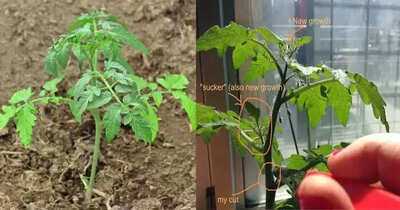
As children, many of us were warned by our parents or grandparents not to pluck leaves at night, as plants were said to be sleeping and feeling pain. While we may have dismissed these claims as childish tales as we grew older, recent studies suggest that plants do indeed possess the ability to feel and respond to pain. Remarkably, when under stress or in pain, plants emit sounds that are inaudible to the human ear due to their low frequency.
If you think these claims are unfounded, consider the recent research conducted by scientists at Tel Aviv University. Their study focused on tomato and tobacco plants, revealing that these plants emit loud sounds when subjected to external pressures, such as having their leaves plucked or when experiencing environmental changes. To capture these sounds, researchers placed a high-quality microphone 10 meters away from the plants and recorded their activities.
The findings indicated that when plants are stressed—such as when their leaves are torn or pulled—they produce ultrasonic frequencies ranging from 20 to 100 kilohertz. These sounds serve as a means for the plants to communicate their distress to other plants and animals. Additionally, the researchers monitored the plants' activities using 35 small devices.
The study also discovered that when deprived of water for several days, both tomato and tobacco plants generated 35 ultrasonic distress sounds. This indicates that plants experience stress when they lack water, resulting in their silent screams. Interestingly, while humans cannot hear these frequencies, animals with heightened hearing, such as mice and bats, can detect these sounds. Researchers believe that other plants may also be able to hear these distress signals.
Therefore, it's essential to be mindful of watering plants and to minimize unnecessary pruning or cutting. The next time you tend to your plants, remember that they may be communicating their needs in ways we cannot perceive.