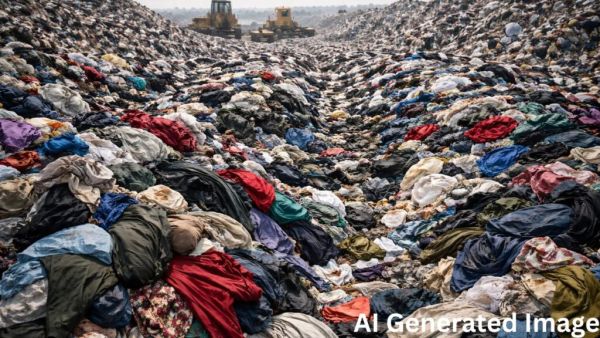
In today’s era, adopting a new look every week has become a trend. Stylish clothes are available for Rs 100 each on online platforms, due to which people are purchasing them again and again without thinking much. The pressure of looking different every time on social media is also increasing this habit, but there is a truth hidden behind this rapidly changing fashion. As fast as we are buying clothes, we are also throwing them away.
This is the reason why fashion is no longer just a style but is also becoming a major cause of waste. Every year millions of tonnes of clothes end up in landfills, causing huge damage to the environment. This habit of cheap clothes is gradually becoming a threat to the earth.
Fast fashion is a model in which companies make latest trend clothes and launch them in the market in a very short time. Where earlier it took weeks or months for a design to reach the market, now this work is done in a few days. For example, Zara used to launch a new design in the market in just two weeks, whereas today brands like Shein launch thousands of new designs every day.
The entire system of fast fashion companies is very fast and based on data.
1. Design from data
Companies see what is trending on social media and immediately design clothes accordingly.
2. Faster production
Clothes are made on a large scale in a short period of time. Many times a design is ready and hits the market in 10 days.
3. Cheap materials
To keep costs low, cheap and synthetic clothes are used.
4. Marketing game
People are inspired to buy again and again through influencers, discounts and app offers.
According to a 2018 report by Quantis International, there are three major reasons behind pollution caused by the textile industry. Dyeing and finishing (36%), yarn making (28%) and fiber preparation (15%). If we understand in simple language, the maximum pollution occurs in the process of dyeing clothes, preparing them and making thread.
The report also shows that a lot of water is consumed in making fibre, especially in growing cotton, which has a negative impact on water sources and the environment. At the same time, processes like dyeing and making yarn require more energy, which mostly comes from fossil fuels. This is the reason why both resource scarcity and pollution increase. Apart from this, the time taken by a garment from being designed to being sold in the market is called ‘lead time’.
Today’s Gen Z and Millennials are beginning to understand this problem. Many people are trying to buy less clothes. The trend towards sustainable fashion is increasing. But the reality is that people think one thing and do something else. According to reports, 46% people say that they avoid fast fashion, but more than half still buy it once a year.
Fast fashion has definitely made our lives easy and stylish, but the environment and society are paying its price. We may feel happy while buying a cloth worth Rs 100, but its real value is much higher, which we are unable to see. Now is the time to rethink our shopping habits, because true style comes with responsibility.