In New Delhi, following the completion of the initial phase of the Census, government officials from local bodies will gather detailed information regarding civic amenities across 784 districts. This effort aims to compile the District Census Handbook (DCHB), which will serve as a comprehensive record of civic infrastructure at both village and town levels.
The Registrar General and Census Commissioner of India, Mritunjay Kumar Narayan, has issued a directive to all states and Union Territories to initiate fieldwork for the handbook two months post the first phase of Census 2027, known as the Houselisting and Housing Census, with a deadline of 30 days for completion.
The DCHB will document various amenities such as schools, hospitals, drainage systems, electricity connections, roads, and banks, detailing not only their existence but also the distance residents must travel if they are unavailable.
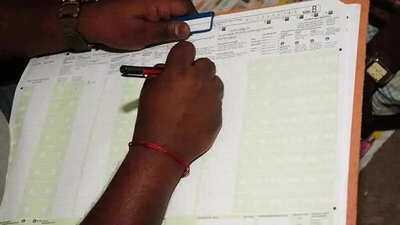
Since its inception after India's independence in 1951, the handbook has undergone a significant methodological evolution. For the first time, data collection will utilize a mobile application instead of traditional paper schedules.
This handbook is crucial for Census Operations, prepared uniquely for each district, showcasing key demographic and socio-economic data alongside detailed insights into civic amenities and infrastructure for every village and town.
The reference date for gathering DCHB data across the 784 districts is set for December 31, 2025, reflecting the status of villages and towns as of that date.
Data will be compiled in two segments: a Village and Town Directory and a Primary Census Abstract, collected by field functionaries such as patwaris, panchayat secretaries, and village development officers in rural areas.
The Village Directory will encompass nine fields, including educational and medical facilities, water and sanitation, transport and communication, banking and credit, electricity supply, land utilization, irrigation, principal agricultural commodities, and handicrafts.
In the Town Directory, additional sections will address slum infrastructure, social and recreational facilities, and a historical overview of population growth dating back to 1911. This directory will also compile civic amenities like fire stations, pucca roads, and latrines.
Field workers will utilize the DCHB Mobile App for data collection. In rare cases where digital collection is unfeasible, manual data collection may be permitted under the supervision of the Charge Officer.
Municipal commissioners or executive officers will oversee data collection for towns, regardless of their size.
The Registrar General of India has established a web portal, dchb.census.gov.in, for real-time data submission and verification by charge officers. This portal features role-based access, real-time monitoring, and built-in validation checks to ensure data accuracy and completeness.
The DCHB app and the web portal are interconnected, allowing for seamless data transfer. Any data entered via the Mobile App will be instantly updated on the web portal and vice versa.
Field functionaries will exclusively use the Mobile App for data collection, while Charge Officers and the Directorate of Census Operations (DCOs) will access the system through the web portal.
Data submitted by field workers will undergo verification by the respective Charge Officer through the web portal. In cases of discrepancies, clarification can be sought from the field functionary via the portal.
Once verified, the data will be authenticated by the Directorate of Census Operations. To maintain consistency, the reported data will be compared against the DCHB Census 2011 data, especially for villages and towns that have experienced jurisdictional changes since then.
This upcoming Census, the eighth since Independence, will be a fully digital initiative, offering citizens the option for self-enumeration. Originally scheduled for 2021, the decadal exercise was postponed due to the COVID-19 pandemic, and it will be conducted in two phases: house-listing and housing census from April to September 2026, followed by population enumeration in February 2027.