
Green-fingered Brits facing sad lawns this summer could be resorting to expensive fertilisers to bring their gardens back to life - but there's a cheaper alternative. Gardeners have been told how to keep their lawns "lush and green" by adding one thing.
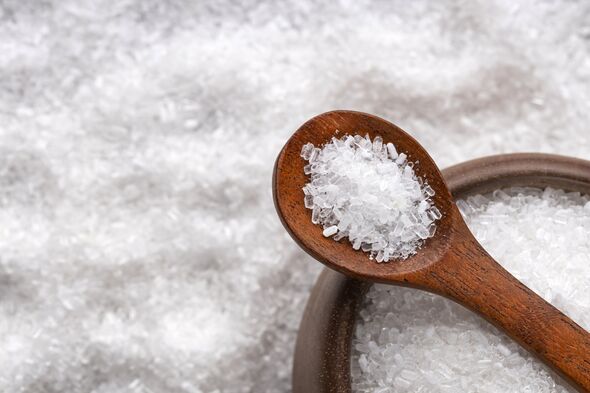
Gardening Know How says that Epsom salt contains magnesium, an important component of chlorophyll. It is a safe, natural product that can boost seed germination, nutrient absorption, growth and the general health of lawns and plants.
Epsom salts are used on crops lacking magnesium. Magnesiumdeficiency is caused by mineral imbalances in the soil or the plant itself. It is most common in light, sandy, or acidic soil that is leached by rainfall or irrigation. These are generally weathered soils with a low pH or soils with a pH above 7 and high in calcium and potassium. Dolomitic lime is usually used to raise soil pH, but Epsom salts for lawnsoffer the added benefit of high solubility and affordability.
Brothers Lawn Service and Landscaping explains: "Chlorophyll absorbs the blue and red wavelengths of light while reflecting back the green wavelength, making lawns appear green in colour.
"If your lawn is struggling to grow properly or is just generally weak and unhealthy, it can not absorb enough energy or create enough chlorophyll to produce the beloved green colour."
Before applying the Epsom salts, you could conduct a soil test to check if your lawn has a magnesium deficiency.
Soil test kits are available online. It's best to apply the salts when your lawn is slightly moist, as this helps the salts absorb and penetrate the soil.
Add 2 tablespoons (29.5ml) to each gallon (3.7l) of water used on the lawn. If you have a sprinkler system, lightly sprinkle the salt directly atop the grass and then allow the system to water into the sod.
Gardening Know How suggests that the best time to apply Epsom salts to your lawn is in the spring, with theSuburban Lawn Sprinkler Co. warning that if you wait until summer, it will contribute to weed growth.