Generally, fans are used extensively throughout India. We primarily use three-bladed fans, as they are the most commonly found variety in the market. Moreover, if we encounter a single-bladed fan, we tend to assume that it won't generate sufficient airflow. Conversely, upon seeing a four-bladed fan, we often worry that it might consume excessive electricity. Consequently, various questions arise in our minds regarding this subject. Therefore, today we will explore which type of fan—based on the number of blades—is the most efficient choice.
**Single-Bladed Fan:** When it comes to fans, it is essential to consider various factors such as the blades, design, motor, and the resulting airflow. Typically, single-bladed fans are not a common sight in everyday settings. However, they possess a unique characteristic: they specifically concentrate and direct airflow toward a single direction or specific spot. For this reason, they are predominantly utilized for industrial and commercial purposes.
**Two-Bladed Fan:** Two-bladed fans are used in some households. If one were to ask whether they generate a greater volume of air, the answer would be no. Consequently, they are generally reserved for use in smaller rooms. Since they provide a moderate amount of airflow—albeit in a limited volume—they are considered a suitable choice for compact spaces.
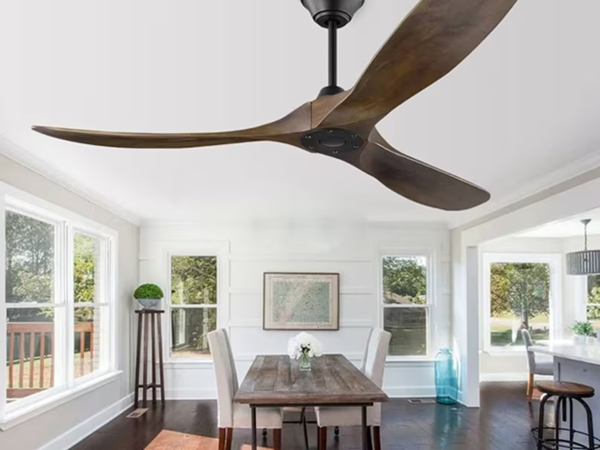
**Three-Bladed Fan:** Three-bladed fans are considered the ideal choice for residential use. They are a ubiquitous feature in most homes. These fans distribute air evenly across the entire room. Furthermore, they consume less electricity, which contributes to their immense popularity in domestic settings. These fans are best suited for rooms that are neither excessively small nor excessively large.
**Four-Bladed Fan:** The usage of four-bladed fans has seen a rise in recent times. As they generate a greater volume of airflow, they are highly suitable for larger rooms. However, it is worth noting that this increased performance comes with a corresponding increase in electricity consumption. Fans featuring more than four blades are generally not utilized in residential environments. However, if you intend to purchase a fan with more than four blades, it is essential to be aware of a few key considerations.
Based on your overall requirements, you should determine the appropriate number of fans to utilize. Many people assume that fans with larger blades consume more electricity while those with smaller blades consume less—and to some extent, this is true. However, in reality, the actual electricity consumption of a fan depends primarily on its motor.
Another important point to note is that the edges of the fan blades should possess a slight curvature. If this curvature is absent, the airflow will not be directed downward effectively. Therefore, it is crucial to protect the fan blades from damage and ensure that they do not lose their original structural shape (curve). Fans equipped with smaller motors and lower RPM (revolutions per minute) consume less electricity. Conversely, fans that generate a higher airflow can cool a room more rapidly. When a room cools down quickly, we can conserve electricity by reducing the duration of the fan's operation.
When purchasing energy-efficient fans, it is imperative to check for the presence of an Energy Star Rating. You should always opt for fans with a higher star rating. It is generally considered advisable to purchase a fan with at least a 3-star rating; a 4-star fan is even better. While 5-star rated fans can be somewhat difficult to find, some individuals prioritize maximum airflow over concerns regarding higher electricity consumption. In such cases, they may choose to use fans with 5 or 6 blades. However, for this setup to function effectively, the room must be sufficiently large; otherwise, the fan will not perform optimally.
Disclaimer: This content has been sourced and edited from News18 Hindi. While we have made modifications for clarity and presentation, the original content belongs to its respective authors and website. We do not claim ownership of the content.