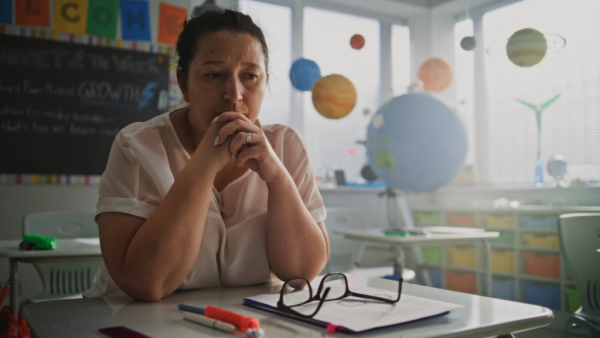
Teaching has never been an easy job, but it does feel like today’s teachers have more issues with their students to complain about. Or, perhaps they just have more platforms to use to voice their opinion. Either way, they’re concerned.
The EdWeek Research Center surveyed teachers and found that 82% said they felt like students today are less independent than they were 10 years ago. One of the top reasons given for this was that “parents these days are more likely to fight their kids’ battles.” This seems evident in how they’re communicating with teachers.
A middle school science teacher had to send out some emails to parents letting them know their children were failing her class. Instead of being concerned, the parents’ reactions were pretty troubling.
“My son was gone for six days. Can he be excused from the assignments?” one parent asked. Another said, “I work almost 50 hours a week, and I am in school. I don’t have the time to monitor every lesson or review study guides with my child.”
One mom requested that the teacher give her son a new copy of the study guide he needed because he lost it. She said she did, and then received a second email an hour after school ended, letting her know he had lost it again and that the parent would like a copy via email.
And, of course, several parents all but insisted this was the teacher’s fault, and said that they could not be expected to do the work she is supposed to handle in her own classroom.
: Former Teacher Blames ‘Too Much Empathy’ For Why Students Are Failing & Teachers Are Quitting
Parents love their kids and want to protect them. Sometimes this comes at the cost of teaching them to take responsibility for their own lives, though. Social worker Amy Morin addressed this in her book, “13 Things Mentally Strong Parents Don’t Do.”
“They do everything for their children, and their kids grow up unprepared for the rigors of adulthood,” she wrote. “If you’ve always rescued your child from facing his own battles and sheltered him from responsibility, he’ll lack the experience and confidence he needs to get by in the real world.”
KieferPix | Shutterstock
Acting like a helicopter parent who is overprotective of their kids has been proven to lead to higher levels of anxiety and depression in kids, as well as lower confidence, and a lack of coping and life skills.
Holding their kids as close as they can and helping them in any way possible feels like second nature for good parents. But sometimes they have to create a little distance and give their kids the chance to fall and get back up if they want them to be truly resilient and responsible.
: Teacher Worries That Average Students Have Disappeared — ‘Some Are High Achievers And Others Are ‘Basement Dwellers’
In the comments, one person insisted, “Parents ARE the problem.” A second noted, “The lack of accountability is genuinely terrifying.”
 Gorodenkoff | Shutterstock
Another parent shared that they could never understand the kind of argument these parents were making. “Teachers and parents are a team,” they said. “You don’t work for them. You’re not against them. I don’t understand why they’re so intent on arguing when you’re TRYING TO HELP THEIR CHILD. I also work and go to school, but my child comes first. If they’re failing at anything, everything else comes second. Bizarre behavior for sure.”
Teachers obviously have a responsibility to prepare kids for their futures, but at the end of the day, they’re simply doing a job that ends when the work day is over. Parents are supposed to be there 24/7 to give their kids the tools they need to succeed. Teachers can’t be blamed for everything.
: Actual Excuses College Students Used To Explain Why They Failed Classes & Genuinely Believe They’re In The Right
Mary-Faith Martinez is a writer with a bachelor’s degree in English and Journalism who covers news, psychology, lifestyle, and human interest topics.