
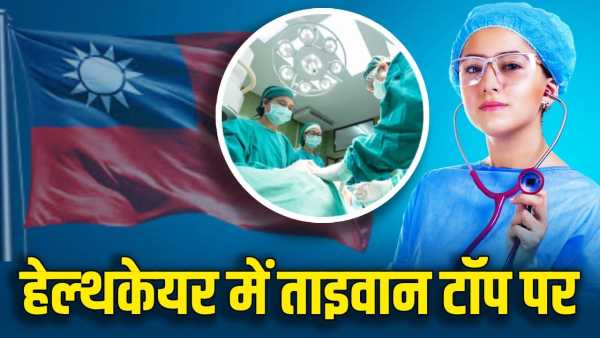
This year's theme on World Health Day (7 April) is – United for Health. Stand with science. When there is talk of solidarity, there will also be talk on the world's health system. A country like Taiwan ranks very high in the CEO World Care Index. Many international organizations and reports also describe Taiwan's health system as excellent. It ranks first in the world.
On World Health Day, know how Taiwan's health care system is on top? What is its specialty? Why do many organizations in the world consider it the best?
Taiwan's health care system is often regarded as one of the best in the world. The main reason for this is that treatment is available there. Expenses are less. The system is fast. The use of technology in the health sector is very strong. Many international reports also confirm this. Especially in the CEO World Health Care Index, Taiwan has achieved very high ranks many times. This index looks at the quality, cost, availability of healthcare, access to doctors, availability of medicines and overall public health infrastructure. For this reason, Taiwan is considered a strong model of the global health system.
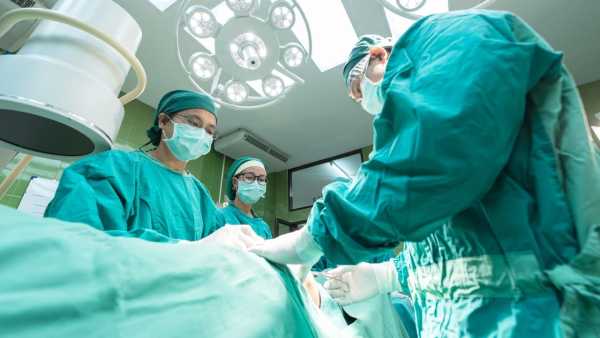
In Taiwan, an ordinary citizen does not have to spend a lot of money for treatment.
Taiwan's biggest strength is its National Health Insurance System. It started in the year 1995. Its objective is that every citizen should get treatment. Today, almost the entire population of Taiwan is covered under this scheme, which means there are very few people who are outside health protection. Under this system, people get hospitals, clinics, tests, medicines, surgeries, dental care and many other essential services. The common citizen does not have to spend a lot of personal money for treatment. This provides relief to both the poor and the middle class.
This model is special because it has huge coverage, but the system is simple. Having a single national structure also makes it easier for people to understand. This is why healthcare in Taiwan is not limited to only rich people. It reaches the general public.

The patient has to pay relatively less for OPD visit, investigation and treatment.
The second big reason is good treatment at low cost. In many countries good medical care is very expensive. This is not the case in Taiwan. There the patient has to pay relatively less for OPD visit, examination and treatment. The government and the insurance system together handle huge expenses.
The special thing is that low cost does not mean bad treatment. Taiwan's hospitals are modern. Doctors are trained. Medical facilities are advanced. Patients get timely diagnosis and treatment. Many experts believe that Taiwan has struck a good balance between cost and quality. For this reason, Taiwan's system looks very strong in international comparison.

In Taiwan, there is roughly one doctor for every 400 to 500 people.
The third reason is easy access. In Taiwan, patients rarely have to wait long for treatment, especially for general medical services. People can directly reach the hospital or specialist doctor. In many cases there is not a complicated referral process. With this, treatment starts quickly. The health infrastructure in Taiwan is dense and active. There are a good number of hospitals and clinics in the cities. Due to the digital system, managing patient records is also easy. With this, doctors are able to take decisions quickly.
As far as doctor ratio is concerned, in Taiwan, roughly one doctor is said to be available for every 400 to 500 people. This ratio may vary slightly from different sources and years. According to many international figures, it sits around 2 to 2.5 doctors per thousand population. This simply means that healthcare is available and access to doctors is relatively good. Although there may be some differences between rural and urban areas, overall Taiwan has maintained strong access to doctors and medical services.
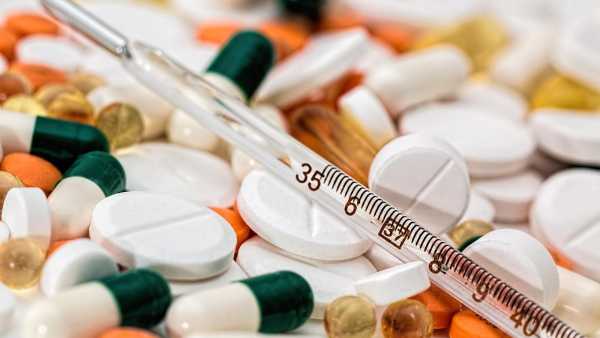
in Taiwan Digital records also help in controlling fake claims.
The fourth reason is the strong use of technology. Taiwan's health system does not depend only on hospitals. It is also based on data, digital cards, and integrated health management. Smart cards have been in use there for a long time. With this, the patient's treatment history, insurance status and many important information becomes quickly available.
Digital records also help in controlling fake claims. This reduces administrative costs. Doctors and hospitals are also able to coordinate better. This system proved to be very useful even during epidemics or public health crises. Due to technology, processes like medicine distribution, test records, and payments are faster. Patient's time is saved. The pressure on the system is reduced. This is why Taiwan's health system is not only said to be cheap or accessible, but also smart and efficient.
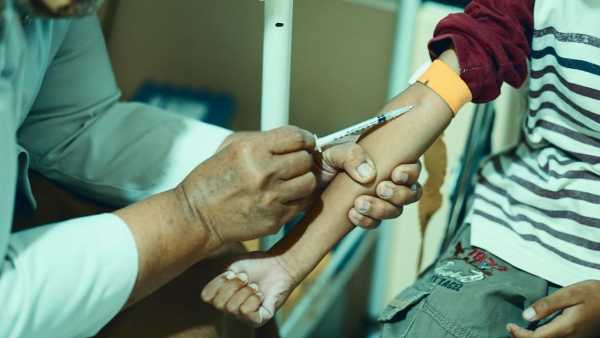
Taiwan has done good work on vaccination, health screening, maternal and child care and public health programs.
The fifth major reason is the emphasis on prevention. A good health system does not just treat disease when it occurs. He also tries to prevent the disease in the first place. Taiwan has done good work on vaccination, health screening, maternal and child care and public health programs. The advantage of a prevention-based model is that the burden of serious disease is reduced.
The patient gets identified quickly. Treatment starts early. This can reduce the death rate and complications. This model also reduces expenses in the long run. Taiwan's public health programs have increased public awareness. The role of regular checkups, cancer screening, and community health services has also been important. This is the reason why the system there is not only hospital based, but also society based.
The CEO World Care Index makes a comparative assessment of the health services of different countries of the world. In this, factors like quality of health infrastructure, availability of doctors, cost, access to medicines, government preparedness and overall medical environment are looked at. Taiwan has been in the top positions in this index several times. This reflects the global recognition of its health system. This ranking is important because it does not look at just one aspect. It tests the entire health system. Taiwan's high rank is an indication that the common man can get good treatment there, that too without much financial burden.
The structure and scale of the health systems of both Taiwan and India are very different. There is also a big difference in population. Yet Taiwan remained among the top countries in the CEO World Health Care Index 2024, while India ranked 78th. The main reason for this is the huge difference in availability, quality, cost control, and equality of structure of health services. Almost the entire population in Taiwan is covered by an organized national health insurance system. Due to this, the common citizen gets treatment at low cost. Doctors, tests, medicines and hospital services are relatively easily accessible.
Health services are improving in India, but the country's large population, rural-urban gap and inequality between government and private systems are still a big challenge. India has world-class hospitals in big cities, but the same quality of service does not reach every citizen. Many people still have to spend out of pocket for treatment, although schemes like Ayushman Bharat have provided relief. Taiwan is also considered to be in a relatively better position in terms of doctor ratio. The availability of doctors and health workers in India varies greatly across states and regions. This is why Taiwan's model is considered more balanced, faster and universal, while India's system is larger in capacity but is still in the process of development at the same level of reach and quality.