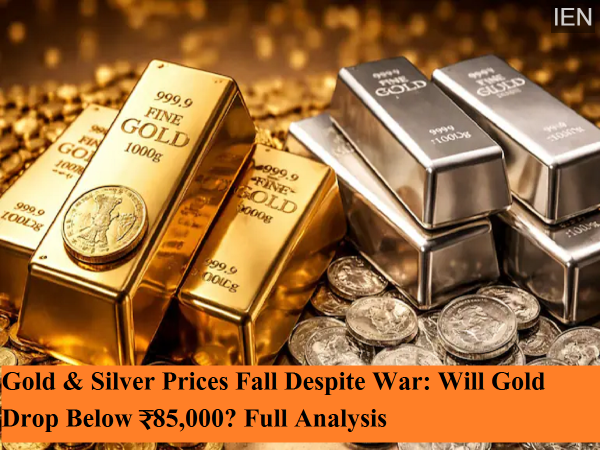
Even during global conflicts, gold and silver are traditionally seen as safe-haven assets. However, recent trends have surprised investors. Despite rising tensions like the US-Iran conflict, gold and silver prices have been falling instead of rising, raising concerns and curiosity among market participants.
Historically, wars and geopolitical tensions push precious metal prices higher. But this time, the trend has reversed. Here are the key reasons behind the decline:
A stronger US dollar is one of the biggest reasons behind falling gold and silver prices. When the dollar strengthens, gold becomes expensive for global buyers, reducing demand and pushing prices down.
Global tensions have pushed crude oil prices higher, increasing inflation concerns. In such scenarios, central banks avoid cutting interest rates, which negatively impacts gold prices.
When interest rates remain high, investors prefer fixed-income options like bonds instead of non-yielding assets like gold and silver. This reduces demand for precious metals.
US Treasury yields have increased, offering better returns with lower risk. As a result, investors are shifting away from gold and silver.
Silver is not just an investment asset—it is widely used in industries like:
Due to global uncertainty, industrial activity has slowed down, leading to a drop in silver demand.
Some countries have sold gold reserves to stabilize their currencies, increasing supply in the market and putting pressure on prices.
After a strong rally in 2025, many investors are booking profits. This selling pressure has contributed to the recent correction.
This sharp correction has surprised both experts and retail investors.
History shows that:
This pattern was seen during:
Markets tend to “price in” the risk over time.
This is the big question investors are asking.
Experts believe:
Then gold may continue to face pressure and could test lower levels.
However, sudden geopolitical escalation or economic slowdown could again push prices upward.
The current fall in gold and silver prices highlights how global financial factors can outweigh traditional safe-haven behavior. While the long-term outlook for gold remains positive, short-term volatility is likely to continue.
For investors, this phase could be: