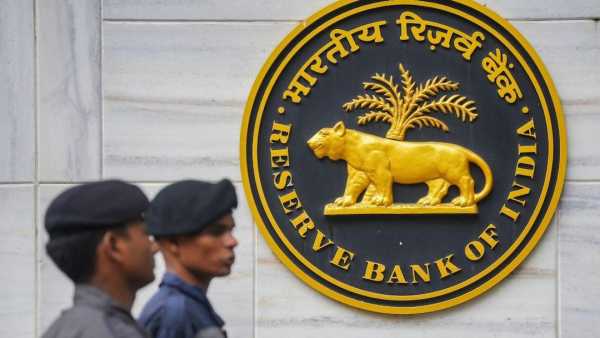
With just hours to go before the Reserve Bank of India (RBI) announces its April 2026 monetary policy decision, expectations are firmly tilted towards a pause. The central bank is widely expected to maintain its policy rates, even as rising crude oil prices and global uncertainties reshape the macroeconomic landscape.
According to a report by SBI Mutual Funds, the central bank is likely to rely more on liquidity management tools in 2026 rather than immediate rate action, signalling a cautious approach to evolving risks.
At the heart of this outlook is the sharp divergence between the RBI’s earlier assumptions and current market realities, reported IANS. Crude oil prices are now hovering roughly 50 per cent above the central bank’s baseline estimate of $70 per barrel, introducing fresh pressure on inflation and external balances. Despite this, the report suggests that the threshold for monetary tightening remains high.
The surge in global energy prices has complicated the inflation outlook, yet policymakers appear reluctant to respond with aggressive rate hikes. The report underscores that even with crude trading significantly above assumptions, the RBI is unlikely to shift its stance abruptly.
This reflects a broader policy preference for stability, particularly at a time when global growth remains uneven and geopolitical tensions continue to disrupt commodity markets. Instead of reacting directly through interest rates, the central bank is expected to fine-tune liquidity conditions to absorb shocks and maintain financial stability.
A key theme emerging from the report is the increasing importance of liquidity operations. With the balance of payments projected to remain under pressure in FY27, the RBI may turn to open market operations (OMOs) to sustain adequate liquidity in the banking system.
The report estimates that if the balance of payments deficit reaches Rs 3.5 trillion, the central bank may need to conduct additional OMO purchases worth Rs 4.5 trillion to Rs 5 trillion to maintain surplus liquidity conditions. This approach would allow the RBI to support credit flow and economic activity without altering benchmark rates.
Such a strategy also provides flexibility, enabling policymakers to respond dynamically to external shocks while avoiding abrupt shifts in borrowing costs.
The evolving energy landscape is expected to create clear sectoral divergences. Metals and mining companies stand to benefit from elevated commodity prices, positioning them as relative winners in the current environment.
On the other hand, sectors that are highly sensitive to fuel costs, such as airlines, tourism, chemicals, fertilisers and textiles, are likely to face margin pressures. Rising input costs could weigh on profitability and demand in these segments.
Meanwhile, sectors such as information technology, telecom, pharmaceuticals and power are seen as relatively insulated from the immediate impact of higher energy prices, making them comparatively resilient in the current cycle.
Beyond sectoral trends, the report also points to a moderation in overall economic growth. Real GDP growth is projected to ease from an estimated 7.8 per cent in FY26 to around 6.5 per cent in FY27. This suggests that while the economy remains on a stable footing, momentum may soften amid global headwinds and domestic pressures.
At the same time, nominal GDP growth is expected to strengthen, rising from 9 per cent to approximately 12-13 per cent. This reflects the impact of higher prices across the economy, even as real growth moderates.
Inflation remains a key concern for policymakers, particularly on the food front. The report highlights that food inflation could pose a greater risk due to an unfavourable base effect and potential weather-related disruptions during the Kharif season.
Consumer price inflation (CPI) is expected to average around 5 per cent in FY27, with certain months potentially approaching the 6 per cent mark. This places inflation close to the upper bound of the RBI’s comfort range, reinforcing the need for cautious policy calibration.
From a market perspective, valuations, particularly in large-cap stocks, are seen as becoming increasingly attractive. The report suggests that any easing in energy prices could trigger a swift recovery in equities, potentially delivering early-teen returns for benchmark indices.
It also notes that if the current energy shock subsides, especially in the event of a geopolitical resolution such as an agreement between the US and Iran, the broader economic impact may prove temporary. In such a scenario, recent market corrections may have already priced in much of the downside risk.
Looking ahead, the report cautions that global markets may be entering a phase of more frequent geopolitical disruptions. This could lead to precautionary inventory build-ups and expansion of strategic reserves by countries, keeping crude oil prices elevated for longer periods.