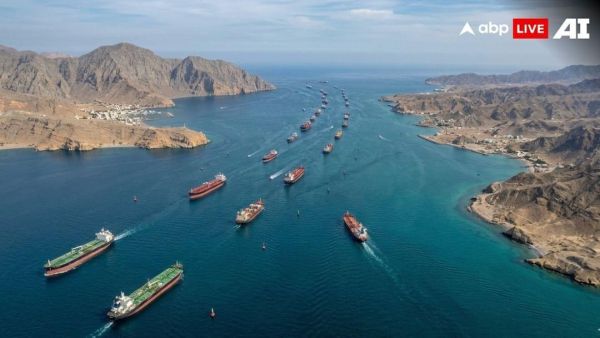
Iran News: Iran is reportedly working on a plan that could significantly alter global shipping dynamics by introducing charges for vessels passing through the Strait of Hormuz -- one of the world’s most critical oil transit routes.
According to emerging details, authorities in Tehran are considering a framework under which all commercial ships would be required to pay a transit fee while crossing the narrow passage. The responsibility for overseeing this system is expected to fall on the Islamic Revolutionary Guard Corps (IRGC). The route currently handles nearly one-fifth of the world’s daily oil shipments, making any such move highly consequential for global trade.
Officials in Iran have reportedly described the proposed charge as a “security-related fee,” arguing that it would compensate for maintaining safety in the region. The proposal comes amid heightened tensions in the Gulf, where incidents involving tanker seizures and shipping disruptions have increased in recent months, largely in response to Western sanctions.
Experts believe the initiative could provide Iran with a substantial new source of revenue, potentially generating hundreds of billions of dollars over time while bypassing financial restrictions imposed through international sanctions.
The possibility of such a toll has raised alarms across the shipping and energy sectors. Analysts warn that additional costs on vessels could sharply increase global freight and insurance expenses. Maritime insurers have already indicated that premiums, currently at elevated levels, could rise further if enforcement involves physical intervention by Iranian forces.
Energy markets have also reacted nervously, with oil prices showing an upward trend amid fears of prolonged disruption. Economists caution that any added cost per barrel due to transit charges could translate into higher fuel prices worldwide, adding pressure on inflation and slowing economic recovery in several regions.
The development is seen as a direct challenge to the longstanding principle of free navigation in international waters, particularly under the United Nations Convention on the Law of the Sea, which supports unhindered passage through key maritime routes.
It also puts pressure on the United States and its allies, whose naval presence in the Gulf has traditionally ensured secure shipping lanes. However, analysts suggest that any direct confrontation over the issue could risk further escalation in an already volatile region.
For global shipping companies, the situation may soon present a difficult choice -- comply with the proposed fees or face potential risks to vessels and crew operating in one of the world’s most strategically important waterways.