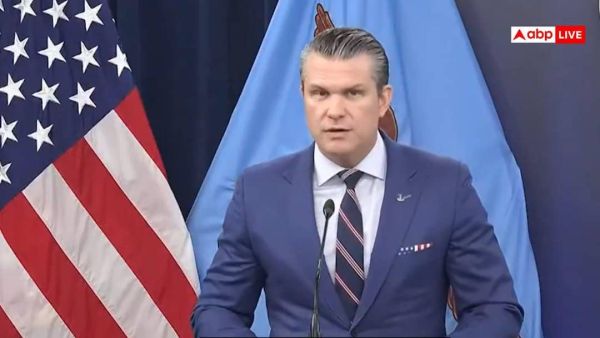
The United States has claimed Iran was forced into seeking a ceasefire following sustained military pressure, with Defence Secretary Pete Hegseth describing the conflict as a “historic success” for Washington and its allies. Hegseth said Tehran had been left with little choice after suffering extensive damage to its military capabilities. The comments come amid a fragile truce in the US-Israel-Iran conflict, with negotiations expected to follow, even as global concerns persist over the stability of the region.
Hegseth claimed that Iran’s new Supreme Leader, Mojtaba Khamenei, had been “wounded and likely disfigured” following recent strikes.
#WATCH | U.S. Secretary of Defence Pete Hegseth says," We know that the new so-called not-so-supreme leader (of Iran) is wounded and likely disfigured..."
— ANI (@ANI) March 13, 2026
Source: US Department of War/ YouTube pic.twitter.com/xaJncLWNVT
Hegseth asserted that Iran had “begged for this ceasefire”, framing the development as a direct consequence of US military dominance. He claimed Iranian forces were unable to defend their territory, stating that their missile and defence infrastructure had been severely degraded.
According to him, Tehran had miscalculated by attempting to challenge the United States, believing it could act without facing direct consequences. He argued that the latest escalation proved otherwise, forcing Iran back to the negotiating table under pressure.
#WATCH | Washington, DC | United States Secretary of War, Pete Hegseth, says, "...President Trump had the power to cripple Iran's entire economy in minutes, but he chose mercy. He spared those targets because Iran accepted the ceasefire under overwhelming pressure. The new… pic.twitter.com/roXFQp0Bcn
— ANI (@ANI) April 8, 2026
The US defence chief also credited Donald Trump with delivering a “decisive military victory”, saying the administration had succeeded where previous governments had hesitated. He described the campaign as having “functionally destroyed” Iran’s ability to build missiles and wage sustained conflict.
Hegseth reiterated longstanding US accusations against Iran, including claims of supporting attacks on Americans and pursuing nuclear ambitions. He argued that these factors justified a hardline response and contributed to what he called a strategic turning point.
The ceasefire, while seen by Washington as a sign of strength, is widely viewed as fragile, with further talks set to determine whether it can lead to a lasting settlement.