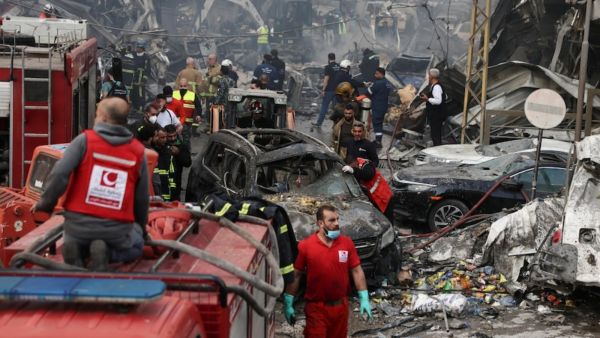
The fragile ceasefire between the United States (US) and Iran entered its second day on Thursday, April 9, under mounting strain, as continued Israeli military operations in Lebanon — which have already left 254 people dead and 1,165 injured — exposed deep divisions over the scope of the truce.
Disagreement persists between Washington and Tehran over whether Lebanon is covered under the agreement. Iranian officials have insisted that halting hostilities in Lebanon is a key condition of the ceasefire framework, while the US has maintained that the deal applies only to direct US–Iran hostilities, excluding Israel’s ongoing campaign against Hezbollah.
The divergence has raised concerns about the durability of the truce, with analysts warning that continued strikes risk derailing diplomatic momentum.

In a statement published by its media arm, the Iran-backed militant group Hezbollah said it had launched a rocket salvo targeting Israel early on Thursday, adding that its attacks would continue until Israeli aggression against Lebanon ceased.
The group said Israel’s strikes on Wednesday constituted a violation of the ceasefire agreement.
Israeli officials and the White House, however, have maintained that the ceasefire does not include Lebanon, contradicting the position of Iran and Pakistan, which played a mediating role in brokering the truce.
In Isfahan, multiple explosions were reported, with air defence systems activated in response, according to the Mehr News Agency.
Similar defensive measures were reported in other cities, raising concerns over potential ceasefire violations or spillover incidents during the truce.
Amid the tensions, the White House said President Donald Trump will dispatch a negotiating team to Pakistan, led by Vice President J. D. Vance.
The move signals Washington’s attempt to reinforce diplomatic engagement and prevent further escalation as the ceasefire remains under pressure.
This is a developing story. More updates will follow as information becomes available.