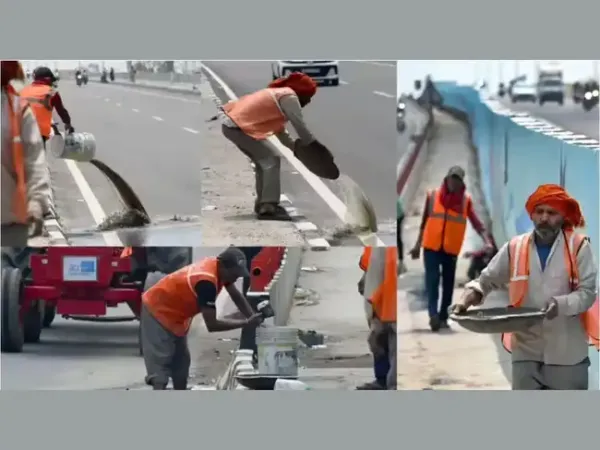
Workers were seen manually clearing stagnant water from the carriageway of the Rs 12,000 crore Delhi-Dehradun Economic Corridor just days before its scheduled inauguration, using the most basic technology, reports TOI.
Four workers were seen using plastic containers to scoop up water and throw it onto the opposite side of the road, while a tractor bearing the NHAI logo stood nearby. “The drain was completely choked. We have no choice but to collect the stagnant water in containers and throw it away to clear the stretch,” one worker told TOI.
Also Read- 2nd puc result 2026 Live
The expressway begins near Akshardham Temple and passes through Baghpat, Baraut, Shamli and Saharanpur before reaching Dehradun. Designed as a six-lane access-controlled highway, it will allow vehicles to travel at speeds of up to 100 km/h.
The corridor includes seven interchanges, two rail overbridges, 10 major bridges and 14 wayside amenities aimed at improving commuter convenience and safety.
To ensure ecological safety, the expressway incorporates two 200-metre elephant underpasses and six dedicated animal crossings, enabling free movement of wildlife and reducing the risk of road accidents.
(With inputs from TOI)
Four workers were seen using plastic containers to scoop up water and throw it onto the opposite side of the road, while a tractor bearing the NHAI logo stood nearby. “The drain was completely choked. We have no choice but to collect the stagnant water in containers and throw it away to clear the stretch,” one worker told TOI.
Also Read- 2nd puc result 2026 Live
Rush to meet inauguration deadline
The manual intervention comes as authorities race to prepare the expressway for its expected inauguration by Narendra Modi on April 14.The expressway begins near Akshardham Temple and passes through Baghpat, Baraut, Shamli and Saharanpur before reaching Dehradun. Designed as a six-lane access-controlled highway, it will allow vehicles to travel at speeds of up to 100 km/h.
Key infrastructure features and interchanges
Officials said the project is expected to significantly improve connectivity between the national capital and Uttarakhand, benefiting both daily commuters and tourists.The corridor includes seven interchanges, two rail overbridges, 10 major bridges and 14 wayside amenities aimed at improving commuter convenience and safety.
Wildlife protection measures integrated into design
A key highlight of the project is a 12-km elevated stretch passing through Rajaji National Park, designed to minimise disruption to wildlife movement.To ensure ecological safety, the expressway incorporates two 200-metre elephant underpasses and six dedicated animal crossings, enabling free movement of wildlife and reducing the risk of road accidents.
Link to pilgrimage routes and regional highways
The expressway also includes a spur connecting to Haridwar and will integrate with the Char Dham Highway network, improving access to major pilgrimage destinations and hill stations in Uttarakhand and neighbouring regions.(With inputs from TOI)