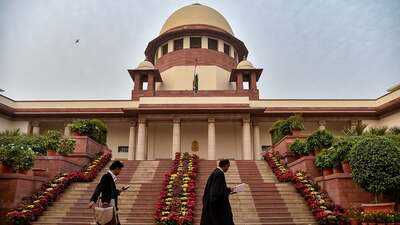
The Supreme Court of India on Thursday observed that restricting entry to temples and mutts on the basis of sect or denomination could adversely impact Hinduism and lead to social division.
A nine-judge Constitution bench headed by Chief Justice Surya Kant made the oral observations while hearing petitions related to religious freedom and entry restrictions, including issues arising from the Sabarimala temple case.
Court flags impact on religion, societyJustice B. V. Nagarathna said exclusion of devotees based on denomination could negatively affect Hinduism.
“Everybody must have access to every temple and mutt… if you say only my denomination will attend the temple and nobody else, that is not good for Hinduism,” she observed.
Justice Aravind Kumar concurred, stating that such exclusions could divide society.
The bench indicated that allowing denominational restrictions in public temples may be counter-productive for the religion itself.
Debate over constitutional provisionsSenior advocate C. S. Vaidyanathan, appearing for Ayyappa devotees and related organisations, argued that Article 26(b) of the Constitution grants religious denominations the right to manage their own affairs, which should prevail over Article 25(2)(b).
Centre defends restriction of entry for women in Sabarimala, stresses religious freedomArticle 25(2)(b) empowers the State to make laws opening Hindu religious institutions of a public nature to all sections of society.
Vaidyanathan submitted that denominational temples could restrict worship to members of a particular sect, though he agreed that public temples must remain open to all.
The court, however, indicated that Article 25(2)(b) allows the State to intervene to ensure broader access.
Reference to past judgmentsThe bench referred to the 1957 Venkataramana Devaru case, which upheld temple entry laws while permitting limited denominational practices.
The court also discussed the 2018 Sabarimala verdict, though it asked counsel to set aside that controversy while addressing broader constitutional questions.
The bench is examining issues relating to the scope of religious freedom, denominational rights and equality, particularly in the context of entry restrictions at places of worship.
The hearing is part of a batch of petitions concerning practices at the Sabarimala temple and similar questions across faiths.
Venugopal raises Sabarimala women entry issue, challenges CM to clarify stand