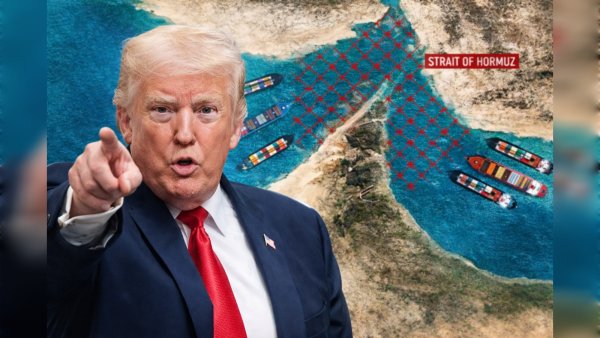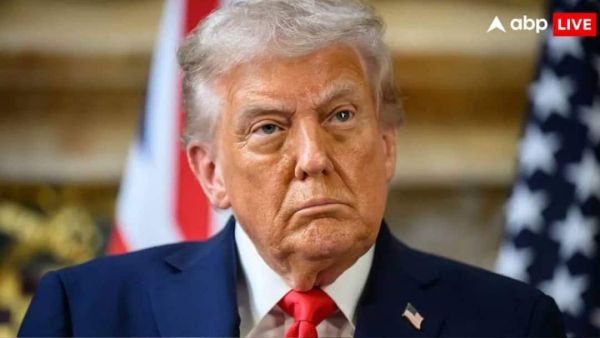
Tensions between the United States and Iran showed fresh signs of escalation despite a fragile ceasefire, with US President Donald Trump issuing a stern warning to Tehran over reports of tolls being imposed on ships transiting the Strait of Hormuz.
In a series of posts on his Truth Social platform on Thursday, Trump cautioned Iran against interfering with maritime movement through the strategically vital waterway, which had only recently reopened under a temporary truce.
"There are reports that Iran is charging fees to tankers going through the Hormuz Strait -- They better not be and, if they are, they better stop now!" Trump said.
Minutes later, he doubled down on the warning, stating that "very quickly, you'll see Oil start flowing, with or without the help of Iran."
The US president also accused Tehran of failing to uphold the terms of the understanding reached during the ceasefire.
"That is not the agreement we have!" Trump added, after earlier claiming Iran was "doing a very poor job, dishonorable some would say, of allowing Oil to go through the Strait of Hormuz."
Despite the announcement of a two-week ceasefire aimed at de-escalating the conflict, maritime traffic through the Strait of Hormuz has remained severely restricted. Maritime tracking data accessed on Thursday showed that only 10 vessels had passed through the route since the truce came into effect.
The chokepoint, which handles a significant portion of global oil shipments, continues to be a focal point of geopolitical tension, with disruptions raising concerns in global energy markets.
Amid the heightened rhetoric from Washington, Iran’s Supreme Leader Mojtaba Khamenei indicated a major shift in Tehran’s approach to managing the Strait of Hormuz.
In remarks carried by state media, Khamenei said Iran was entering a “new stage” in overseeing the critical waterway, while also vowing accountability for recent attacks on the country.
"We will certainly demand compensation for each and every damage inflicted and the blood price of the martyrs and the compensation for the wounded of this war," he said.
Khamenei also underscored Iran’s intent to retaliate for the killing of his father, Ayatollah Ali Khamenei, in US-Israeli strikes on February 28, asserting that Tehran would not relinquish its rights despite not seeking conflict.
The developments come as a tenuous two-week ceasefire between the United States and Iran remains in place but increasingly fragile. Renewed hostilities in Lebanon have added pressure to the already delicate arrangement, raising doubts over its sustainability.
While the agreement had briefly eased fears of a wider regional conflict, the latest exchanges and continued disruption in the Strait of Hormuz suggest that underlying tensions remain far from resolved.