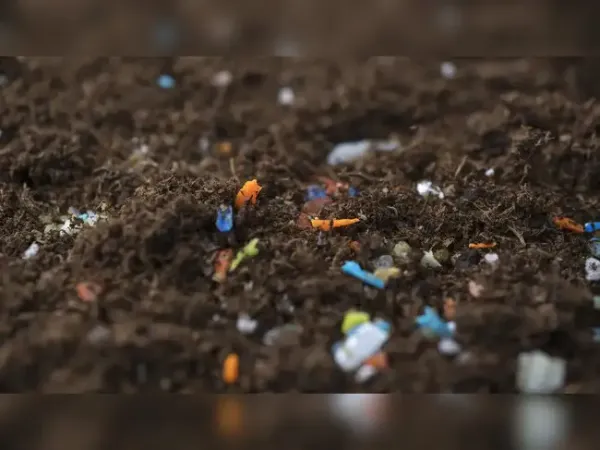
Plastic pollution has become a major global environmental and public health concern, entering ecosystems through mismanaged waste, industrial spillages, synthetic textiles, tyre wear, and personal care products. Agriculture adds to the burden through heavy use of plastic mulch, greenhouse films, and irrigation systems.
A study by the National Academy of Agricultural Sciences (NAAS) titled “Microplastics Pollution: Remedial Strategies for Sustainable Environmental Management” highlights the growing threat of microplastics. For the uninitiated, plastics larger than 20 mm are classified as macroplastics, while those smaller than 5 mm are termed microplastics (MPs). These MPs originate from the breakdown of larger plastic materials.
“In 2024, the global total plastic production was expected to be 413.8 million tons (MT) using 4% of global fossil fuel. Plastic production increased significantly (79%) between 2000 and 2015 alone, and plastic pollution has been elevated to a potential issue of high concern for exceeding planetary boundary. As population grows and development continues, the volume of plastic wastes is rising rapidly, which significantly contributes to environmental pollution. The impact on the soil environment is determined by the type of released chemicals, the kind of plastic, and its size,” says the research paper released in March 2026.
In India, despite relatively low per capita consumption (nearly 11 kg annually), total plastic waste generation stands at approximately 26 MT per year, with nearly 9.3 MT entering the environment, making the country one of the largest global contributors, the paper adds. Over time, these materials degrade into microplastics, releasing additives and toxic polymers into surrounding environments. Soil contamination by MPs is increasingly evident, particularly in agricultural landscapes. MPs interact with pesticides, flame retardants, and persistent organic pollutants such as PCBs, amplifying soil toxicity. Their distribution is influenced by farming practices, irrigation with contaminated water, landfill leakage, and atmospheric deposition.
“Microplastics’ pollution has emerged as a critical environmental concern affecting soil health, agriculture, ecosystems, and human well-being. MPs are now widespread across soil, water, and food systems, impacting productivity and posing health risks. This roadmap developed through a consultative process by NAAS emphasising national database and monitoring protocols, improved waste management and reduced plastic use, promotion of biodegradable alternatives, and upgraded wastewater treatment is critical. This roadmap aligned closely with the Government of India’s initiatives like Atal Mission for Rejuvenation and Urban Transformation (AMRUT), Swachh Bharat Abhiyan, and the Smart City Development Program, along with stronger regulations and awareness,” says ML Jat, President, NAAS, Secretary, Department of Agricultural Research and Education (DARE) and Director General, Indian Council of Agricultural Research (ICAR).
A coordinated, science-based approach is imperative to effectively address this challenge and ensure sustainable environmental management, adds Jat.
Ganga river system discharges 0.12 MT plastic annually
Studies across India indicate widespread but variable contamination. Agricultural and urban soils typically contain 20-300 particles/kg, with hotspots reported in regions such as Goa, Bhopal, and Karnataka, the report mentions.
Factors such as plastic mulching, wastewater irrigation, and proximity to polluted rivers significantly influence these levels. Microplastics also undergo vertical movement within soils due to tillage, erosion, and climatic factors like wet-dry cycles. Fine particles can penetrate deeper soil layers, complicating remediation efforts.
“The Ganga River network is one of the largest rivers which contributes 0.12 MT of discharged plastics per year. The National Centre for Coastal Research (NCCR) covered 19 transects surveyed from Porbandar (Gujarat) to Kanyakumari (Tamil Nadu) under West Coast and 25 transects sampled from Puri (Odisha) to Thoothukudi (Tamil Nadu) under East Coast, and found that the riverine inputs and abandoned fishing gear were the major sources of MPs pollution along India’s coasts,” the study notes.
MPs in soils can increase carbon dioxide emissions by accelerating microbial decomposition of organic matter, the paper says. They also harm plants, reducing seed germination, root growth, and photosynthesis, while causing oxidative stress, hormonal imbalance, and poor nutrient uptake, ultimately lowering agricultural productivity.
Human exposure is widespread, with MPs detected in food, water, and air. They enter the body via ingestion, inhalation, and skin contact, and are linked to gastrointestinal, respiratory, endocrine, and immune effects.
Need a dedicated policy framework
India has taken steps to regulate plastic waste, including amendments to plastic waste management rules in 2021 and a ban on select single-use plastics in 2022. However, a dedicated policy framework for microplastics is still lacking, says the paper.
Microplastic pollution in India is constrained by key gaps, no standardised detection methods, limited data on soil-plant transfer and human exposure, absence of national monitoring, and weak analytical infrastructure, hindering risk assessment and policy action.
The report says that addressing this challenge requires a multi-pronged approach: promoting biodegradable farm inputs, upgrading wastewater treatment (membrane filtration, activated carbon), improving waste segregation and recycling, leveraging bioremediation, strengthening stormwater management, and deploying innovations like floating collectors, alongside strong public awareness.
Going forward, India needs a comprehensive national strategy with centralised monitoring, standardised protocols, stronger food and water safety norms, promotion of alternatives like cellulose and bamboo, and greater farmer participation in recycling, the research says.
A study by the National Academy of Agricultural Sciences (NAAS) titled “Microplastics Pollution: Remedial Strategies for Sustainable Environmental Management” highlights the growing threat of microplastics. For the uninitiated, plastics larger than 20 mm are classified as macroplastics, while those smaller than 5 mm are termed microplastics (MPs). These MPs originate from the breakdown of larger plastic materials.
“In 2024, the global total plastic production was expected to be 413.8 million tons (MT) using 4% of global fossil fuel. Plastic production increased significantly (79%) between 2000 and 2015 alone, and plastic pollution has been elevated to a potential issue of high concern for exceeding planetary boundary. As population grows and development continues, the volume of plastic wastes is rising rapidly, which significantly contributes to environmental pollution. The impact on the soil environment is determined by the type of released chemicals, the kind of plastic, and its size,” says the research paper released in March 2026.
In India, despite relatively low per capita consumption (nearly 11 kg annually), total plastic waste generation stands at approximately 26 MT per year, with nearly 9.3 MT entering the environment, making the country one of the largest global contributors, the paper adds. Over time, these materials degrade into microplastics, releasing additives and toxic polymers into surrounding environments. Soil contamination by MPs is increasingly evident, particularly in agricultural landscapes. MPs interact with pesticides, flame retardants, and persistent organic pollutants such as PCBs, amplifying soil toxicity. Their distribution is influenced by farming practices, irrigation with contaminated water, landfill leakage, and atmospheric deposition.
“Microplastics’ pollution has emerged as a critical environmental concern affecting soil health, agriculture, ecosystems, and human well-being. MPs are now widespread across soil, water, and food systems, impacting productivity and posing health risks. This roadmap developed through a consultative process by NAAS emphasising national database and monitoring protocols, improved waste management and reduced plastic use, promotion of biodegradable alternatives, and upgraded wastewater treatment is critical. This roadmap aligned closely with the Government of India’s initiatives like Atal Mission for Rejuvenation and Urban Transformation (AMRUT), Swachh Bharat Abhiyan, and the Smart City Development Program, along with stronger regulations and awareness,” says ML Jat, President, NAAS, Secretary, Department of Agricultural Research and Education (DARE) and Director General, Indian Council of Agricultural Research (ICAR).
A coordinated, science-based approach is imperative to effectively address this challenge and ensure sustainable environmental management, adds Jat.
Ganga river system discharges 0.12 MT plastic annually
Studies across India indicate widespread but variable contamination. Agricultural and urban soils typically contain 20-300 particles/kg, with hotspots reported in regions such as Goa, Bhopal, and Karnataka, the report mentions.
Factors such as plastic mulching, wastewater irrigation, and proximity to polluted rivers significantly influence these levels. Microplastics also undergo vertical movement within soils due to tillage, erosion, and climatic factors like wet-dry cycles. Fine particles can penetrate deeper soil layers, complicating remediation efforts.
“The Ganga River network is one of the largest rivers which contributes 0.12 MT of discharged plastics per year. The National Centre for Coastal Research (NCCR) covered 19 transects surveyed from Porbandar (Gujarat) to Kanyakumari (Tamil Nadu) under West Coast and 25 transects sampled from Puri (Odisha) to Thoothukudi (Tamil Nadu) under East Coast, and found that the riverine inputs and abandoned fishing gear were the major sources of MPs pollution along India’s coasts,” the study notes.
MPs in soils can increase carbon dioxide emissions by accelerating microbial decomposition of organic matter, the paper says. They also harm plants, reducing seed germination, root growth, and photosynthesis, while causing oxidative stress, hormonal imbalance, and poor nutrient uptake, ultimately lowering agricultural productivity.
Human exposure is widespread, with MPs detected in food, water, and air. They enter the body via ingestion, inhalation, and skin contact, and are linked to gastrointestinal, respiratory, endocrine, and immune effects.
Need a dedicated policy framework
India has taken steps to regulate plastic waste, including amendments to plastic waste management rules in 2021 and a ban on select single-use plastics in 2022. However, a dedicated policy framework for microplastics is still lacking, says the paper.
Microplastic pollution in India is constrained by key gaps, no standardised detection methods, limited data on soil-plant transfer and human exposure, absence of national monitoring, and weak analytical infrastructure, hindering risk assessment and policy action.
The report says that addressing this challenge requires a multi-pronged approach: promoting biodegradable farm inputs, upgrading wastewater treatment (membrane filtration, activated carbon), improving waste segregation and recycling, leveraging bioremediation, strengthening stormwater management, and deploying innovations like floating collectors, alongside strong public awareness.
Going forward, India needs a comprehensive national strategy with centralised monitoring, standardised protocols, stronger food and water safety norms, promotion of alternatives like cellulose and bamboo, and greater farmer participation in recycling, the research says.